
 E-Paper



Opposition parties get set to jointly fight BJP in 2019
A broad understanding has been reached among major opposition parties to give a joint fight to the BJP in the 2019 Lok Sabha elections.


A broad understanding has been reached among major opposition parties to give a joint fight to the BJP in the 2019 Lok Sabha elections.
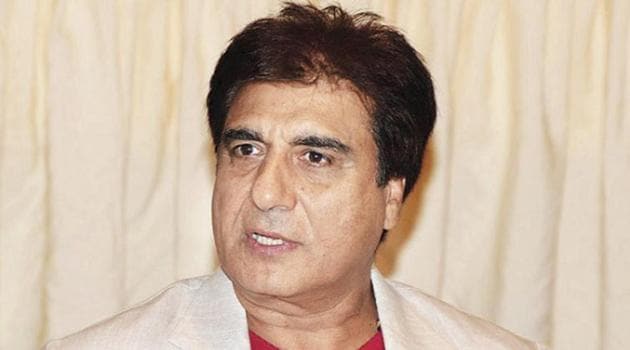
“Yes, there is a consensus to fight elections jointly to check division of votes. A respectable number of seats will be given to the allies,” confirmed Uttar Pradesh Congress Committee (UPCC) president Raj Babbar.
As modalities for seat-sharing are being finalized on state-to-state basis, and top leaders are in touch for the purpose, the Congress hopes the understanding among opposition parties will be able finally check the BJP in states like Madhya Pradesh, Maharashtra, Punjab, Bihar etc.
BSP, Samajwadi Party, RLD and the Congress will fight the elections together in Uttar Pradesh, said a senior Congress leader did not want to be named.
The leader said the party already has allies in some states like the NCP in Maharashtra. “Congress president Rahul Gandhi has given the go-ahead for the alliance and asked senior party leaders to ensure that the allies get respectable share of seats. Top leaders are in close touch. The Congress already has an alliance in the NCP in Maharashtra. There will also be some understanding in Bihar, Punjab and some other states,” said the leader.
A decision on the united opposition’s Prime Ministerial candidate will be taken only after the polls, said a senior Congress office-bearer, on condition of anonymity, in Delhi.
“We don’t want to create any confusion or disruption among the opposition parties at this juncture. The leadership issue is divisive and we don’t want to discuss it at this point,” he added.
The Congress leader claimed that his party is dealing the alliance issue in two stages – first that all of the opposition parties have to together take on the BJP and Prime Minister in the 2019 polls; and second, that the call on the Prime Ministerial candidate will be taken after the results.
“A broad consensus has been reached among the opposition parties in this regard. Our primary job is to defeat the BJP and the RSS (Rashtriya Swayamsewak Sangh).”
“There is a feeling among all opposition parties that the primary job is to defeat institution-capturing by RSS. What happens after elections will depend on how different parties perform, what elections have to show. We do not want to get into anything divisive,” the leader said.
The Congress leader expressed confidence that his party would “considerably improve” its performance in next year’s elections, especially in states such as Madhya Pradesh, Rajasthan, Chhattisgarh, Punjab and Haryana. In 2014, it managed to win only 44 seats in the Lok Sabha, a record low. Striking a proper alliances in Uttar Pradesh, Bihar and Maharashtra is crucial, he said, claiming that the BJP is expected to lose a major chunk of its seats in these states, which would pave the way for the ouster of Modi.
Asked about the alliance with the Trinamool Congress in West Bengal, the Congress leader refused to give details, saying he cannot divulge the specifics now.
However, he asserted that the Congress would not have a tie-up with the Shiv Sena in Maharashtra as the two parties are ideologically poles apart and there can be no alignment between them.
Asked about the possibility of a tie-up with the Aam Aadmi Party (AAP), he said the Congress leadership respects and does not overrule the views of state units before striking alliances.
The Congress Working Committee (CWC), the party’s highest decision making body, had on July 22 authorised Rahul Gandhi to take a call on pre and post-alliances for the 2019 polls.
The Congress leader expressed confidence that his party would win the upcoming assembly elections in Rajasthan, Madhya Pradesh and Chhattisgarh. He said the Congress is unlikely to project a chief ministerial candidate in these states.
He claimed that if the BJP wins less than 230 and 240 seats, Modi will not become the PM. “The NDA allies might not agree to him becoming the Prime Minister. There is also a possibility that someone else from the BJP might emerge as the PM candidate,” he said. “We are sure that if proper alliances happen in UP, Bihar and Maharashtra, Modi will not come back to power. In fact, BJP will not even win five seats in UP.”
In 2014, the BJP won 71 seats out of 80 in the state and one of its allies won 2.
(With inputs from HTC/Delhi)


