
 E-Paper



After spate of deadly blazes, Mumbai fire brigade plans surprise checks at high-rises, malls
After the tragic fire in Kamala Mills in December 2017 in which 14 people were killed, the BMC had formed a fire compliance cell to check if commercial structures had fire safety mechanisms. Until July, inspections were done only to provide clearance certificates to mainly hotels and restaurants.

 Prefer HTon Google


The death of four people in Wednesday’s fire at Crystal Tower, where several safety rules were violated, has served as a wake-up call to the fire brigade and the Mumbai civic body to start conducting surprise checks at residential buildings.
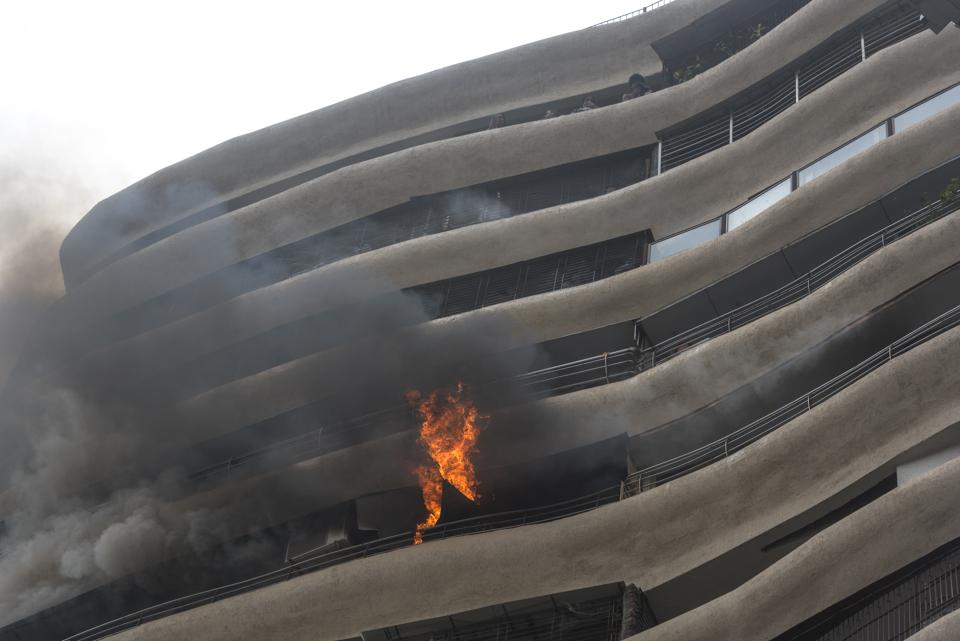
After the tragic fire at two restaurants in Kamala Mills in December 2017, in which 14 people were killed, the Brihanmumbai Municipal Corporation (BMC) had formed a fire compliance cell to check if commercial structures had fire-safety mechanisms in place.
Until July, this cell’s inspection were done only to provide clearance certificates, to mainly hotels and restaurants.
“As the Kamala Mills fire was at a commercial spot, we focused on inspecting eateries, multiplexes, pubs and bars,” said fire brigade officer. “High-rise housing societies were not in focus.”
The 3,423 buildings the cell inspected since it was formed in February 2018 were hotels, restaurants, theatres, and malls. In July, the BMC issued a circular asking the cell to inspect a minimum of 300 buildings, including residential ones, every month. So far, such checks at residential properties had not been conducted. “We have introduced a new and more stringent procedure for fire safety only last month,” chief fire officer P Rahangdale confirmed.
“Follow-up investigations of existing high-rise buildings will also be done to check if they follow the mandatory bi-annual fire audits, and comply with fire safety.”
Currently, all residential societies must conduct a fire-safety audit and send a report to the fire brigade. Under the new circular, buildings across Mumbai have been categorised based on their height and divided among officials of the compliance cell — the tallest buildings will be inspected by senior-most officials. The officials will pick buildings at random, and without giving them notice of an inspection.
Penalties for not complying with the fire safety rule could end in prosecution under the Fire Prevention Act.
The random checks are to ensure buildings continue to stay fire-safe even after the initial inspections.
Housing societies across Mumbai welcomed the move, while urban planners pointed out the need, not only for better compliance by housing societies, but also for regulating how permissions are given in the first place.
Madhu Poplai, a resident of Pali Hill’s Cozihom — an enclave of five buildings, each 10 storeys high, with 162 residents — said housing societies could learn from such inspections. “Cozihom is fire compliant and the housing society even conducts the mandatory bi-annual inspections of its equipment to make sure they work .”
Hiren Mehta, who lives in Gasper Enclave, a Bandra apartment constructed in 1962, said, his building was hardly fire compliant.”But, if inspections happen, we will welcome them. The law will then take its course, and if irregularities are pointed out in our building, we will fix them.” Eight families live here.
In Churchgate’s Swastik Enclave, a five-storey structure with 25 residents, there are fire extinguishers on every floor, signs and exit plans. Resident Naina Kathpalia was open to the idea of surprise checks. “Our building is fire compliant, and we have fire extinguishers with floor plans. We still welcome an inspection by the fire brigade.”
Urban planner PK Das pointed out: “We are missing the main point here. What we need is to regulate how permissions are given to buildings, where fire safety measures like ensuring there is enough open space and access to refuge areas are given little thought.” He added, “The root cause of the problem lies in the beginning, at the time of the construction itself, where builders blatantly flout norms, and the government lets them do so. Follow-up inspections is only patch work with little impact.”
A fire brigade official conceded that until 2017, there were several instances where officials gave buildings no-objection certificates without necessarily inspecting them. “But, after the Kamala Mills incident, the concept of a compliance cell came up and we began mandatory fire inspections before giving NOCs. Now, the concept of fire prevention has been added to this list.”


