
 E-Paper



Every Covid case is alarming for us: Aaditya Thackeray
Cabinet minister says city yet to see a surge after liberalisation of testing, MMR working towards containing spread


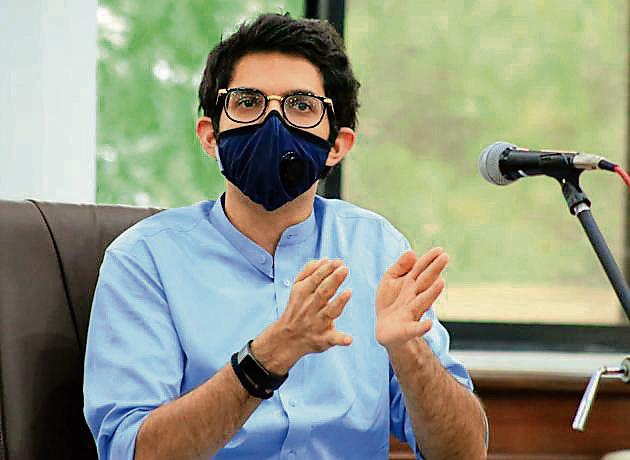
Aaditya Thackeray, state environment minister and guardian minister of Mumbai suburbs, elaborates on the city’s preparedness in tackling the Covid-19 situation. Edited excerpts:
Mumbai’s Covid numbers show improvement, but is the city doing better? When will it open up?
In terms of the pandemic and when it will get over, the World Health Organization (WHO) knows, or ‘who knows?’ It [the virus] is something we are adjusting to. What is important is to have medical buffer beds as we have embarked on Mission Begin Again. Mission Begin Again started four weeks ago. In Mumbai, testing was liberalised one week ago. We have still not seen what we would call a surge in cases. But can we be sure that it will not rise anymore? That is something we cannot predict. It totally depends on how we, as citizens, respond to this virus and take precautions. There have been countries around the world that have opened up and shut down. We don’t want to do that back and forth. Mumbai will open up in a staggered manner. Every step towards opening up will be supported with buffer beds. For example, last week when we increased shop timings to 9am to 7pm, and we allowed hostels to partially open up, we added 3,500 beds and 220 ICU beds to the city’s capacity.
What is your assessment of Mumbai’s performance?
We have to always be on alert. As the BMC, state, fire brigade and police, response from the administration has been great in terms of identifying the cases, tracing high-risk groups and isolating index patients. On the medical response side, the line of treatment has evolved every week. Like for example, in March, a couple of doctors told me about oxygen intervention that helped us identify susceptible people, so medical practitioners have been working very hard to give it the best shot and save as many lives as is possible. In terms of response from citizens, today we have over one crore people on the road, even as Mumbai is coming out of lockdown in a staggered way. But everyone is wearing masks, everyone is disciplined. People are now settling into the mode of “there will be cases, how do we take precautions?” The response has been very good. If you compare Mumbai to cities around the world which are equally populous, such as New York, Moscow, Sao Paulo, then Mumbai has done better than expected. Today, Mumbai’s doubling rate is 51 days. Our recovery rate is 70%. We have 7,000 empty beds.
Last Monday, we liberalised testing, so testing is no longer on the basis of a doctor’s prescription. No one can say Mumbai is not testing enough. Tests have increased from 4,500 to almost 7,000, yet the number of cases in the past three weeks has steadily dropped from 1,400 to 1,200 to 950 on Monday. Ambulances are plenty. Currently, the death rate in hospitals has reduced. Since BMC has begun to inform people they are positive, instead of the earlier practice where labs communicated this to the patient, the panic among people has come down, as they know where to go and what to do if they are positive. We have evolved every week and we have come to understand the virus more in terms of tackling it. You have to understand the enemy when you are fighting it.
What will be done to revive the city’s economy once it is completely out of lockdown?
It is generally the human spirit that will push the economy to revive. There is one country that did not choose to lockdown at all – I was reading in New York Times the other day – this country has a death rate higher than that of the United States. Their economy contracted by 4%, and their unemployment is at 9%. When you have a high mortality and infection rate, even if you open up, the economy is not going to run. The first thing we have to safeguard is lives.
We have to sustain this period. This is not a usual calamity. It is not like a flood or an earthquake, which has come and gone. We are in the middle of a pandemic. Once this is over, we will be supportive of each other as people and as governments to get back on our feet.
Now the Mumbai Metropolitan Region (MMR) is seeing a high number of Covid cases. Did the government delay in ramping facilities in MMR?
Initially, no one knew what the outbreak will be, but now we are able to understand it better. The virus has moved in two ways, from Mumbai’s slums to its high-rises, and from Mumbai to MMR. So in big cities, we are now ramping up capacity. Earlier, everyone thought that whatever capacity these cities had was enough. Nonetheless, the chief minister took a meeting with all new municipal commissioners appointed three weeks ago. Everyone is working in full swing in Navi Mumbai, Thane, Mira-Bhayander, Ulhasnagar, Ambernath and Badlapur. All guardian ministers have been taking updates every day. I have been speaking to all municipal commissioners every day.
What is being done to contain the outbreak in MMR?
First of all, we are looking at a bed capacity of 40,000 to 50,000 for all of MMR. In Mumbai today, jumbo facilities have around 20,000 beds. Institutional beds in hospitals are around 8000. Similarly, municipal commissioners in MMR are working. I visited Kalyan and Thane, and I plan to visit Bhiwandi. We have set models in terms of chasing the virus, testing people, and also quarantine facilities. I took [assistant commissioner of the G/North ward] Kiran Dighavkar with me to tell them what the Dharavi model is. So it is these simple things that will help us get ahead of the virus in MMR. All municipal commissioners have been told that first they need to have standard operating procedures in place. I want to ensure there is strict division of work and coordination among all teams.
Will the Dharavi or Worli model be relevant in MMR?
Yes. Essentially the Dharavi or Worli model, or the Bandra-East or Govandi, or E-ward model, is that BMC has aggressively chased the virus. We have an entire team working on creation of jumbo facilities. Similarly, different teams are working on ramping up hospital beds and procurement of medical equipment. One is a medical response team working on putting together private hospitals, doctors, smaller clinics, and preparing medical response to the virus. And finally, we have a team that is leading the data analytics. That is what is really helping Mumbai. Likewise in MMR also, a lot of cities are now in lockdown, but when we start opening up aspects of life such as shops in Mumbai and offices working at 10% capacity, and manufacturing industries across Maharashtra, it is important to create buffers, control mortality, and analyse data to predict what could happen, where the virus could move, how it could move, what is the most targeted age group. These are questions the whole world is targeting. Population living in MMR or in Mumbai is equal to population of some of the smaller countries in the world.
Mumbai’s suburbs have not been doing well. Are interventions working?
The first outbreak was in G South ward, which my constituency is part of. Then it moved to Dharavi, then the E ward in Byculla and Mumbadevi, then it moved to Govandi. We have noticed the virus takes about two weeks to grow and move. BMC is going in and taking out high-risk contacts [in suburbs]. We have observed that the higher the number of people we take in as high-risk contacts, the faster we can control the epidemic in any area. That is what all ward officers have been doing. I make it a point to speak to every ward officer every alternate day. I have been telling them, “Don’t be afraid of the numbers. A lower number does not mean a lesser rate of infection, and a higher number does not mean a higher rate of infection. A higher number means you have been successful in identifying so many people. It is a pandemic. About 25% of the population is going to be affected by it.” The success of a ward officer lies in how many cases he can identify, quarantine, isolate and treat.
Isn’t Mumbai’s fatality rate at 5.6% alarming for the state?
Every case is alarming for us, not just the deaths because our primary job in an epidemic or a pandemic is to safeguard all citizens. In terms of mortality, the first thing we have been doing is chasing the virus. Most deaths are among patients who have come after a week of fever or symptoms, or after ignoring symptoms or self-medicating. I would say, please go to a doctor.
On our part, we are chasing the virus. Instead of the patient coming to us, we are going to the patient, we are going to homes, checking oxygen saturation, temperature, for early detection of cases. For line of treatment to keep mortality in check, we have oxygen concentrators of 5 litres and 10 litres, high rising oxygen cannulas, ventilators. Each week, there is a new line of treatment coming out. But we are at the forefront of trying different medicines and being successful at it. Maharashtra has world’s largest blood plasma trial. All of these medicines [remdesivir, tocilizumab, tamiflu and favipiravir] are being used and procured as soon as companies get licence. As we go ahead in time, these will be commonly available. In BMC hospitals, it will be available for free. Last week, companies got permission to manufacture.
Is there a shortage of medicines?
In BMC hospitals, they are easily available. Maharashtra is getting remdesivir and tocilizumab on a large scale. The only issue has been licensing from the Drug Controller General of India (DCGI). The chief minister requested the Prime Minister in a video-conference to expedite the licensing process. After that request, the PM expedited it in 24 hours and all companies got licences for them.
Will the government focus more on using jumbo Covid facilities as prime centres of Covid care?
The CM asked the MMRDA in March to create a jumbo facility because he foresaw that we would fall short of beds because of the number of international passengers we were getting. Jumbo facilities are places where Covid care is most professional. They are facilities designed to handle Covid care at a single site, with contact-less clinics, PPE donning and dropping areas, negative pressure ICUs. These make jumbo facilities better equipped to manage Covid cases. We are creating enough beds in jumbo facilities and hospitals. Going forward, there will be a balance in Covid and non-Covid care at hospitals. Elective surgeries will happen. However, I have requested all non-Covid hospitals to have triage areas. To refuse a patient is not fair. So they should take in a Covid patient if he comes in, give primary care, and send him to a Covid hospital.
Stay updated with all the Breaking News and Latest News from Mumbai. Click here for comprehensive coverage of top Cities including Bengaluru, Delhi, Hyderabad, and more across India along with Stay informed on the latest happenings in World News.


