
 E-Paper



Goregaon residents convert waste-to-wealth, develop fruit-vegetable garden
Last year in January, the Malhar co-operative society in Goregaon East, adopted the integrated waste management system with the help of waste management experts and has recycled 3.7 tonnes of organic waste (comprising discarded food and horticultural waste) since then.

 Prefer HTon Google


The Malhar co-operative housing society (CHS), Goregaon (East), has developed its own fruit and vegetable garden by recycling 90% of the waste generated in the premises. Last year in January, the society comprising 72 flats, adopted the integrated waste management system with the help of waste management experts RUR Greenlife (Are You Reducing Reusing Recycling) and has recycled 3.7 tonnes of organic waste (comprising discarded food and horticultural waste) since then. The society obtained 300kg of compost from the recycled organic waste, from which they developed a 350 square foot fruit-and-vegetable garden.
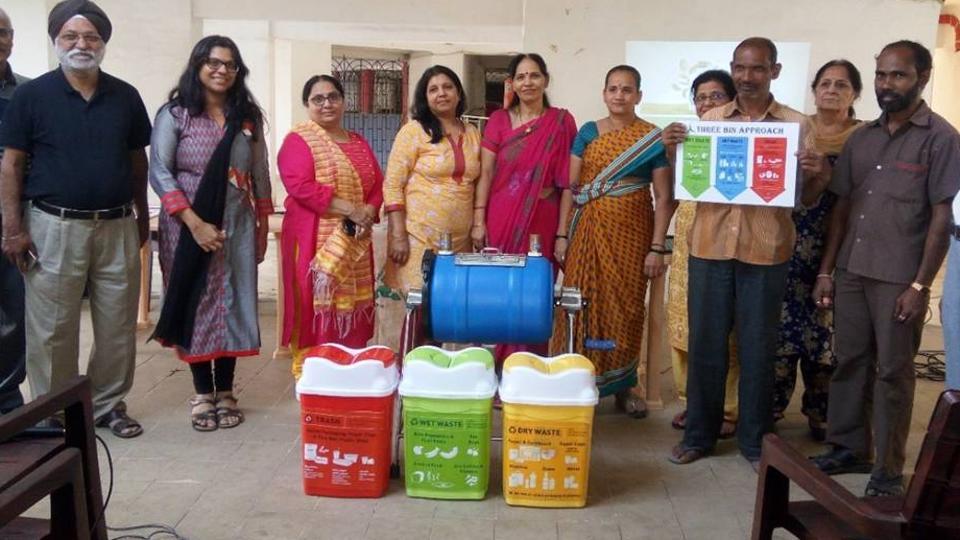
“After a comprehensive study of various composting techniques, we found the solution offered by RUR to be the most feasible. It helped us understand the process of scientific composting by regular monitoring of pH (a scale of acidity from 0 to 14) and temperature. Now we treat our waste in our own building, and the compost generated is used for our fruit plants, potted plants and garden area,” said HB Singh, a resident of the society.
Besides the organic waste, Malhar residents also recycled 650 kg of dry waste and until now sent 2,000 Tetra Pak cartons collected from the society for recycling. By adopting the waste management system, the society mitigates more than 70kg carbon dioxide (CO2), generated owing to the transportation of waste from societies to landfills.
The society has installed three bins – wet, dry and trash – to segregate organic waste. The dry waste on the other hand is stored in seven different bins – hard plastic, soft plastic, glass, Tetra Pak cartons, paper and cardboard, electronic waste, and metals. “Our composting system does not require any cost rather brings in some money. Likewise, the seven-bin waste segregation setup under the project also brings in money by the sale of recyclables. We disburse the money among the operating staff,” said JB Sharma, another resident.
Monisha Narke, founder and chief executive officer, RUR Greenlife said, “This form of circular economy is highly sustainable and is a holistic solution to waste management. It not just results in waste management but also aids in remediation by replenishing nutrients back to soil, mitigates greenhouse gases generated due to transportation of waste from source to landfills.”


