
 E-Paper



Make learning practical, teach students job-oriented subjects: Educators
Currently, students have to study co-curricular subjects, such as personality development, career guidance, health and physical education, information and communication technology, NCC and work-experience, which carry 50 marks each. The marks obtained are later converted into grades.


With the state school education department planning to revamp the syllabus for subjects like National Cadet Corps (NCC) and work-experience in Classes 9 and 10, city schools want more job-oriented subjects and no written exams to be introduced.
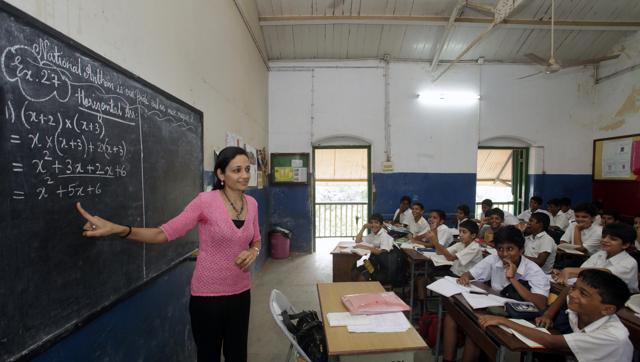
Currently, students have to study co-curricular subjects, such as personality development, career guidance, health and physical education, information and communication technology (ICT), NCC and work-experience, which carry 50 marks each. The marks obtained are later converted into grades.
Educators, however, have demanded that job-oriented and modern courses, which will enhance students’ skill sets, must be taught to students. “Many graded subjects taught in schools are outdated and have no practical utility,” said Suresh Nair, principal, Vivek Vidyalaya and Junior College, Goregaon.
In many schools, carpentry and sewing are taught in work-experience, but these skills do not hold any importance in the job market, said teachers. “Instead of carpentry, students should be taught designing and programming,” said Uday Nare, senior teacher, Hansraj Morarji Public School, Andheri.
Several international and non-state board schools are joining the ‘maker movement’ in which students are taught to use 3D-printers, modern software to give shape to their ideas and become creators instead of consumers.
But teachers admitted that many state-board schools might be unable to afford such technology. “Providing sophisticated equipment and training teachers to use them is expensive and will drive up the school fees. The board should find a way to subsidise these programmes for schools,” said Nare.
Lack of transparency in assessing these subjects is another obstacle towards increasing the value of these subjects, said educators. “Neither schools nor students are taking these subjects seriously. Schools are blindly grading students as the assessment is at the school-level,” said Vasant Kalpande, former chairperson of the Maharashtra state board.
Kalpande and a few other educators part of Shikshan Katta, an independent discussion forum, also recommended scrapping written exams for these subjects. “Instead of mugging up theory, the focus should be on practicals. Students too will enjoy the subjects this way,” said Basanti Roy, former secretary of the state board and convener of the Katta.
The education department should also allow schools to hire specialised teachers for these subjects, said educators. “Aided schools don’t get approval for too many teachers and as a result, a teacher teaching history or science ends up teaching all graded subjects,” said Father Francis Swamy, joint secretary, Archdiocesan Board of Education, which runs 150-odd schools in Mumbai.
What are graded subjects?
The Maharashtra State Board of Secondary and Higher Secondary Education awards grades instead of marks to co-curricular subjects, which include National Cadet Corps, work experience, information and communication technology, health and physical education, among others.
How are they evaluated?
A written exam is conducted at the school-level for these subjects, except for ICT. Each subject carries 50 marks. The marks are later converted into grades. The ICT exam is conducted online by the board. There are no checks on how schools assess these subjects.
What teachers suggested
Scrap written exams: Every graded subject has a 50-mark theory component, which is tested in a written exam. These subjects do not need written exams
Focus on practical component: Since these subjects are skill and application-based, teachers said that they can be best assessed through a practical exam. Teachers must assign hands-on activities to students instead of asking them to mug up theory
Introduce job-oriented subjects: Most of the graded subjects being taught in schools are outdated and irrelevant. These must be replaced with job-oriented subjects that will enhance students’ skill set
Transparency in assessment: The board should appoint external examiners to evaluate these subjects instead of leaving it to schools. This will ensure transparent and fair assessments and students will take the subjects seriously

Stay updated with all the Breaking News and Latest News from Mumbai. Click here for comprehensive coverage of top Cities including Bengaluru, Delhi, Hyderabad, and more across India along with Stay informed on the latest happenings in World News.


