
 E-Paper



State awaits nod to release Avni’s cub after monsoon
The decision to release T1C2 was taken on Thursday during a meeting chaired by principal chief conservator of forest (PCCF) wildlife with forest officials and the committee constituted in November 2018 to oversee the cub’s capture and behaviour and captivity.

 Prefer HTon Google


After failing to release the female cub (T1C2) of alleged man-eater tigress T1 or Avni last year, the Maharashtra forest department has yet again decided to go ahead with the plan this year post monsoon.
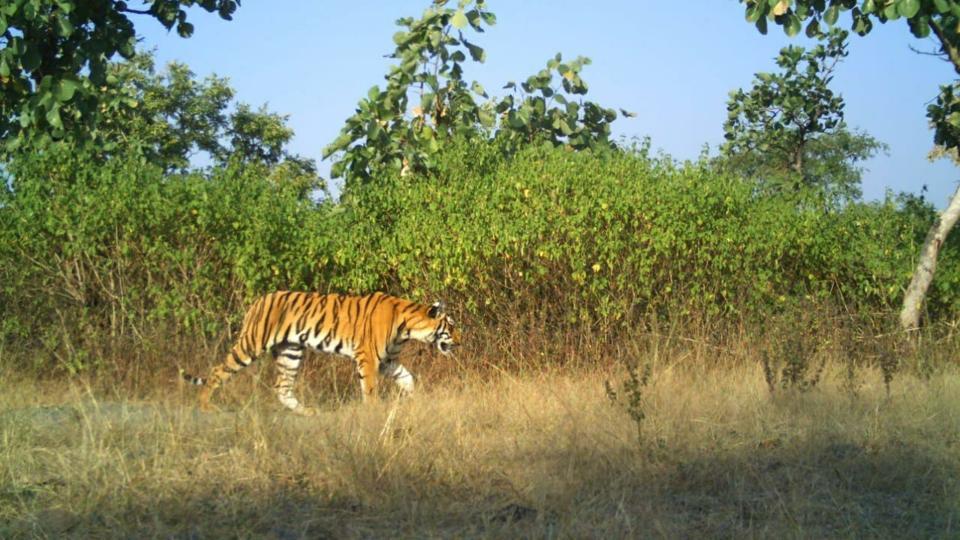
T1C2, now a sub-adult tigress, aged two-and-a-half years, has been kept in captivity in a 4.5-hectare (ha) area in Pench Tiger Reserve since December 22, 2018. She was captured around a month after Avni was shot dead by a father-son hunter duo hired from Hyderabad on November 2.
The decision to release T1C2 was taken on Thursday during a meeting chaired by principal chief conservator of forest (PCCF) wildlife with forest officials and the committee constituted in November 2018 to oversee the cub’s capture and behaviour and captivity. However, the forest department needs approval from the National Tiger Conservation Authority (NCTA) before releasing the animal back in the wild.
“T1C2 has been showing all traits of a tigress that can hunt and kill in the wild. She is fit for release. A proposal to that effect will be submitted in the coming week to NTCA. Based on their approval, we should be in a position to release the tigress in a couple of months or just after monsoon,” said Nitin Kakodkar, PCCF (wildlife), Maharashtra.
PCCF added that three locations had been shortlisted as possible areas of release — Navegaon-Nagzira Tiger Reserve in Gondia, Pench Tiger Reserve in Nagpur and Melghat Tiger Reserve in Amravati. “As of now, Navegaon-Nagzira looks most promising as there is a low tiger population. However, this will be finalised based on NTCA’s nod,” said Kakodkar.
SP Yadav, member secretary, NTCA, said, “We are aware about the matter. A decision will be taken once we receive their (Maharashtra’s) proposal.”
Last year, the state had planned a similar release after monsoon but met with complications with NTCA guidelines. “Some activities as per NTCA’s standard operating procedure (SOP) still needed to be studied. For example, the number of prey killed by her, prey base, and frequency of kills etc. We were not complying with NCTA’s SOP then. All conditions are met now,” said Kakodkar.
One of the committee members requesting anonymity said, “We were monitoring her behaviour using CCTV. She was too young to be released last year, and would not have survived in the wild.”
Former member of the National Board for Wildlife (NBWL) Kishor Rithe said the tigress’s timeline in captivity and extent of human imprint (changes in behaviour in captivity) were two crucial factors. “If we are sure that there is no human imprint on the animal then it is fit for release. Also, the time period between the animal’s capture and translocation has to be minimum. In this case, the period is more than one-and-a-half years. I have serious doubts about this experiment,” said Rithe.
Earlier this year, a rewilding experiment in Madhya Pradesh’s Bandhavgarh Tiger Reserve had failed after two tigers were shifted to a Bhopal zoo after they were found incapable of hunting wild prey. Tiger cubs usually mature slowly and stay with their mother till at least eighteen months, after which they disperse into the wild in search of new territory.
“One school of thought says there is nothing like human imprint on large carnivores. However, if her release is happening as per NTCA protocol and assessed in a scientific manner, it should be done. The animal cannot be kept in captivity for life,” said Dr Prayag HS, former chief wildlife veterinary officer, Karnataka forest department.
Tiger scientist from Wildlife Institute of India (WII) Bilal Habib said, “Since T1C2 was captured, it was decided that she would be released. She was kept away from humans and all efforts have gone into ensuring minimal human imprint unlike other captive animals. Thus, it is the right decision to release her back into the wild.”
WHY WAS T1C2 CAPTURED
Tigress T1 or Avni was shot dead by a father-son hunter duo hired from Hyderabad on November 2, after it was said that she killed 13 people in Pandharkawada forest in Ralegaon, Yavatmal. The forest department began the capture of her male and female cubs soon after as they were too young to fend for themselves in the wild and could have fallen prey to infighting among other tigers. It was also suspected that the cubs allegedly posed a threat like T1. While T1C2 was rescued on December 22 with the help of Madhya Pradesh forest department and sent to Pench, the male cub T1C1 remained elusive.


