
 E-Paper



Why we should not be trigger-happy
I have never been a war-monger because of that early exposure to the personal price we pay for other people’s goals


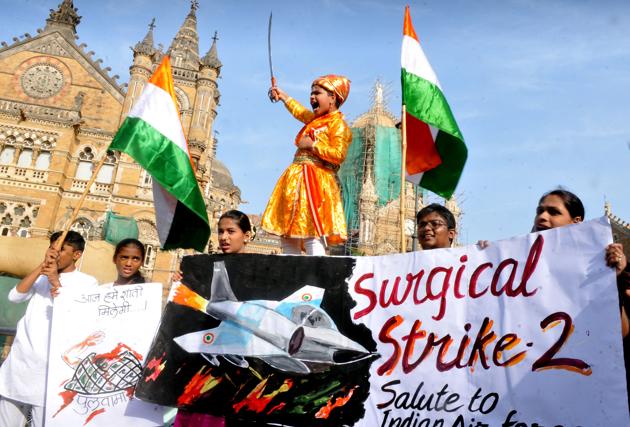
As I woke up to the news of the strike by the Indian Air Force deep into Pakistan territory on Tuesday, a part of me jumped with joy, but there was another part that sobered me instantly.
I was in school when India went to war with Pakistan over Bangladesh – too young to assess the consequences, but old enough to understand the feeling of gloom that instantly covered the homes of the army personnel at the defence unit where my father was posted. Some of the soldiers did not return and I have never forgotten the devastation their families suffered.
I have never been a war-monger because of that exposure to the price we pay for other people’s goals. The 1971 war was about the assertion of political superiority by leaders of all three nations, India, Pakistan and the soon-to-be-formed Bangladesh.
But the current situation, which is far removed from 1971, where both the nations have nuclear weapons, messages travel at the speed of light and there’s jingoism on television channels in both countries [Didn’t a Pakistani anchor threaten us with atom bombs because we stopped sending tomatoes to Pakistan after Pulwama?], brings out concerns about how we might react. In 1971, I had not known what a war correspondent might be, but in the late 1980s as I cut my milk teeth at a news agency, I signed up with them to report on the escalation at the borders during Rajiv Gandhi’s regime, when it seemed as though we would go to war with Pakistan. Nothing came of it, but I came back with this memorable story that was told to us as a warning not to report incorrectly. All naval ships were on red alert off the Mumbai (then Bombay) coastline in 1971 and that’s how far the war correspondents of the two leading news agencies got at the time. But they were suspicious of each other as both wanted to be first with their “flashes” in case anything happened. Bombay was under complete blackout and you could hardly see a few metres beyond your own hands. So when a trigger-happy sailor accidentally set off his machine gun, all ships fired in the direction of the sound of that gunfire. The two reporters on board the ship that had radio communications set up for them ran for that single line. Of course, only one could get into the communication room first. Without bothering to cross check, his single line flash went out – Bombay tonight came under enemy attack for the first time!
There was no Doordarshan then, but All India Radio picked up the flash from the agency. BBC quoted AIR on it, Voice of America relayed it from BBC. A jubilant Radio Pakistan quoted VOA to announce the Indian Navy had been destroyed and the Pakistan defence establishment seemed to confirm it without cross-checking. Our ministry of defence was furious when it realised what had happened , but it was only after Pakistan’s plans to destroy the Indian Navy recently came to light through the Alia Bhatt-starrer ‘Raazi’ that I realised why Pakistan should have thought it had achieved its goal. From the Indian side, our navy got a scare, but then a sheepish retraction of the false alarm went out from the agency that had erred. The incident could, however, have led to a lot of collateral damage.
It was stressed to us then why we must never be jingoistic about war, sadly many of us are today. Of course, many retired army men and politicians, who have nothing to lose in a war, are being even more trigger-happy than that poor sailor who almost set off an attack on the Bombay harbour. He lost his job. So did the reporter. And Mrs Indira Gandhi, like Winston Churchill, won the war, but lost the next election. That is a sobering thought.


Stay updated with all the Breaking News and Latest News from Mumbai. Click here for comprehensive coverage of top Cities including Bengaluru, Delhi, Hyderabad, and more across India along with Stay informed on the latest happenings in World News.


