
 E-Paper



A national monument, a cradle of leadership
NDA, the alma mater of a significant majority of India’s military leadership, turned 75 in January. The journey so far, and the path ahead

 Prefer HTon Google


Laying the foundation stone of India’s National Defence Academy (NDA) in 1949, then Prime Minister (PM), Jawaharlal Nehru called it a “monument in the making”. Not only did the NDA emerge as an imposing national monument, it also became the embodiment of a pioneering concept, wherein entrants into the Army, Navy and Air Force would receive basic training in the same institution. Field Marshal Sam Manekshaw wrote that the rationale underpinning this radical idea came from “…the lessons of WWII, that the three services had to be fully integrated and functioning as a single striking force in war… this could be most effectively achieved by starting at the grassroots. i.e., by officer cadets being trained together, in the same academy.”
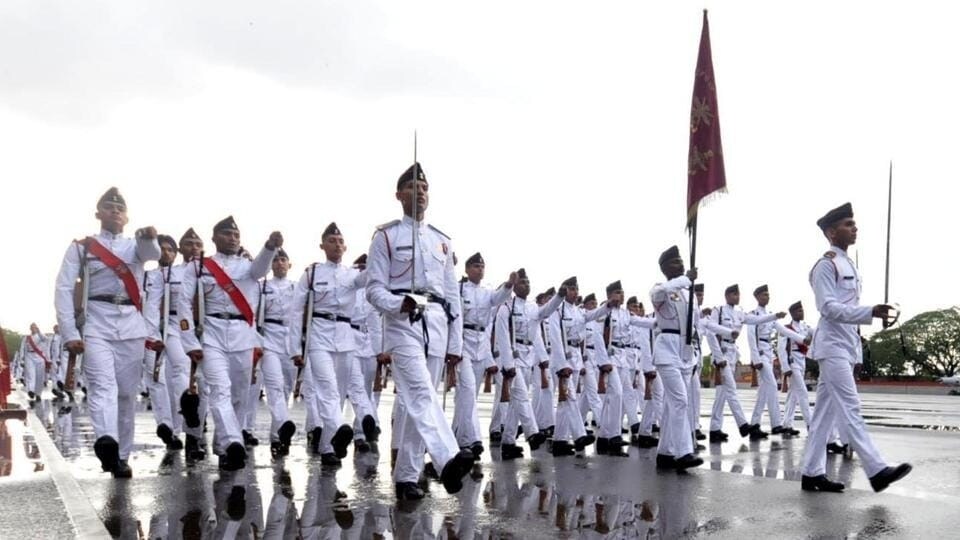
As the academy celebrates its 75th anniversary this month, it can proudly claim to be the “alma mater” of a significant majority of India’s military leadership. Many yardsticks can be employed to assess the performance of this grand old institution, but two critical metrics bear scrutiny at this juncture. One is the NDA’s success in fostering integration/jointness — which was its raison d’etre — and the other is how well it has justified its popular title of “cradle of military leadership”.
In 1991, 40 years after they passed out of the NDA, three cadets of its 1st course rose to become Army, Navy and Air Force chiefs, near-simultaneously. Three decades later, we have another rare “conjunction of planets” with all three current service chiefs emerging from the 61st NDA course. It would be hard to imagine a more favourable situation for synergy and cooperation among the three services.
The stark reality, however, is that the past seven decades have seen little or no progress towards attaining the “holy grail” of jointness, visualised by Manekshaw. This is despite the creation, at PM Narendra Modi’s behest, of the long sought-after post of Chief of Defence Staff (CDS) and a department of military affairs. The clear Cabinet mandate given to the first CDS in December 2019 was: (a) to “bring about jointness within three years,” and; (b) to “establish joint/theatre commands”.
A prolonged gridlock at the highest echelons of the military seems to have followed. Since the reasons are not known, it is commonly assumed that serious differences between the three service Chiefs regarding the sharing of assets as well as “command and control” of military capabilities have blocked decision-making. This casts into doubt the validity of premises that we have taken for granted so far.
The structure and orientation of “grassroots” training in the NDA have, clearly, been inadequate to inculcate an enduring spirit of jointness among the cadets. Consequently, the assumption that “schoolboy friendships” formed during NDA training would automatically transmute into actual jointness when these individuals reached higher ranks has proved fallacious. Service parochialism frequently trumps jointness.
But the full onus of responsibility cannot be placed on the NDA. Other institutions of higher military learning too, such as the Defence Services Staff College and the National Defence College, were designated as “tri-service” in the hope of promoting a spirit of jointness amongst officers receiving higher military education but saw limited success. Thus, over the past decades, while the concept of jointness has received effusive lip service from the military’s leadership, its actual implementation has remained stalled by subterranean resistance.
This brings us to the second metric: Leadership, for which I hark back a few decades.
Having passed out of the NDA’s portals in 1964, I returned 33 years later as its commandant to find that the institution had seen a vast improvement in many ways. What came as a nasty surprise was the advent of a new ethos, which required a cadet to possess a basic “skill set” for survival. This included cheating, manhandling juniors, minor theft, and even impersonation — all against the academy’s rules and unheard of in our times. Even more dismaying was the benign and tolerant attitude of the training staff towards such misdemeanours.
Having emerged from the same system just a few years earlier, the young staff officers believed that not only was such conduct an “academy tradition” but that unless a “smart” cadet was resourceful enough to “beg, borrow or steal” a few small things, and tough enough to give and take a little manhandling, he would be useless as an officer!
Corrective measures including an “honour code” system were instituted in the NDA. But on reflection, a larger, more worrisome message emerged. One realised that the fundamental cause of trespasses by senior military officers in recent times boiled down to the individual’s “moral compass” wandering. Clearly, the initial setting of this moral compass took place during basic training, due to the brainwashing that justified, seemingly, minor delinquencies. Such a mindset mutated over time into serious character flaws, which led to major ethical lapses and misdeeds by senior officers.
In conclusion, there are three messages that an alumnus would like to convey on this occasion to the NDA, the Indian military’s most loved and venerated institution.
First, a genuine spirit of jointness needs to be instilled in the cadet body not as a mere token of teenage camaraderie, but as an operational imperative for future Army, Navy and Air Force officers. They must be taught through historical experience and contemporary examples the critical importance of jointness in modern warfare, and how India lags behind other military powers in this regard.
Second, cadets must be constantly reminded that their countrymen expect the armed forces to be not only exemplars of integrity, professionalism and excellence but also steadfast upholders and defenders of the Constitution of our secular democratic Republic. Their standard of conduct must always be distinct and above that of civil society because the armed forces set their values and abide by their regulations.
Finally, even as they are moulded into uncompromisingly honest, upright and ethical individuals, it must be impressed upon the cadets that moral courage is as important for a military leader as physical courage, and the ability to “speak truth to power” must be seen as a cherished quality.
Arun Prakash is a former chief of naval staff. The views expressed are personal


