
 E-Paper



Adolescence becoming uncharted waters now
Children’s access to smartphones and their participation in social media has created an altogether new reality

 Prefer HTon Google


Many parents whose children are at present nine or 10 years of age will shortly find themselves in an unknown territory. This was not so two decades ago.
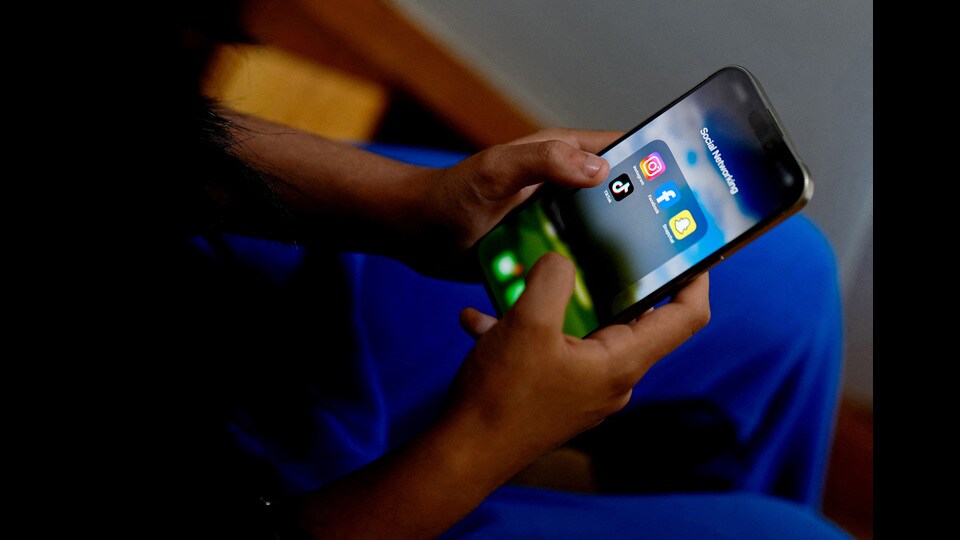
Research on adolescence had generated, over the previous half-century, a considerable amount of knowledge about this turbulent period of life. Teachers were told about its typical characteristics in different cultures. Some who became school counsellors knew what to do when faced with difficult behaviour or the emotional turmoil that children experience when adolescence sets in. The changes their minds and personalities go through were viewed with confident familiarity by staple psychology texts.
This is no longer the case. A new book, The Anxious Generation, argues that children’s access to smartphones and their participation in social media has created an altogether new reality.
The author, Jonathan Haidt, presents copious scientific evidence to discuss the impact of virtual reality on the adolescent mind. The latter’s vulnerability is no news, but the tidal wave of mental illnesses among the young certainly is.
Haidt is concerned mainly with American children, but the scenario he draws is global. We can witness it in our cities and district towns, and we can’t judge how far it has already spread to villages.
Despite parental complaints, the crisis they face has not been acknowledged. Among teachers too, there is acceptance of a problem, but neither its nature nor scale has entered public debates.
The hesitation stems from two sources. First, a sense of pointlessness in discussing something unavoidable; and second, a despair that nothing can be done. The issue seems too huge to handle at the individual level.
At the same time, it is no laughing matter to arouse the collective concern and energy needed to make decisions. Any attempt to persuade people to protect their children from the dangers they face on the internet and social media necessarily faces serious doubts.
One is that even if a family succeeds in keeping a child off the internet, the child will find some other way to access it. Won’t that be worse? Schools regard it their duty to introduce children to the internet. It is part of digital literacy. It is also seen as a means of an easily accessible learning resource.
Haidt provides clarity on ways in which smartphones and other digital devices may disturb the normal development of children’s intellectual capacity.
The three broad routes of adverse impact are sleep deficit, social deficit, and addiction. Haidt’s book also draws attention to some new dimensions of concern. For instance, he talks about impulse control capacity in the brain. It is a function of the frontal cortex which develops in a relatively late phase of puberty.
Its development is disturbed by the new technologies that habituate children to seeking quick responses. Smartphones and social media encourage this tendency — something that adult users and parents may not experience and notice.
Reading Haidt’s book, one becomes aware of the rapid pace at which parental anxiety has grown over the recent years on a global scale. Parallel to it is the growth of parental insecurity and chronic anxiety. It is not clear whose responsibility it is to alleviate these feelings.
Can the State tame the companies that dominate the internet? Recently, Meta — the company that owns Facebook — has provided a long-delayed response to the demand for protecting children, by making parental approval a requirement for joining social media. In a few countries, led by Australia, a new law has been passed to fix the minimum age for participation in social media. When this law comes into force next year, children would have to wait till they are 16 before they can join social media.
As a step towards reaffirming children’s rights, such moves are good, but they may prove a bit too weak and late, considering how early a vast number of parents permit, and even encourage, children to use smartphones — to remain quiet.
The point that adolescence is a period when children struggle to establish their own identity is common knowledge. This struggle is known to take rather different forms in boys and girls. The latter’s struggle for identity is more difficult because the stereotypes they face in everyday life are so strong.
Teenage boys, by comparison, live in a world that boosts masculine self-stereotyping. Such boosting apparently occurs at the expense of girls. Their attempt to copy the typical behaviours associated with masculinity often leads to further deeper insecurity which is vigorously hidden.
The Hindi poet and thinker, Mahadevi Verma, had pointed out that anusaran (following) and anusaran (copying) are two common ways in which girls and women try to become like men. In his book, Haidt underlines the fact that the negative consequences of smartphones and social media are far worse for girls.
Krishna Kumar is a former director of NCERT and the author of ‘Thank You, Gandhi’. The views expressed are personal


