
 E-Paper



Behind the de-hyphenation of India and Pakistan in cricket
BCCI leveraged the IPL as an exclusionary tool, denying the Pakistan robust cricketing experience. As a result, the rivalry has lost much of its thrill

 Prefer HTon Google


Pakistan likes to blame India for many of its failures and shortcomings, most of which are frivolous and laughable. But if Pakistan were to blame India for its exit from the Champions Trophy 2025, then undoubtedly there would be an element of truth in it. By not permitting Pakistani players to play in the Indian Premier League (IPL), the Board of Control for Cricket in India (BCCI) very effectively denied them the benefit of the experience they would have otherwise gained. As a result, another world cricket tournament and another first-round exit for the team. Pakistan’s exit from the Champions Trophy seemed to very much follow the script of the 2024 T20 World Cup. BCCI has successfully leveraged the IPL as an exclusionary tool by not permitting Pakistani players to play in one of the prestigious cricketing leagues of the world. Since the beginning of the competition, Pakistani players have only featured once in the IPL — the inaugural session in 2008. After that, Pakistani players were banned from the IPL because of Pakistan’s support to cross-border terrorism.
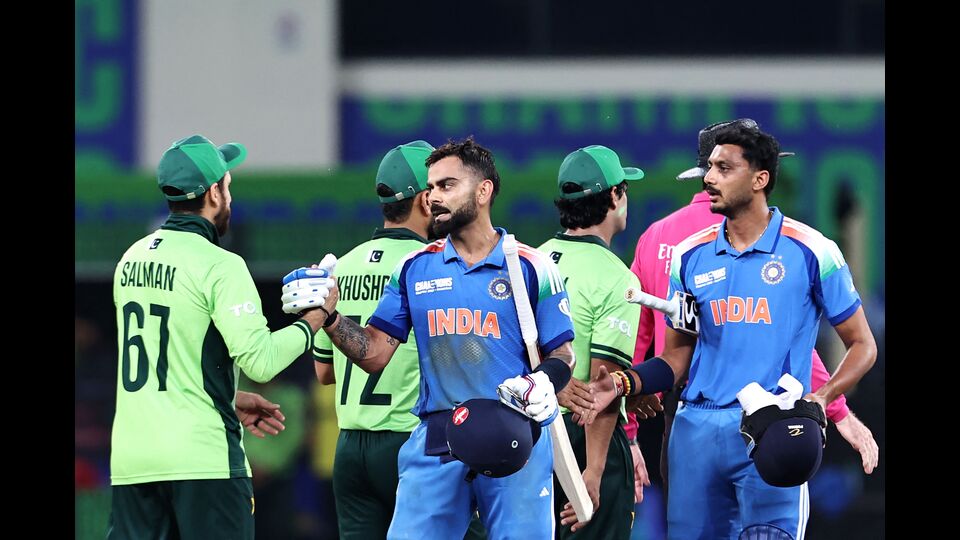
By not permitting Pakistani players to play in the IPL, BCCI had deprived Pakistani players of a significant opportunity to play in a competitive environment, learn from some of the best in the game, adapt to different conditions, and test their mettle against top-class opposition on a consistent basis. Very importantly, BCCI also deprived Pakistani players of the experience of playing in front of large crowds. As a result, when Pakistan was playing in Ahmedabad in 2024, their players seemed like deer caught in the headlights, unable to adapt to the stress of playing international matches in front of large, hostile crowds. The inadequacy of their preparation became glaringly apparent, and what followed was almost predictable — a first-round exit. On the other hand, Australia very much used the experience gained by their players from IPL in the way they played the final of the T20 World Cup.
Fast forward to the Champions Trophy, and the narrative is similar. Pakistan entered the tournament laden with expectations from its passionate fans, but dreams of a glorious home tournament were dashed in a matter of days. It very soon became clear that the Pakistani players lacked the required depth and intensity. As a result, Pakistan didn’t even win a single match in this tournament. Once again, the consequences of being left out from IPL were evident — game strategy, quick reflexes, and tactical nuances that are honed in the pressure cooker of league cricket seemed absent. It was as though Pakistan’s players had been operating on outdated training manuals while their competitors were living in the fast lane, embracing modern cricket’s frenetic pace.
Now switch to the case of Afghanistan. In a sensational showdown, Afghanistan knocked England out of the Champions Trophy 2025. Star batter Ibrahim Zadran led the charge with a 177-run masterclass, while Azmatullah Omarzai’s five-wicket haul dismantled England’s hopes. Even though Afghanistan was later eliminated because of a rain-washed tie against Australia, the press, world over, acknowledged the meteoric rise of the Afghani team. BCCI has certainly played a part in this — the number of Afghan cricketers playing in the IPL has consistently increased. In fact, seven of the Afghani players in the current team had IPL contracts previous year, while four of them having signed contracts for this year’s IPL season 2025, including Omarzai. The exposure gained by Afghan players in the IPL has undoubtedly helped them elevate their game and handle pressure situations better, reflected in their rise in the world cricket rankings and their commendable performances in international tournaments.
Support for Afghanistan has been like a double whammy for Pakistan. BCCI has not only choked an important avenue of cricketing experience for the Pakistani players, by providing financial assistance, political support, the use of Indian grounds, and advocating for its inclusion in international cricket forums, it has also created a nexus of goodwill in Afghanistan. And it is not a coincidence that this has happened at the same time as a deterioration in Pakistani-Afghani relations.
All International Cricket Council (ICC) tournaments now follow a predictable pattern — India consistently emerging as Pakistan’s bogey team. The once-thrilling Indo-Pak rivalry is in danger of losing its allure. Matches that were once celebrated for their nail-biting drama have turned into one-sided affairs.
Just as geopolitics has seen the de-hyphenation of India and Pakistan, cricket is following the same path. Without firing a single bullet, the BCCI has achieved something far greater than just sporting dominance.
Aman Singh is president and head of strategy, chairman’s office, Adani Group, and Shishir Priyadarshi is president, Chintan Research Foundation. The views expressed are personal


