E-Paper



Climate and Us |The dangers of omitting gram sabha consent in new forest rules
By removing the obligation for gram sabha consent for project clearances, the Forest Conservation Rules 2022 deal a huge blow to the process of scrutinising projects, and in turn, disempower the forest-dwelling community.


Obtaining gram sabha consent for any infrastructure project, from mining to industry, in forest areas has been a huge challenge for the Centre and state governments. As part of my reporting on forest conservation, I have come across several cases where locals have found that their consent was either forged or forced through indirect intimidation. And yet, the provision of gram sabha consent along with recognition and settlement of forest rights are the only two checks available for forest-dwelling communities to have their say in projects involving the diversion of forestland.
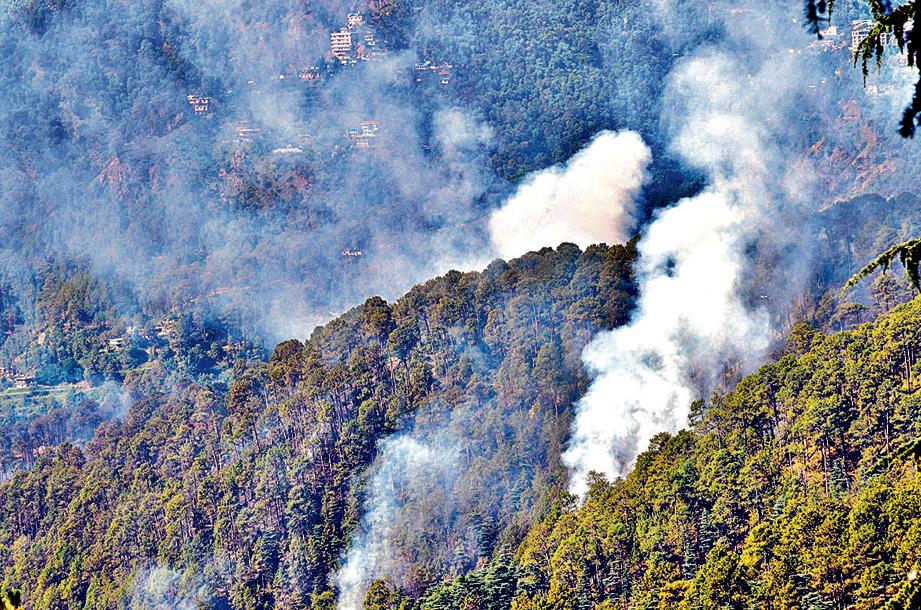
The power of the gram sabha
The ministry of environment, forest and climate change (MoEFCC) issued a notification on the Forest Conservation Rules 2022 on June 28, which received a lot of criticism from Opposition parties and legal activists for their dilution of certain provisions on recognising forest rights before a project is granted forest clearance. What also emerged last week was that the rules have removed the obligation to get gram sabha consent before forest clearance is granted to a project. The rules — which replace the forest conservation rules of 2003 — will be placed before both Houses of Parliament during the monsoon session, scheduled to commence on Monday.
Lawyers working on forest and wildlife matters said the gram sabha clause missing from the rules could deal a huge blow to the process of scrutinising projects that come up in forest areas. “This clause mandating that prior informed consent of the gram sabha be obtained by the district collector and sent to the nodal officer dealing with the forest clearance of the project was first introduced in the forest conservation amendment rules of 2014. It is a very empowering clause, but now it finds no mention in the 2022 rules. On settling and recognition of forest rights in the forestland concerned, at least the rules state that the state government must complete the formalities before the land is diverted. We see it as a major dilution of the norms,” said a lawyer to me during discussions on various changes made by the new rules.
While the provision that forest rights be recognised by the state government after a forest nod has been already granted by the Centre has received widespread media attention, the missing clause on gram sabha consent has still not been discussed and debated as much as it should be. Senior officials of the forest conservation division of MoEFCC explained that the clause may be missing in the rules, but state governments are welcome to seek gram sabha consent before they divert land for any project.
Over the years, ensuring gram sabha consent for project clearances has been a tedious process. Most mining projects in central India including states such as Chhattisgarh, Odisha, Jharkhand, and Madhya Pradesh are in blocks underneath dense, rich forests that provide food and livelihoods to locals. Forests invariably support the lives of locals when other income sources are few and far between.
For example, forest-dwelling communities depend on forests near them for minor forest produce that can be collected and used or sold. They also depend on water sources within forests. Most of these communities understand that the loss of forests can trigger an increase in human-animal conflict and change the micro-climate of the region. There are rights-based organisations also working in most of these states who work closely with communities to educate them on forest rights and the powers of the gram sabha.
Omitting the provision on informed consent of gram sabha is a consequence of these challenges and the delay it leads to in appraising every forest-related project. But if the provision is not clarified or restored, there may be backlash from tribal communities across the country. Such a move will go against the spirit of the forest rights act and the concept of equity and justice for forest communities.
The equity issue
An unrelated, but significant, development on equity also happened last week. Equity in climate crisis negotiations has been among the most contentious and polarising topics. It revolves around one question: Who is liable for mitigation of the climate catastrophe?
Last week, a study on climate liability claims shows the concept of equity can be interpreted by both developed and developing countries to suit their economic and development goals. But, a deliberately misplaced interpretation of the concept would mean injustice and subjugation of millions of poor people.
Here’s why.
On July 12, the journal, Springer, published a paper by authors from Dartmouth College titled National attribution of historical climate damages which said: “a sound scientific basis exists for climate liability claims between individual countries.”
The study, according to the authors, is the first to assess the economic impacts that individual countries have caused on other countries through their contribution to global warming. It draws connections between cumulative emissions of nations to losses and gains in Gross Domestic Product (GDP) in 143 countries. The paper found that the top five emitters (the United States, China, Russia, Brazil, and India) have collectively caused $6 trillion in income losses from warming since 1990, comparable to 14% of annual global GDP.
Yet, the distribution of warming impacts from emitters is highly unequal: High-income, high-emitting countries have benefited, while harming low-income, low-emitting countries, emphasising the inequities embedded in the causes and consequences of historical warming, the paper concludes.
But, why does the paper choose 1990 as the base year to consider historical cumulative emissions? Possibly because it can suit a certain narrative about high-emitting countries in a more effective manner. If the paper would have chosen say 1900 as the base year, the results would have been vastly different.
“Our main analysis uses territorial emissions accounting from 1990 to 2014, but other accounting choices are equally valid. Consumption-based accounting incorporates emissions embodied in international trade and shifts the spatial pattern of attributable damages, in particular diminishing the income changes attributable to countries in the Eastern Hemisphere. Under consumption-based accounting, attributable damages increase by 1.5% for the US, increase by 10-20% for some European countries, and decrease by 15% for Russia and 9% for China, expanding the gap in responsibility between the US and all other countries,” the paper goes on to explain.
Considering that equity is a principle under the Paris Agreement, such research papers should be sensitive to the vast differences in results when consumption-based emissions since the industrial period are considered. The burden of greenhouse gas emissions considered from 1990 onwards will list some developing countries, including India, among the list of top polluters.
But is it a just way to quantify the liability of the climate crisis?
From the climate crisis to air pollution, from questions of the development-environment tradeoffs to India’s voice in international negotiations on the environment, HT’s Jayashree Nandi brings her deep domain knowledge in a weekly column
The views expressed are personal
 ABOUT THE AUTHORJayashree Nandi
I write on the environment and climate crisis and I believe these are the most important stories of our times.