
 E-Paper



Court takes a key stand on marital rape, POCSO
The SC has established a clear path toward the exercise of reproductive autonomy. In a world where the Supreme Court of the US finds inspiration in British jurists from the 17th century while deciding to divest women of their most fundamental rights, this judgment is a watershed

 Prefer HTon Google


Women have fought to assert autonomy over their bodies for many centuries. The fact that biology dictates that a woman’s body is the incubator of new life has added a dimension to this battle. On September 29, the Supreme Court (SC) passed a progressive judgment in this regard, laying down strong principles in support of reproductive rights and erasing the distinction between married and unmarried women under the Medical Termination of Pregnancy (MTP) Act. In a simple but important acknowledgement of a woman’s autonomy over her body, particularly when access to an abortion is still conditional on the approval of medical practitioners, the court held that “significant reliance ought to be placed on each woman’s own estimation of whether she is in a position to continue and carry to term her pregnancy”.
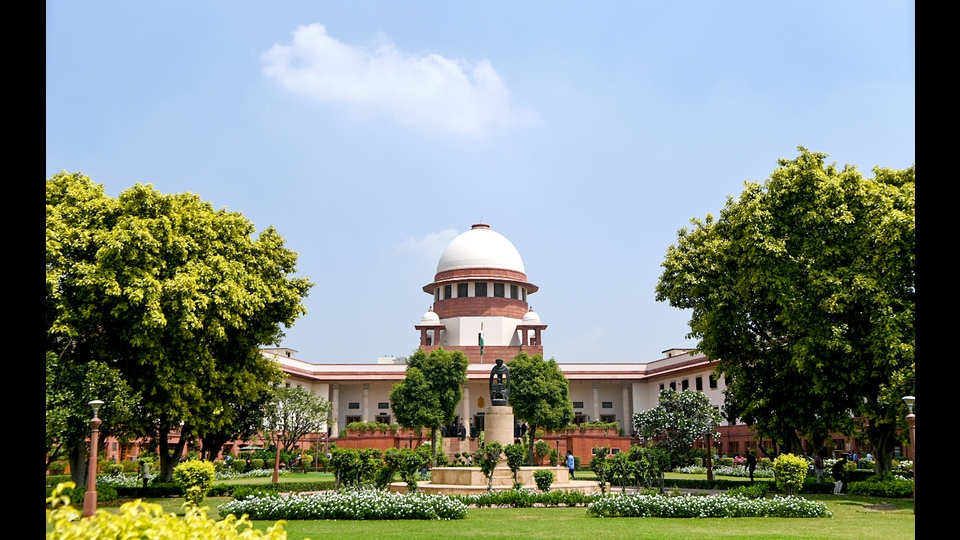
Perhaps the two most significant observations of the court were those on marital rape and dispensing with reporting requirements under the Protection of Children from Sexual Offences Act, 2012 (POCSO).
One of the several exceptions permitting abortions between 20 and 24 weeks is if the woman is the survivor of sexual assault, rape or incest. The SC said that the exception will also apply to married women since “it is not inconceivable that married women become pregnant as a result of their husbands having raped them”. This is significant because an exception providing that a man cannot rape his wife remains on our statute books. A challenge to this exception resulted in a split verdict from the Delhi high court earlier this year, and now awaits determination by the SC. Yet in the case of X v. Principal Secretary, Health and Family Welfare, the SC laid down two foundational principles that will have a bearing on how we view marital rape. The court said that the contours of consent do not change with marriage and that the exception for marriage in the Indian Penal Code (IPC) is “legal fiction”. A legal fiction is an assertion that is accepted as true for legal purposes, though it may not be in reality. The SC bench that hears the case on marital rape will decide whether this “legal fiction”, exempting non-consensual sexual acts within a marriage from the ambit of rape, is to be retained. In this particular case, the SC specifically left that question open. However, the foundational findings, unless overruled by a larger bench, will shape the case on the criminalisation of marital rape because the fundamental debate — on whether rape can occur within marriage — now stands settled. Additionally, findings of this nature are often a bellwether indicator of how related questions may be decided.
The court also weighed in on another controversial provision. POCSO criminalises sexual activity with anyone below 18 with no exception for consensual relationships. The court noted that women under 18 engaging in consensual sexual activity ought to have access to safe abortions from a registered medical practitioner. Standing in the way of this is a mandatory reporting obligation under POCSO, where any person with knowledge of the commission of an offence has an obligation to report it. Failure to report entails criminal consequences. The court noted that the MTP Act recognises minors as a special category entitled to an abortion up to 24 weeks. Yet under the law, as it stands, the fear of being entangled in criminal proceedings under POCSO may prevent them from seeking medical attention.
To pave the way for safe abortions and also to give full effect to the right of a minor to access abortions till 24 weeks, the SC dispensed with the obligation on medical practitioners to disclose the identity of the minor while providing information under POCSO, if so requested by the minor and her guardian. While this case was about the realisation of reproductive rights, the SC’s recognition of the pitfalls applying POCSO to consenting minor relationships is significant. It will be interesting to see how it influences the way cases relating to consensual relationships between minors are adjudicated under POCSO in the future.
Meanwhile, it is clear that the SC has established a clear path toward the exercise of reproductive autonomy. In a world where the Supreme Court of the United States finds inspiration in British jurists from the 17th century while deciding to divest women of their most fundamental rights, this judgment is a watershed.
Shyel Trehan is a counsel practising in the Delhi high court and Supreme Court. She is a graduate of NLSIU Bangalore and Columbia Law School.
The views expressed are personal


