
 E-Paper



Gaze isn’t necessarily framed by gender lens
Cinema engages the human form with the surroundings, the scale, and the characters, which derive meaning through the fascination of the spectator.

 Prefer HTon Google


One of the formative works on gaze and visual art consumption, Ways of Seeing — a 1972 TV series created by writer John Berger and producer Mike Dibb for BBC Two — offers an exhaustive summary of themes that underscore visual depictions. “Men dream of women; women dream of themselves being dreamt of. Men look at women; women watch themselves being looked at,” Berger says at the beginning of Episode 2 – Women and Art. He makes a case for how heterosexual patriarchy dominated the arts through classical European paintings, some of the earliest platters for visual consumption before photographs and cinema made their way — a status quo maintained to date.
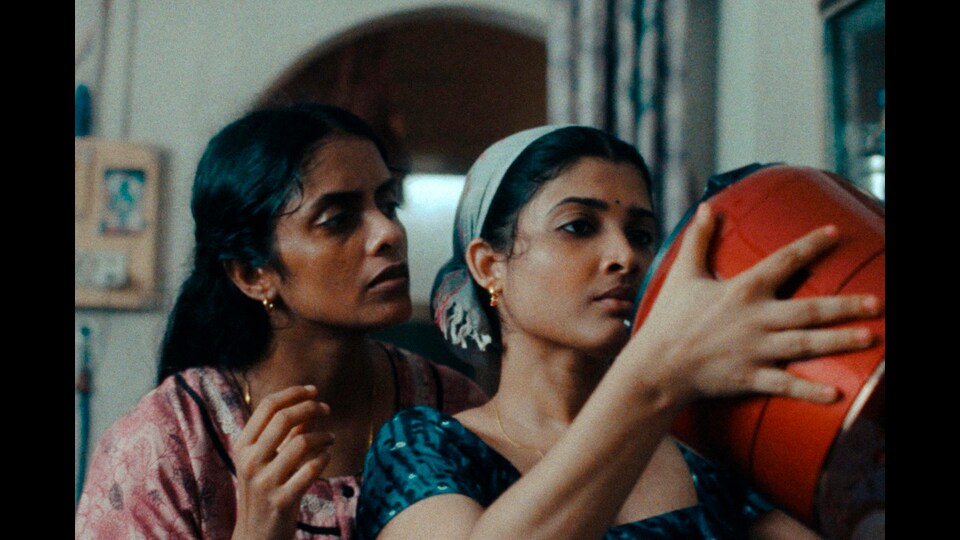
In a recent interview, Malayalam actor and the star of Payal Kapadia’s critically acclaimed film All We Imagine As Light, Kani Kusruti remarks that the male gaze is not limited by the gender that defines it. In simple words, the male gaze transcends boundaries of sexuality and identity to accommodate demand and supply nurtured by norms of performativity and perception. It has been reinforced too many times and has now become naturalised.
Take for instance, Bollywood directors Farah Khan Kunder or Pooja Bhatt, whose films Main Hoon Naa and Jism 2, respectively, use the women characters, and subsequently their identities and bodies, to drive a male-centric plot. In the former, a blockbuster starring Shah Rukh Khan, the characters of Sushmita Sen and Amrita Rao are used as pawns of objectification. Sen as Chandni Chopra, a sensuous chemistry teacher, is deployed to take under her wings and transform the wardrobe (and image) of a “tomboyish” Sanjana, played by Rao. Soon after the desired changes, Sanjana is turned into the eye candy of the college. Bhatt’s Jism 2 was termed an “erotic thriller”. The film was promoted on the plank that it starred Sunny Leone (as Izna), a former adult entertainer, marking her debut in Bollywood. Leone’s character is portrayed almost as an excuse for the hypersexualised scenes. Izna’s body is used as a site of male desire rather than the passion of romance it claims to depict.
At the centre of these depictions and consumptions is the female gaze, a close cousin of the male gaze but imagined by women through the perceptions of a heterosexual man. As stories being told by women, films by women directors often carry the burden of having to undo years of normative damage without accounting for the fact that women, too, are products of those norms. Film theorist Laura Mulvey, one of the first people to engage with the terminology “male gaze”, underscored that among the many pleasures that cinema might offer is scopophilia — to derive pleasure from watching others naked or engaged in sexual activity.
Cinema engages the human form with the surroundings, the scale, and the characters, which derive meaning through the fascination of the spectator, regardless of gender. In conventional mainstream cinema, this fascination is fed by a range of factors, including the body as a site of curiosity, projected desire, aspiration, and consumption, all of which overlap. Prolonged suppression of identity, repression of desire, and interminable standards of beauty play varied roles in this melee.
Over time, there have been attempts to feminise the gaze, an important step in breaking stereotypes. It seeks to subvert the male perception, which can also include demystifying its site, i.e., the body. However, this is where purpose matters over tokenism.
For instance, the viral Telugu item song Oo Antava from the Allu Arjun starrer Pushpa: The Rise typically depicts a seductress dancing amid a set of debauched men including the hero, with the exception that the lyrics are seemingly progressive. Loosely translated, the lyrics sum up to how “they scan me if I wear a skirt or saree. It is not the clothes that matter but men’s perception”. But here is the caveat: This is the extent of feminist progression made by the film. Without the lyrics, there is no telling if the song is a textbook item number or a pathbreaking lesson in women’s emancipation because the film offers no context which can help sustain the subversion of the lyrics. The intention behind the choice of words remains unclear.
So, what does true desire look like? Is there a way to depict it? There is no one answer, but one can look at depictions that attempt bits of cinematic realism. Cases in point can be Alankrita Shrivastava’s Lipstick Under My Burkha and Shyam Benegal’s Mandi, two very different films from different eras, but both of which make way for layered, robust depictions of desire as a deeply personal concept stemming from introspection rather than projection.
As Mulvey says, the contoured representation of desire in conventional cinema must be “attacked”, not to intellectualise art to the point of taking away the pleasure but “to conceive a new language of desire”, which “transcends oppressive forms”. The challenge is to refrain from the assumption that gender neutralises oppression. Gender can and does reinforce rigid ideas. It is intention which neutralises oppression.
The views expressed are personal


