
 E-Paper



Policies and People | Glasgow: The interconnections between climate disasters
In a climate-hit world, most disasters have deep interconnections. And, so the response cannot be fragmented


“If I had to select one sentence to describe the state of the world, I would say we are in a world in which global challenges are more and more integrated, and the responses are more and more fragmented, and if this is not reversed, it’s a recipe for disaster.”
António Guterres, UN Secretary General 2019
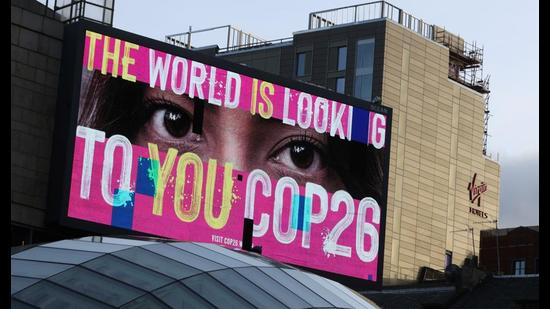
Last weekend, thousands of people gathered in Glasgow, Scotland, and worldwide to put pressure on leaders to come up with a comprehensive climate-combat plan. The timing of the rallies was important. As one participant explained it, the first week of COP26 was all “sugar rush”, the second will be about sobering up and getting down to business.
The rallies were “a kind of a cornucopia of different groups,” NPR’s Frank Langfitt reported from Glasgow.
“People of all ages, from babies in prams being pushed by their young parents, to people in wheelchairs and some in crutches, the very young to very old, and from all over the world marched demanding immediate action to curb the climate catastrophe many were facing daily in their respective countries,” one of the participants, Carmen Miranda, told me. “The rain certainly did not damp or wash out the passion and determination of the protesters”.
Common cause
In the run-up to the Glasgow meet, there was a flurry of reports on the various facets of the climate challenge. But, while many got extensive media space, a report by the United Nations University-Institute for Environment and Human Security (UNU-EHS),Interconnected Disaster Risks 2020/2021, was lost in the din.
But the report is vital because it deftly and lucidly explains why tackling climate-related disasters need a united approach.
The report, published in September, analyses 10 disasters from the last year: Amazon wildfires, Arctic heat wave, Beirut explosion, Central Vietnam floods, Chinese paddlefish extinction, Covid-19, Cyclone Amphan, Desert Locust outbreak, Great Barrier Reef bleaching and Texas cold wave.
While these disasters occurred in different locations and did not initially appear to have much in common, the report explains their interconnections, highlights solutions, and provides recommendations.
Joining the dots
“When people see disasters in the news, they often seem far away,” said UNU-EHS senior scientist Zita Sebesvari, a lead author of the report. “But even disasters that occur thousands of kilometres apart are often related to one another and can have consequences for people living in distant places.”
To investigate interconnectivity between the 10 diverse events, the team looked at three levels of links between causes and effects for each event, and then looked for patterns in these levels across events where interconnections between them could be identified.
The first analysis was at the level of root causes, identifying disastrous events that stem from the same underlying factors. For example, Cyclone Amphan, which battered Sundarbans, shares root cause with the Great Barrier Reef bleaching, because high sea temperatures, thanks to increased greenhouse emissions, are responsible for both.
Then they analysed the level of influence between the disastrous events themselves, either where one event directly exacerbated the hazard of another (e.g. a cyclone creating conditions increasing the likelihood or severity of a locust swarm), or where an event had indirect influence on the exposure or vulnerability of people and/or places to another event.
Lastly, the scientists looked at shared impacts.
Root causes
The analysis showed many of these events shared similar root causes.
Human-induced greenhouse gas emissions were responsible for seven of the 10 disasters. Insufficient disaster risk management was responsible for seven of the 10 disasters. Environmental costs and benefits undervalued in decision-making were behind six of the 10 disasters.
Insufficient national/international cooperation was responsible for five of the 10 disasters. Proritising individual profits (cases where maximising profit is prioritised over other social concerns in the global value chain) was responsible for four of the 10 disasters Global demand pressures, which leads to consumptive demand for goods, was responsible for four of the 10 disasters.
Disasters are not only connected; they are also connected to us as individuals. For example, the record rate of deforestation and wildfires in the Amazon is partly due to the high global demand for meat: Farmland is needed to grow soy, which is used as animal fodder for poultry. This means that some of the root causes of disasters are in fact influenced by the actions of people far away from where the event itself occurs.
“Our actions have consequences, for all of us,” said fellow lead author Dr Jack O’Connor. “But the good news is that if the problems are connected, so are the solutions.”
Death by a thousand cuts
The disastrous events of 2020/2021 are linked not only by their causes, but also by their effects.
By far, the most commonly shared impacts, found in 10 out of 10 events, were the loss of livelihoods as hazards damaged infrastructure and ecosystems essential for income generation or otherwise removed or reduced the potential to earn a living.
Several of the disastrous events in 2020/2021 contributed to reduced food and water security in impacted areas, either through damaging food production or water access infrastructure directly or through increased financial vulnerability.
Humans are not the only ones who suffer the impacts of disastrous events. Extreme weather and climate change wreak havoc on the natural world, as precious biodiverse habitats such as coral reefs, tropical mangroves and Arctic tundra feel the heat, many species lose their habitats and attempt to either adapt or move to new areas.
The takeaway from the report is unambiguous: The failure to address interconnected root causes and emerging risks will accelerate the climate crisis, creating new and more intense extreme events, increasing vulnerabilities.
In short, a fragmented approach will be, as Guterres said, a recipe for disaster.
The views expressed are personal.
 ABOUT THE AUTHORKumKum Dasgupta
KumKum Dasgupta is with the opinion section of Hindustan Times. She writes on education, environment, gender, urbanisation and civil society. .


