
 E-Paper



Great powers deciding for others isn’t multipolarity: Trump-Xi-Putin meet raises fears of new Yalta
The potential meeting of Trump, Xi, and Putin has raised the possibility that the US, China, and Russia might settle questions of war, sanctions & nuclear risks

 Prefer HTon Google


Russian President Vladimir Putin’s first victory in Shenzhen, where the Asia Pacific Economic Cooperation (Apec) summit will be held on November 18 and 19, will come before any negotiation begins. He only has to be there. A photograph beside US President Donald Trump and Chinese President Xi Jinping will help undo years of western efforts to isolate Putin and allow him to present Russia as a peer of the US and China.
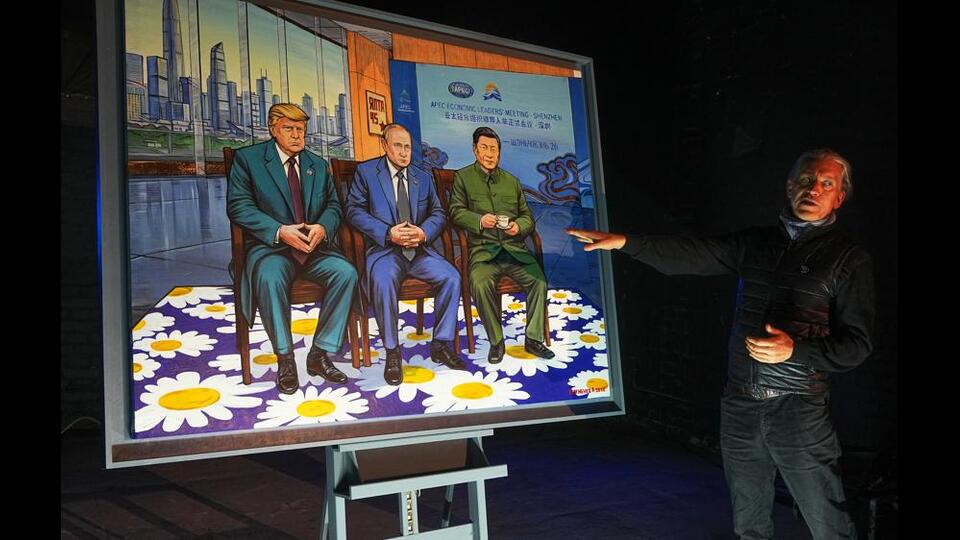
For much of Europe, that photograph will recall a darker one: Roosevelt, Churchill, and Stalin at Yalta in 1945, deciding the shape of postwar Europe. The fear is that Ukraine’s territory and Europe’s security could again be settled over the heads of those most affected. Although the US has indicated that Ukraine is not on the formal agenda, the concern remains.
The world of 2026 is not the world of 1945. Power is more dispersed, and governments have more tools to resist decisions made without them. The anxiety, however, is about the habit of treating other countries’ futures as matters for great-power management.
Moscow has been promoting the idea for months. The meeting scheduled for November 19 has prompted talk of a G3. No such institution exists. But this meeting has raised the possibility that the three powers might increasingly settle questions of war, sanctions, and nuclear risks among themselves.
India, which has argued that multipolarity should give more countries a voice, has reason to take note of what this could mean for its own interests. India’s Brics partners may now claim for themselves the authority they condemn when exercised by the West. Their dissatisfaction with western dominance should never be mistaken for a commitment to greater Indian influence.
Trump wants progress on nuclear arms control and an end to the wars in Ukraine and Iran. Success would strengthen his claim to be a peacemaker and ease pressure on his administration. India, too, has reason to want results: safer Gulf shipping, calmer energy markets, and fewer shocks to trade.
Xi’s calculations are more delicate. Hosting both presidents gives Beijing prestige. It also brings demands China would rather avoid. Beijing has long resisted nuclear negotiations that could lock in its disadvantage against the much larger American and Russian arsenals.
China also needs European markets, where resistance to Chinese imports is already growing. Hosting talks that appear to sideline Europeans on their own security would risk strengthening the case for tougher restrictions on Chinese business. Beijing would find it harder to claim that it speaks for countries denied influence while helping decide their futures without them.
Europe’s economic weight would still matter, as would Ukraine’s willingness to accept any settlement. The summit may produce broad statements on reducing nuclear risks, keeping military communication open, and seeking an end to the wars. Such outcomes would be welcome, but they would not amount to a new global order. They would leave the hardest questions unresolved: what each side would concede on territory, security guarantees, trade and sanctions; how commitments would be enforced; and who would pay the price. Countries excluded from the process can still make an agreement difficult to implement or impossible to sustain.
The G3 spectacle must not distract New Delhi from Washington’s separate dealings with Beijing and Moscow. Those negotiations may matter more than the trilateral itself. Any American understanding with Russia on Ukraine and sanctions could affect India’s energy purchases, shipping insurance, and trade settlement arrangements with Moscow.
Trump and Xi have trade and technology disputes to address alongside their two countries’ wider rivalry. Understandings on tariffs, advanced computing or critical minerals could alter investment decisions affecting India. Even limited cooperation on artificial intelligence safety could shape standards that Indian firms would be expected to follow. New Delhi cannot build its industrial plans on the assumption that Washington will keep Chinese competitors permanently boxed in.
A Quad summit meeting involving India, the US, Japan, and Australia is scheduled in Manila on November 17. It would give Prime Minister Narendra Modi an opportunity to assess what Washington intends to offer in Shenzhen and make clear where India expects prior consultation.
Japan has reason to ask the same questions. Both India and Japan would benefit from less volatility in American relations with China. They should make clear, however, that pressure on China’s neighbours cannot become an acceptable price for agreement on an unrelated issue. Differences over Russia need not prevent New Delhi and Tokyo from saying that together.
Meeting before Shenzhen would give India and Japan a chance to influence the American approach. Otherwise, the sequence could say more than the communiques: reassurance in Manila, decisions elsewhere.
New Delhi should also convey its concerns directly to Moscow and Beijing. With European partners, India can compare notes where interests overlap and discuss how to preserve room for independent decisions. Neither side has an interest in great-power bargains that leave others to absorb the consequences. India itself participates in many small-group meetings. Its absence from one meeting is not a national setback. The danger lies in repeated bargains that narrow its choices while valued partnerships provide little warning and less influence. That calls for candid diplomacy now, before positions harden.
India should welcome any agreement that makes the world safer. But agreement among three powerful countries does not amount to consent from the rest. Multipolarity should give more countries a say in their own future, not merely give more great powers a say in everyone else’s.
Syed Akbaruddin served as India’s permanent representative to the United Nations in New York and, currently, is dean, Kautilya School of Public Policy. The views expressed are personal


