Hutong Cat | Russia, China, and the ‘Power of Siberia’
The Power of Siberia gas pipelines 1 and 2 will tackle Western economic sanctions and significantly aid in the two countries building on their strategic partnership
Nearly three weeks into Russia’s unprovoked armed assault on Ukraine, which much of the world has called an invasion except for a few countries including the two most populous ones, China’s current diplomatic strategy to deal with this attack is clear. Or, from Beijing’s public posturing, it seems so.
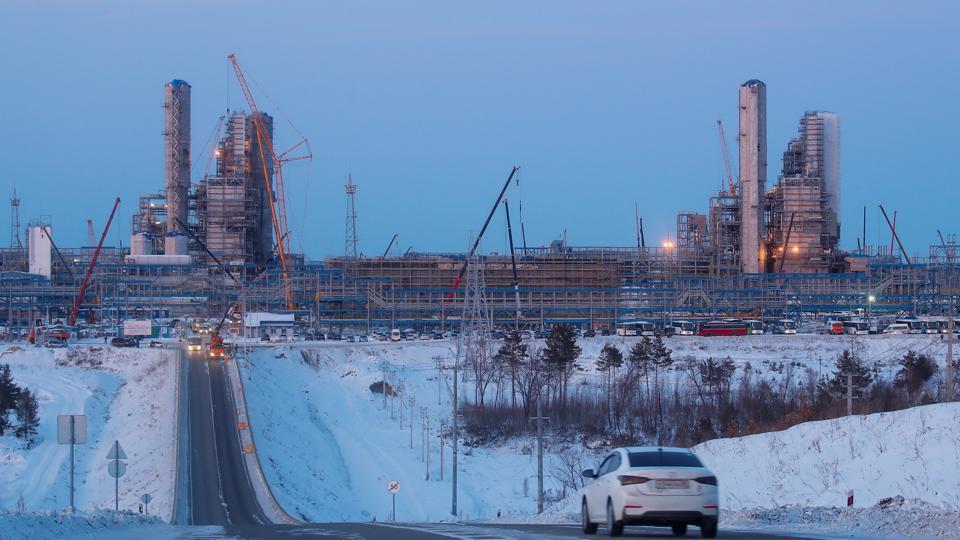
In 2020, Putin approved the launch of a feasibility study for the “Power of Siberia-2” pipeline to export natural gas from western Siberia to China. (Reuters)
The basics: Focus, fret and fuss over the humanitarian impact, give token aid to Ukraine, even call it war and use appropriate words like “heart-wrenching”; continue blaming the United States (US) and the North Atlantic Treaty Organization (NATO) for pushing, provoking Russia and prompting Ukraine into a conflict; side with Russia, strongly oppose economic sanctions; always, always, call for negotiations to end the crisis; reach out to the European Union (EU).
Additionally, for high-impact, use the word “peace” as many times as possible in official readouts on interactions between the Chinese leadership and global leaders and diplomats.
That’s not all.
On the side: Censor pro-Ukraine views; resurrect conspiracy theories, one of which claim Russia is targeting selected Ukrainian cities because of the presence of US bioweapons labs.
Once in circulation, the theory was promptly picked up by State-run media outlets in China and Russia; in no time, it was echoed by China’s foreign ministry.
“US Biolabs in Ukraine have indeed attracted much attention recently,” Chinese foreign ministry spokesperson Zhao Lijian said at a regular briefing.
“...all dangerous pathogens in Ukraine must be stored in these labs and all research activities are led by the US side,” Zhao said without providing evidence — which to be fair to Zhao, he never does — to back up the claim.
Meanwhile, Wang Yi, China’s suave — and possibly outgoing — foreign minister, told the world on March 7 that China-Russia ties were “rock solid” just in case someone read too much into a Chinese diplomat calling the situation in Ukraine “heart-wrenching” at the United Nations just a couple of days before.
Wang’s statement at his annual press conference on the sidelines of the yearly meeting of the National People’s Congress, China’s rubberstamp legislature, made it amply clear that Beijing-Moscow’s “no limits” friendship was strictly off-limits for any speculation to the contrary.
It’s no coincidence that Xi Jinping and Vladimir Putin, who have referred to each other as “best friends”, have met 38 times in the past decade.
To be fair, at the big risk of not being treated to Russian ice cream by buddy Putin at his upcoming birthday, President Xi on March 8 told European counterparts French President Emmanuel Macron and German Chancellor Olaf Scholz during a trilateral video summit that China was “deeply grieved by the outbreak of war again on the European continent”.
Xi expectedly stopped short of calling the conflict an invasion but called for “maximum restraint” to minimise the humanitarian crisis.
Intense internal discussions and introspection later, there might be more nuance in how China is publicly commenting on Russia’s invasion of Ukraine but make no mistake — Beijing and Moscow are as thick as wary best friends with benefits.
Beijing-Moscow ties gradually warmed after the end of the Cold War in the 1990s. Around the time, the two also resolved their long-standing land border dispute following protracted negotiations, which as a leading Chinese expert on Russia once told me, invariably ended with rounds of vodka.
The two countries have since pursued a strategic partnership, working closely on wide-ranging sectors including trade and military and having each other’s backs in geopolitics.
Ties have strengthened under Xi’s aggressive China, which is always ready to take on the US and the West.
Besides building a common front against the US-led Western bloc, China and Russia, for one, are also trying to build an alternative financial system.
The statements issued after Putin’s visit to Beijing in early February are telling in more ways than just their joint opposition to NATO’s expansion in Europe.
Putin’s signed article published by China’s official news agency, Xinhua, on February 3 gives an indication of just how Beijing and Moscow are preparing to tackle Western economic sanctions.
“We (Russia and China) are consistently expanding settlements in national currencies and creating mechanisms to offset the negative impact of unilateral sanctions. A major milestone in this work was the signing of an agreement between the Government of Russia and the Government of China on payments and settlements in 2019,” Putin wrote.
Putin also said he wants to increase trade between the "two superpowers" to a volume of $200 billion, up from the $140 billion it had reached in 2021.
What’s also fuelling bilateral ties is the “mutually beneficial energy partnership” between the two countries.
“Along with long-term oil and gas supplies to China, we have plans to implement a number of large-scale joint projects,” Putin wrote.
For example, the world's longest pipeline, the China-Russia east route natural gas pipeline, has transported over 15 billion cubic metres (bcm) of Russian gas to China as of January 17, 2022, Chinese state media has reported.
The flagship “Power of Siberia 1” gas pipeline is headlining the energy partnership between the two countries.
In December 2019, the Power of Siberia-1, or the Russian section of the China-Russia east-route natural gas pipeline, became functional.
According to Chinese official media, it provided some 5 bcm of Russian gas to China in 2020.
“The amount is expected to increase to 38 bcm annually from 2024, under a 30-year contract worth $400 billion signed between the China National Petroleum Corp and Gazprom, China’s national energy giant, in May 2014.”
That was the beginning.
In 2020, Putin approved the launch of a feasibility study for the “Power of Siberia-2” pipeline to export natural gas from western Siberia to China.
Gazprom has conducted a preliminary technical and economic analysis of the project, which is expected to deliver up to 50 bcm of gas to China via Mongolia each year, Xinhua had then reported.
On February 28, the Russian company released a statement on a working meeting between Alexey Miller, company chairperson and the Deputy Prime Minister of Mongolia, S Amarsaikhan.
“The parties discussed the implementation of the project for the construction of the Soyuz Vostok gas pipeline in Mongolia. It will be a continuation of the Russian gas pipeline ‘Power of Siberia-2’ and will allow to supply of up to 50 billion cubic metres of Russian gas per year to China, the world's fastest-growing gas market,” the Russian company said in a statement.
During his meeting with Xi in Beijing, Putin said Russia has prepared a new deal to increase gas exports to China to 48 bcm a year via a new pipeline that will deliver 10 bcm annually from its Far East region.
“Russia is the third-largest natural gas supplier to China, including both pipeline gas and LNG. Russian natural gas accounted for around 10% of China's total gas imports of 121 million mt in 2021, against 25.9% and 19.8% from Australia and Turkmenistan, respectively,” according to S&P Global Commodities Insight.
With the EU, which gets some 40% of its gas from Russia, planning to reduce the volume by two-thirds this year, China is set to emerge as a viable alternative for Moscow.
Sutirtho Patranobis, HT’s experienced China hand, writes a weekly column from Beijing, exclusively for HT Premium readers. He was previously posted in Colombo, Sri Lanka, where he covered the final phase of the civil war and its aftermath, and was based in Delhi for several years before that

 E-Paper