
 E-Paper



Hutong Cat | The fine print of Chinese Parliament's ‘Two Sessions’
This year’s Two Sessions — or Liang Hui — are significant because they come within months of Xi Jinping beginning his third tenure as the general secretary of the CPC and post China's “zero-Covid” policy


The ongoing annual sessions of China’s rubber-stamp parliament, the National People’s Congress (NPC), and the country’s top advisory body, the Chinese People’s Political Consultative Conference (CPPCC) — mostly the former — will set the government's economic agenda for 2023 and formalise personnel and institutional restructuring.
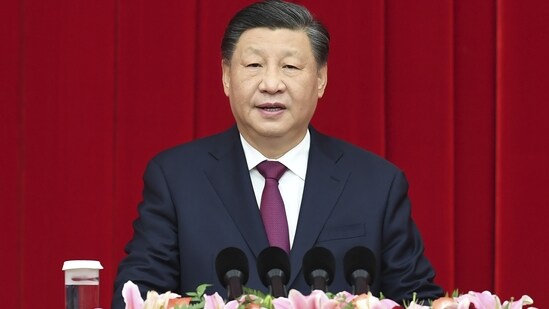
Thousands of lawmakers — called delegates and deputies — have gathered in Beijing for the sessions, which will last for a week to eight days, from March 4 and 5.
The sessions and the voting during the week-long sessions are choreographed: Decisions have already been approved behind the opaque internal goings-on of the Communist Party of China (CPC).
This year’s Two Sessions — or Liang Hui, literally meaning two sessions — are significant because they come within months of Xi Jinping beginning his norm-breaking third tenure as the general secretary of the Communist Party of China (CPC), setting himself up as the life-long party chief, in October.
Xi’s third leadership term as general secretary at the 20th CPC Congress in October sealed his place as the most important leader of China in decades since Mao Zedong.
Xi is also set to begin his third five-year term as President of China at the end of the Two Sessions.
His third tenure as China’s President will complete his hold over power, complementing the two top Communist Party positions he secured at the CPC congress — as the general secretary and the chairman of the powerful Central Military Commission.
The parliament sessions will further consolidate Xi’s power and stature as the country’s undisputed leader whose aim is China’s “rejuvenation”.
So far, his policies have been marked by domestic control: The CPC’s tightening grip over the lives of Chinese citizens and expanding, balance-tilting influence over the private sector. It has also been marked by diplomatic aggression globally and military belligerence in the neighbourhood.
The sessions are the first since Beijing abruptly withdrew the “zero-Covid” policy and dismantled Covid-control measures. The sudden reversal of the all-pervasive epidemic-control policy was aimed at resurrecting the gloomy economy and neutralising people’s anger and frustration at living heavily restricted lives for three years. And, thanks to the Qatar World Cup, watching the world moving on from the Covid-19 pandemic.
The tone of this year’s sessions was set by Xi during a major three-day meeting of the party's Central Committee last week.
Addressing the top leadership, Xi, according to the official news agency, Xinhua, said part of the reform plan pertaining to state institutions would be presented before parliament, adding that at the last October’s congress, the party had decided that institutional reforms including that of the financial system, were needed.
“The overall reform plan will be "targeted, intensive and wide-ranging, touching on deep-rooted interests", Xi said in a speech before the Central Committee.
Another CPC document, a communique released following the conclusion of a plenary session for the 20th Central Committee indicated what could be expected at the Two Sessions.
The communique revealed that the meetings at the Two Sessions will include discussions of "a plan on reform of Party and state institutions” without giving details.
“The economic and legislative decisions made at the Two Sessions are of high importance to business leaders and foreign investors in China; they serve as a valuable window into China’s politics and reveal Beijing’s priorities and policy direction for the coming year. Below we look at some of the most likely outcomes of the Two Sessions and discuss how they could impact businesses,” Dezan Shira & Associates, a financial services firm, said in an analysis ahead of the Two Sessions.
“Stabilising the economy is the foremost political priority for China this year, and money stands as the core and pivotal issue. The most significant challenge for this year's Lianghui, or Two Sessions, lies in tackling this matter,” He Jun from the Beijing-based think tank, Anbound, wrote in an analysis of the sessions shared with HT.
“The core task of stabilising the economy presents one of the most significant and pressing challenges for the Two Sessions this year, and this is particularly true when it comes to monetary issues. Monetary resources are crucial for economic recovery, and for easing the pressures of the aging population and social security,” he wrote.
The sessions will mark the departure of Premier Li Keqiang — a seemingly amiable technocrat — who for a decade was at the helm of the world’s second-largest economy.
Li’s departure will mean further consolidation of Xi’s powers as the outgoing Premier’s replacement is known for being close to the general secretary.
There’s a lot of interest among China watchers in Li Qiang becoming the new Premier, replacing Li Keqiang.
As then Shanghai CPC boss, Li had met Tesla CEO Elon Musk during an inspection tour of the gigafactory of Shanghai Tesla in January 2020.
“We will give full support to the upcoming construction of Tesla projects, and we hope Tesla will expand cooperation with Chinese enterprises in clean energy and transportation,” Li had told Musk, according to local media reports released after the meeting.
More recently, late last year, Li is said to be the official hurrying up the dismantling of the “zero-Covid” policies, which triggered a massive outbreak in China but seems to have started a gradual economic recovery.
Shanghai residents will remember Li: It was under his leadership as party chief that the city went through a bruising and grinding two-month Covid-19 lockdown last year.
Overall with China transitioning to a post-pandemic era in 2023, there's a sense of optimism though experts advise a note of caution.
Premier Li’s last work report, delivered on March 5, revealed a cautious “around 5%” GDP growth target for 2023.
Experts have said a conservative approach was expected given 2022’s disruptions caused by the “zero-Covid” measures and then the country-wide outbreak.
“Overall, we view it as a relatively conservative but pragmatic proposal for delivering a healthy and organic economic recovery from last year’s huge disruptions caused by Covid, and we see no sign of a massive stimulus programme,” brokerage, Nomura, said in a report on the work report on March 6.
“In our view, the GDP growth target of “around 5.0%” is a reasonable and rational choice, as China’s economy is still set to face multiple headwinds over the course of the year. We continue to expect China’s GDP growth to pick up to 5.3% this year from 3.0% last year, and caution against being overly optimistic regarding the pace of recovery this year.”
Sutirtho Patranobis, HT’s experienced China hand, writes a weekly column from Beijing, exclusively for HT Premium readers. He was previously posted in Colombo, Sri Lanka, where he covered the final phase of the civil war and its aftermath, and was based in Delhi for several years before that
The views expressed are personal


