
 E-Paper



In their quest for power, UP’s Brahmins keep parties guessing about 2022
With an approximate 12-14% share in the population, Brahmins, who continue to be opinion leaders at various societal tiers, have for years been a leaderless community in the key Hindi state

 Prefer HTon Google


One has to travel back in time to probe the Brahmin community’s alienation from its old flame, the Congress, its flirtations with the Bahujan Samaj Party (BSP), and the reignition in 2014 of a courtship with the Bharatiya Janata Party (BJP) which, some believe, could now be reaching a breaking point in Uttar Pradesh (UP).
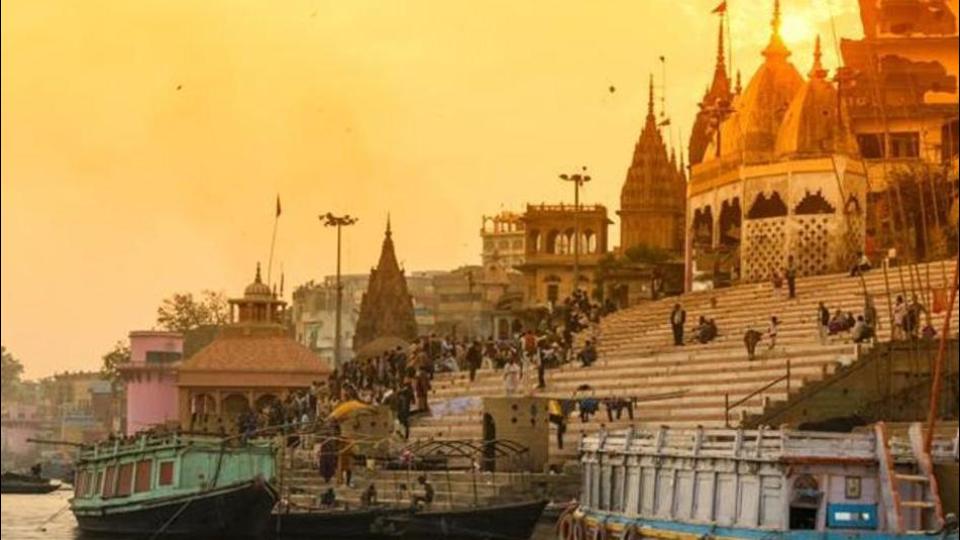
With an approximate 12-14% share in the population, Brahmins, who continue to be opinion leaders at various societal tiers, have for years been a leaderless community in the key Hindi state.
The era of titans such as GB Pant, Kamalapati Tripathi, HN Bahuguna, Umashankar Dikshit, ND Tiwari (all from the Congress stock) and the BJP’s Murli Manohar Joshi and Atal Bihari Vajpayee, who hailed from Madhya Pradesh but contested several times from UP, has long passed. This perhaps explains the community’s vagrant ways in the race for political space in a socially competitive polity.
In the post-Mandal phase, the community lost as much relevance as did its original safe harbour, the Congress. It was left to fend for itself as the BSP and the Samajwadi Party (SP) ran away with the Dalit-Muslim components of the party’s once-formidable social compact. The resultant churn nudged the Brahmins into the Hindutva tent in the course of the Ram Temple movement. That has been a long-term legacy of the short term VP Singh regime the BJP propped up in conjunction with the Left after the 1989 polls. It was Singh’s government which enforced the Mandal Commission report in 1990.
The crisis of leadership
It is their broader social acceptability that has helped the Brahmins fare better than other forward identities in moving subaltern groups with them. In the Hindutva sweepstakes, the community’s superior adaptability faced pushbacks from the Rajputs and certain Hindutva-aligned, Mandal-empowered Other Backward Classes (OBC) sub-groups.
Notable among them were the Lodhs and Kurmis, besides sections of the Yadavs. In the resultant tussle for prime political space, two Brahmin BJP leaders widely considered as chief minister material met with untimely, unnatural deaths.
The first to go in 1997 was Brahmdutt Dwivedi. A Kanyakubj Brahmin and a sitting Member of Legislative Assembly (MLA) from Farukkhabad, he had clout in the Doab area between Braj (Mathura-Vrindavan) and Avadh (Lucknow-Ayodhya-Allahabad). What made him a celebrity of sorts was his chivalrous rescue of Mayawati during the 1995 Lucknow guest house assault involving elements from Mulayam Singh’s SP.
Also Read | In Indian politics, a crisis of leadership
Dwivedi was a favourite of Vajpayee. The latter’s rise as prime minister could’ve earned him the chief ministerial spurs. But that was not to be. Instead, Kalyan Singh, a weighty Lodh leader whose administration was dismissed after the Babri mosque demolition in December 1992, held the office twice while Vajpayee ruled Delhi in the politically uncertain late 1990s.
In 2004, another notable Brahmin in the BJP’s ranks, Ghanshyam Shukla, died in mysterious circumstances. A freak road accident had his family alleging murder. Be that as it may, the tragedy came with political repercussions. The deceased leader was popular among the sizeable Brahmin electorate in the Barabanki-Balrampur stretch including Bahraich, Gonda, Sitapur, Ayodhya and Shrawasti.
The area is famous for political turf-battles between the Brahmins and Rajputs. The Jana Sangh had pockets of influence there even when the Congress was the dominant force. Vajpayee first entered the Lok Sabha from Balrampur in 1957. Located at nearby Gonda is the Rashtriya Swayamsevak Sangh (RSS) icon, Nanaji Deshmukh’s Deendayal research institute for rural development.
In the 2007 assembly polls, the Brahmins went on a rebound to Mayawati against this backdrop. She won them over with her seemingly inclusive cry of “Haathi nahi, Ganesh hai, Brahma, Vishnu, Mahesh hai”. The slogan marked a 360-degree turn from her reactionary anti-forward caste chants of “Tilak tarazu aur talwar, inko maaro jutey chaar.”
The Brahmin value-add got her a majority of her own. In seeking to expand her base, Mayawati learnt perhaps from her bitter rival and Yadav chieftain, Mulayam Singh, who forever kept by his side three prominent upper-caste faces: Janeshwar Mishra (Brahmin), Rewati Raman Singh (Bhumihaar) and Mohan Singh (Rajput). A reminder at once of his socialist pretence, their companionship lent his image an inclusive touch beyond the sectarian.
How the Congress squandered the 2009 gains
In the 2009 Lok Sabha elections, the BSP (20) came third after the SP (22) and the Congress (21) in terms of the number of seats they won. The results signalled the preference of Brahmins for the Congress over regional parties, notably the BSP, in parliamentary elections. It indicated as much their search for a pan-Indian platform other than the BJP.
The thaw between the Congress and the Brahmins — who brought with them sections of the Dalits and Muslims — has to be contextualised to dissect the reasons for its short life. The party failed to nurture and expand the ground-level narrative which yielded electoral dividends across the state, especially in the Brahmin strongholds. The parliamentary seats the Congress wrested included eastern UP’s Barabanki (won by PL Punia), Faizabad (Nirmal Khatri), Bahraich (Kamal Kishor), Shrawasti (VK Pandey) and Gonda (Beni Prasad Varma).
The phase also marked the last electoral win of Jitin Prasad — who recently crossed over to the BJP — from Dhaurehra in Lakhimpur Kheri adjoining Bahraich. But more on that, later.
The eastern UP areas where the Congress did well have a sizeable presence of the omnibus, geographically identified Kanyakubjs and their sub-group, the Saryupari Brahmins. The broader identity inhabits several north Indian states; the latter hail from across the Saryu river near Ayodhya. Of their strength, the Kanyakubjis are also a factor in Farukkhabad (Salman Khurshid’s constituency) and the Saryuparis in Khushinagar (RPN Singh) besides Basti, Gorakhpur, Deoria, Ballia, Ghazipur, Varanasi and Mirzapur.
From 1997 — when Dwivedi was shot dead — till 2012, when Akhilesh Yadav of the SP became the chief minister, the Brahmins weren’t en bloc in the BJP camp. The community was on the prowl for a respectable sinecure. Its 2009 rapprochement with the Congress happened after its disillusionment with the BJP and Mayawati. The Congress’s campaign in those elections was led by the Manmohan Singh-Sonia-Rahul Gandhi trinity which seemed a reassuring mix of experience, inclusivity and youth in the aftermath of the 2008 global economic crisis.
The entente broke when the Congress projected a Kurmi leader, Beni Prasad Varma, then the sitting Member of Parliament from Gonda, as its face in the assembly polls. Akhilesh Yadav won by a thumping majority.
Also Read | 30 years later, the life and legacy of Rajiv Gandhi
“Had the Congress showcased a Brahmin leader in those elections, they could’ve built on the 2009 success,” said Amresh Misra of the Rashtravadi Kissan Kranti Dal.
The times had changed but not the Brahmin investment in self-respect and search for leadership. The party failed to provide the influential community with even a hint of the sense of belonging reminiscent of free India’s early decades. That apart, the Congress didn’t come across as fighting for an honourable defeat leave alone a victory against a charged-up BJP under Narendra Modi.
The BJP’s wooing of Brahmins: A replay of 2014
As the 2014 general elections drew closer, the Congress remained inert while the critical importance of Brahmin support dawned early and tangibly on the BJP. The party of the Ram Janmabhoomi movement appointed Meerut’s Laxmikant Bajpai as its state unit chief in December 2012. His clean image and organisational skills worked well for Modi‘s prime ministerial challenge. The party won 71 of the 80 Lok Sabha seats.
Not surprising that Bajpai was among the multiple contenders projected as a possible BJP CM face in the 2017 assembly polls — there was no official CM face - after making room for an OBC leader, Keshav Prasad Maurya, the current deputy CM, as the party’s UP president. What put paid to the possibility was the Brahmin leader’s shock defeat in Meerut against the run of the electoral play. Besides him, Kalraj Mishra, a Saryupari Brahmin from Deoria, who is now the governor of Rajasthan, was retained as a central minister in the run-up to the UP elections. In order not to annoy the Brahmin electorate, he was allowed to continue beyond the age of 75, the limit set for active politics by Modi.
Had Bajpai not run out of luck, UP could’ve got a Brahmin CM after a quarter century; the last to occupy the office (1988-89) was the Congress’s ND Tiwari. A testimony to the BJP’s flagging support in the community is the call made recently on Bajpai by Swatantra Dev Singh, the party’s incumbent UP chief and a vocal supporter of the beleaguered CM, Yogi Adityanath.
It’s difficult to guess where Jitin Prasad fits in the broader BJP plan — except being an ornamental Brahmin face. He lacks the heft to be a catalyst for his clansmen’s rapprochement with Yogi, who is seen as partisan to his Thakur (Rajput) base. Such is the deficit of trust that the Brahmins view as a “caste encounter” the killings of dreaded gangster Vikas Dubey and his cohorts. The UP Police had gone after the gang after suffering casualties in an earlier gun battle.
Also Read | From 1991, the lessons for the India of 2021
Not just that, the Yogi regime’s 2017 decision to cancel Parshuram Jayanti as a state holiday has also become an issue in the lead up to next year’s polls. “In response to the BJP’s Jai Sriram, the Brahmins’ chant Jai Parshuram,” said Misra of the RKD. Jitin Prasad was among the leaders who appealed to the CM in recent years to restore the jayanti its due place on his government’s calendar.
The pleadings that haven’t hitherto been heard might find consideration in the ongoing season of political expediency. The Brahmin rebellion came to the fore in the recent panchayat polls in which the BJP did poorly. In Shrawasti for instance, the party gave 20 candidates from the community. All of them lost.
A joke doing the rounds in UP these days is that the CM could have become PM had he not lacked Vitamin B (Brahmin). The messaging turns serious when read with another jibe, that of Yogi running a (Thakur) T-series in UP.
It is a bit early to say how much of a force multiplier would he be. But the lateral induction in the UP BJP of AK Sharma (a former IAS officer perceived to be close to Modi) has had the grapevine working overtime. It’s a flashback of sorts to the leadership search after the 2017 polls which brought in circulation the name of Manoj Sinha, currently the Lt Governor of Jammu and Kashmir. But Yogi had his way.
The bureaucrat-turned-politician initially tipped to take over as deputy CM is, like Sinha, an eastern UP Bhumihaar who claim to be Brahmins. Their caste-moniker suggests their land-owning status.
Yesteryear Brahmins
Historically, the one Brahmin defection that changed the course of an election in UP was that of HN Bahuguna in the post-Emergency 1977 polls. He quit the party to set up the Congress for Democracy with Jagjivan Ram and Odhisha’s Nandini Satpathy. The fledgling outfit merged later with the Janata Party. A keen political observer and former student leader of Allahabad University, Baba Abhaya Awasti rated the event as the “beginning” of the party-hopping phase that has since turned from the sublime to the ridiculous.
Bahuguna famously justified the switch with the reasoning that only the dead and the foolish don’t change their line of thinking: “Sirf murdey aur murkh hi vichardhara nahi badalte.” The cryptic one-liner is part still of Allahabad’s oral history.
Also Read | The politics of foreign aid in India
Belatedly though, Bahuguna walked out not as much on Indira Gandhi as on her autocracy, her actions that vilified democracy. In so deciding, he did not show himself as a Brahmin leader — but a leader who happened to be a Brahmin.
What was true of Bahuguna — who took pride in a riot free UP on his watch as the CM — applied to many leaders of the early generation. Their stewardship wasn’t driven by primordial caste identities. Their acme was their strong moral fibre, their probity, progressive learning and personal integrity. The Rashtriya Janata Dal’s Manoj Jha, a Maithil Brahmin from Bihar, said the regressive journey began some three decades ago; caste predominance cleaving the polity into silos and leaders into votaries of inward-looking social groups.
Exemplifying that is Bahuguna’s progeny that moved from the Congress to the BJP the way Jitin Prasad has. The one thing common between them is their commonplace curriculum vitae. The retrogressive metamorphosis is visible across parties, more so in the vastly diminished Congress.
Little wonder then that the Brahmins are leaderless. And it is this search for leadership that continues to drive their political calculations, keeping all of UP’s major political players in suspended animation about how the community would swing in 2022.


