
 E-Paper



India’s big reform push will help Global South
India’s push for holistic, transformative reforms of multilateral development banks is key to transitions to low-carbon economies.

 Prefer HTon Google


Calls for the reform of the Bretton Woods institutions are not new. For years, these demands have largely been motivated by two factors. One, the need for resources (or simply put, money). Two, the issue of control with countries such as China and India wanting more say in the running and choice of leadership of the International Monetary Fund (IMF) and the World Bank. Now, a third issue has been added to these – climate financing, or the need to raise money to fund the transition of countries, mostly in the Global South, to low-emission economies. Unlike the first two factors, the third has a deadline and a threshold – unless countries, both developed and developing, move rapidly to a low-emission regime, the world looks on target to exceed the bar of 1.5 degrees Celsius warming over pre-industrial levels sometime in the 2030s. And it’s important to acknowledge the elephant in the room – successive climate talks have faltered on the issue of climate finance, with even its definition still up in the air.
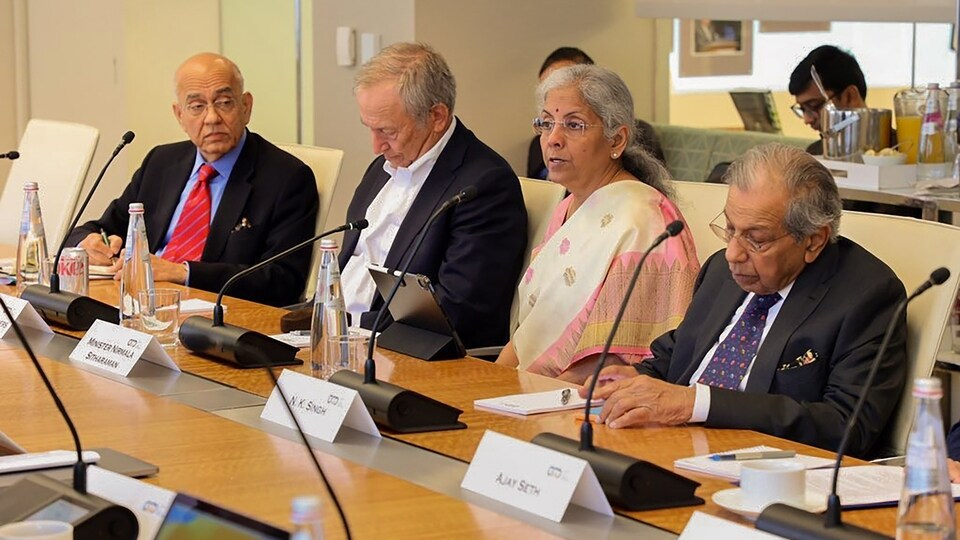
It is in this context that India’s push, as chair of the G20, for “transformative” and “holistic” reforms of the multilateral development banks – the words within quotes are those used by finance minister Nirmala Sitharaman to the G20 expert group on strengthening the multilateral development banks that is headed by former US treasury secretary Lawrence Summers and NK Singh, chairman of India’s 15th Finance Commission in April – instead of a piecemeal approach. The minister asked that “global public goods” be added as the third goal to the two existing ones of the multilateral development banks – elimination of poverty and shared prosperity (natural goals for bodies set up after WWII). Global public goods include everything from the environment to health to culture to aspects of the digital domain (India, for instance, is showcasing its Unified Payments Interface or UPI, which has powered India to becoming a world leader in digital transactions, as a digital public good).
The good news is that there would appear to be a broad consensus among all stakeholders on the need for IMF and the World Bank to expand the scope of their objectives to include public goods. The question, though, is one of resources. India and the Summers-Singh expert group are clear that there can be no redeployment of funds from the first two objectives to the third. The challenge, then, is to find additional resources for “global public goods”. HT’s Prashant Jha, reporting on the deliberations of the expert group from Washington wrote that it believes “that a mix of creative leveraging” of the multilateral development banks’ “current capital, with fresh capital infusion”, including a large amount of private capital, “can make a significant change to lending capacity.” A caveat may be in order here – it is unlikely that stakeholders of the multilateral development banks will sign off on the recommendations of the expert group with enthusiasm and that there will be some sense of closure before the end of India’s term as G20 chair; but just as India is building on work done under the chairmanship of Indonesia, and before that Italy, Brazil and South Africa will have to build on what is achieved this year. That said, recognising a third goal for these institutions would be a milestone, as would be recommendations on how it could be funded. To be sure, it probably makes sense to delink this from the pressing need to reform the running and control of the multilateral development banks – for that would ensure a quick death for the new idea. And even as they adopt a new third objective, both the World Bank and IMF continue to focus on the first, the elimination of poverty – especially at a time when Covid-19, the war in Ukraine, and the slowdown in the West have affected incomes around the world. Jha wrote in his report that the expert group is also examining ways to enhance concessional financing provided by the International Development Association.
The report on the capital adequacy of multilateral development banks, presented last year, is a good starting point. The report found that these institutions can use their capital more efficiently (read: lend more), simply because previous assessments of capital adequacy overlooked two things: One, borrowing governments always repay their loans from the development banks; two, the buffer that these institutions have in the form of callable capital (basically money they can tap from shareholders in case of financial trouble). The report, commissioned during Indonesia’s chairmanship of the G20, found that the World Bank, IMF, and 13 other multilateral development banks have around $1.2 trillion in callable capital – money that has never been called upon.
Efficiencies apart, there is also the real need for enhanced contribution by shareholders of the institutions, but the discussions of the expert group have revolved around staggering and optimising these. Given the extent to which the multilateral development banks are able to leverage capital – the bigger ones by as much as 30 times – this will be a significant source of funds. The challenge for the expert group, and for the banks, will be to work out ways to attract private capital. There is consensus in the group that the multilateral development banks cannot provide unlimited funds for just about every need, and that there is a need to tap other sources. There’s been talk of underwriting risk to some extent to attract private capital, for instance, but there’s also a very clear recognition of the moral hazard this involves.
How important is this? In 2021, for instance, multilateral development banks provided just over $50 billion to low- and middle-income countries as climate finance. While some experts believe this could have been higher, the amount was still a significant portion of the under $100 billion in climate financing these countries received that year. Getting these institutions to focus on public goods, especially climate financing, may well be the key to accelerating the transition to low-carbon economies.
letters@hindustantimes.com


