
 E-Paper



Jammu and Kashmir polls and Islamabad’s shadow
There is no doubt that India will defeat the immediate jihadi threat militarily. The elections seem to have consolidated the preference for peace and stability.

 Prefer HTon Google


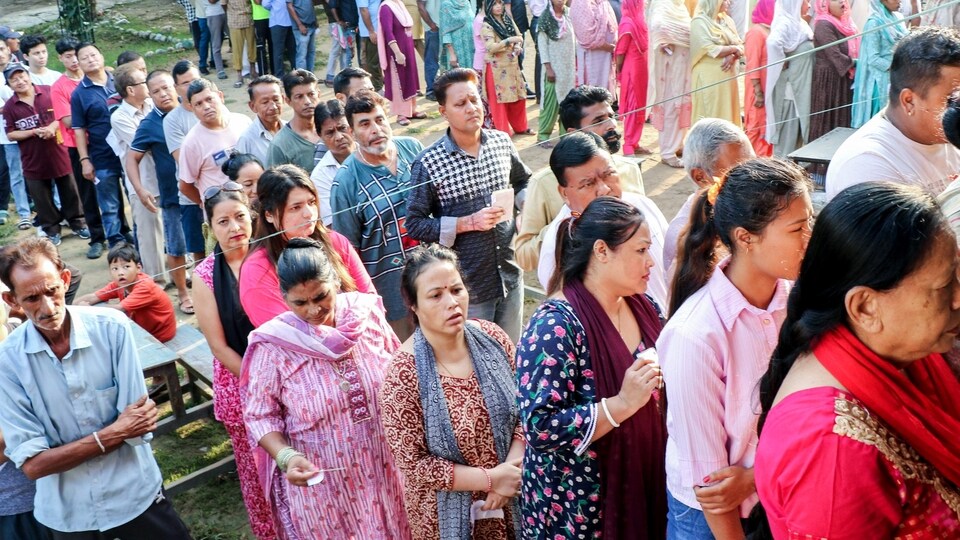
The turnout in the elections in Jammu & Kashmir was high, as even historical boycotters like the Jamaat-e-Islami participated, and the electoral process took place peacefully and smoothly. Initially, it was assumed that the National Conference (NC)-Congress alliance would sweep the Valley and the Bharatiya Janata Party (BJP) could dominate the Jammu region. But the presence of smaller formations like Engineer Rashid’s Awami Ittehad Party supported by the Jamaat, the J&K Peoples Conference, the J&K Apni Party, independents, and the BJP itself might upset these calculations in the Valley.
The NC and the People’s Democratic Party (PDP) have demanded the restoration of Article 370 and J&K’s statehood, as well as the nullification of laws amended since 2019. The BJP is equally vehement that Article 370 will never be restored, though statehood will be, at some point in time. The Congress has been silent on Article 370 but has promised statehood as well as a slew of freebies.
The big issue will be government functioning after the polls. Following the changes since 2019, the new Union Territory (UT) Assembly and government won’t have many of the powers they had before 2018. Law and order, economy and land use will be decided by unelected officials reporting to the lieutenant governor (LG), under the Union home ministry.
The BJP is banking on making a breakthrough in the Pir Panjal region and even in the northern reaches of the Valley, in places like Gurez.
The Pir Panjal area has been a stronghold of Valley-based parties, but post-2019 developments, such as the reservation of nine seats for Scheduled Tribes (mainly Gujjars and Bakarwals), are likely to be a factor. The BJP is seeking the ST vote but has also endorsed ST status for the Pahari community, comprising mostly Hindus but also Muslims and Sikhs.
A BJP victory in the UT will not result in too many problems because the party is in power at the Centre. But an NC-Congress victory will face all manner of problems. The Centre announced crucial rule changes to further empower the LG vis-à-vis an elected government in J&K. A July 2024 notification has noted that the transfer or posting of any officer from the All India Services will have to be approved by the LG. The government will also have to seek the approval of the LG to appoint the advocate general and other law officers.
Essentially, the continuity of the Centre’s control on J&K is ensured regardless of the poll results. The parties contesting do so with the knowledge that there has been a structural change in the governance system. Delhi’s experience here could be instructive. But J&K politicians are probably hoping that UT gains back full statehood, and with that, the state government its powers.The BJP says the high turnout indicates its Naya Kashmir strategy is working.
The problem in J&K is that there is another malign element in the equation that wields a disproportionate amount of weight — Pakistan. In the run-up to the polls, Pakistan has been active on the ground through its proxy warriors. According to estimates, over the past year, Islamabad has managed to push in a highly trained force of 100-150 jihadis into the UT through the international border in Jammu. These have been operating in small groups from the heights of the Pir Panjal.
Through 2023, there had been a rise in terrorist activity in the Poonch-Rajauri area. In June, a bus carrying Hindu pilgrims was ambushed in Reasi, with nine people killed and many injured. Since then, there have been a number of incidents involving the security forces and terrorists in the region stretching from Poonch to Doda.
The security forces have pressed Army para-commandos to ferret out the terrorists, and the J&K police set up 19 special counter-terror units to deal with the challenge in the eight districts of the Jammu division. The police have also arrested several persons who have been providing logistic support to the terrorist squads.
Pakistani terrorists aim to keep the Kashmir pot boiling. We cannot ignore the nature of the Pakistani polity, where the Pakistan army calls the shots on ties with India. During General Qamar Javed Bajwa’s term, we saw Pakistani efforts to stabilise relations with India. But the current chief, General Asim Munir, does not seem too favourably inclined towards India. As it is, the unity of the Pakistan army is frayed. The fallout between the army and Pakistan’s most popular political force, Imran Khan, has badly divided the country. Internal challenges are mounting, so pushing jihad against India in Kashmir remains the preferred option.
There is no doubt that India will defeat the immediate jihadi threat militarily. The elections seem to have consolidated the preference for peace and stability. But the problem of Pakistan will not go away that easily. It remains a pill stuck in our throat — we need to swallow or spit it out.
Manoj Joshi is distinguished fellow, Observer Research Foundation. The views expressed are personal


