
 E-Paper



Kejriwal’s Delhi: A truly smart template for Indian cities? | Opinion
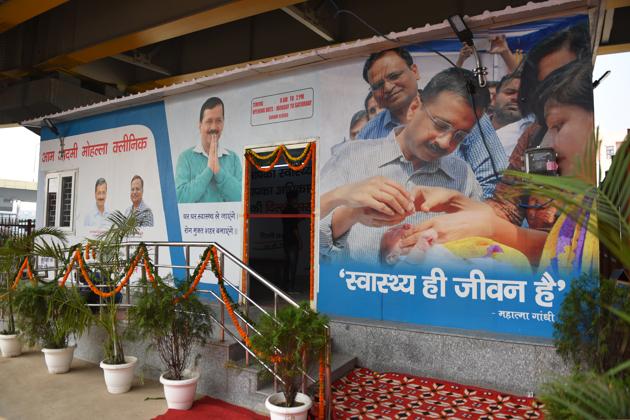
Which Indian city wouldn’t welcome swimming pools in government schools, well-run mohalla clinics and free commuting for women in public buses as has been demonstrated in Delhi?


One of the best kept secrets of the nearly 190 municipal schools in Pune city is the prime real estate they sit on.
While many of the newly-established private schools and the international schools exist in matchbox constructions without a playground to speak of, the municipal schools not only have large playgrounds but also spacious buildings with large, well-ventilated classrooms, and natural light.
While Pune Municipal schools are run on an annual budget of ₹300 crore and offer free education, books and uniforms, their management suffers from a high degree of neglect from the civic administration and the politicians. The infrastructure is as good as broken, the toilets stink and the quality of education is poor. That is why even the poor prefer private English medium schools for their children despite their high fees that increase every year.
Many Pune municipal school buildings are sitting idle after forced to shut down due to lack of students.
The depressing reality of Pune municipal schools is a study in contrast to the makeover Delhi government schools have undergone in the last five years of Arvind Kejriwal’s government.
At the recently-concluded 17th Hindustan Times Leadership Summit in New Delhi, Kejriwal spoke of several initiatives including improving education and healthcare for the poor, effecting a complete transformation of government schools and public clinics and hospitals in the national capital.
Other initiatives, such as free commuting for women in Delhi Transport Corporation (DTC) buses, had cost the Delhi government Rs. 140 crore annually — far less than the ₹190 crore spent by the Gujarat chief minister on a new helicopter, said Kejriwal.
Electricity supply had not only been normalised with free power for nearly 25 lakh poor consumers, but the power outages of previous years had been all but forgotten. One no longer saw the mini-gensets that were once ubiquitous in the market, and the sale of inverters had actually come down by a few lakh units, he said.
Harassment and corruption by the civic tax officers had been addressed effectively, tax revenue had increased without raising taxes, and the escalating cost of infrastructure projects, such as flyovers, had been arrested.
A city administration can be considered truly smart if it delivers maximum good for the maximum number of people. Given that in any city, the poor far outnumber the rich, focused attention on public education, public healthcare, mass transport and civic infrastructure will always make a greater impact than the cost-intensive Smart City initiatives aligned with the interest of a few.
In Pune, for example, the upmarket Aundh-Baner-Balewadi (ABB) localities were selected for Smart City development in 2016. The proposed projects included the smart street design with broad footpaths, public bicycle sharing, electric rickshaws and buses, smart bus stops and an 8 km dedicated lane for buses to the IT Park at Hinjewadi. Of these, the smart street design with wide footpaths has been a success. The cycle sharing project failed completely and the other smart projects have not taken off or are yet to show results. Public healthcare, public schools, water supply and mass transport continue to suffer neglect throughout Pune.
Which Indian city wouldn’t welcome swimming pools in government schools, well-run mohalla clinics and free commuting for women in public buses as has been demonstrated in Delhi?
The Delhi model of development could perhaps serve as a truly smart template for our cities.


