The world is reacting swiftly with travel bans and adoption of quick emergency measures, including standard operating procedures for international travellers from “at risk” countries, as the B.1.1.529 strain of the original Wuhan Sars-CoV-2 virus appears on the horizon.
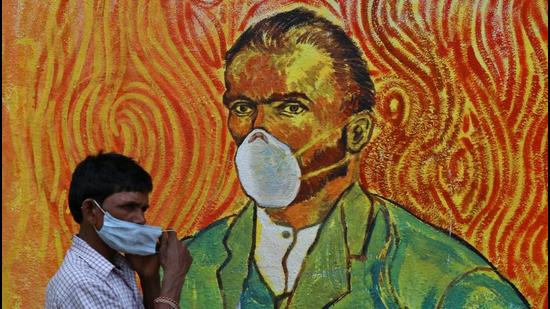
The appearance of new cases in countries outside South Africa is a cause for concern since further growth can be driven by the unvaccinated (REUTERS)
First detected in Botswana on November 9, it has spread rapidly in almost all provinces of South Africa, driving an over tenfold increase in the daily Covid-19 infections. Isolated cases have also been reported from other countries outside Africa, including Israel, Holland, Australia, Belgium, Italy, Germany, Denmark, Australia and a few others. No confirmed cases have so far been reported in India, and the India Sars-CoV-2 Genomics Consortium (INSACOG) is closely monitoring and tracking the new variant.
South Africa first reported the presence of the variant to the World Health Organization (WHO) on November 24. At the emergency meeting of their global Technical Advisory Group, WHO decided to classify this new strain as a “variant of concern”. Genome sequencing suggests that nearly 75% of all new cases in South Africa belong to this category, almost entirely replacing the dominant Delta strain.
Omicron has many more mutations than hitherto known in coronaviruses, including over 30 in the spike protein alone, which is double the number associated with the Delta variant. The Receptor Binding Domain (RBD), which helps create an entry point for the coronavirus to the angiotensin converting enzyme 2 (ACE-2) receptor on human cells, has 10 mutations in comparison to the Delta variant, which has just two. This points towards higher transmissibility of the new variant. The Network of Genome Surveillance in South Africa has already collected over 100 whole genomes as have scientists elsewhere around the world, including those in Israel and the Netherlands. Their data will provide crucial information on the origin and possible impact of these mutations.
The question that needs to be answered is why there should suddenly be so many mutations in the virus, and what possibly could have driven this? Francois Balloux, a computational biologist at the University College, London, suggests the virus could get mutated during chronic infection in a person with a weakened immune system, such as in the case of HIV/AIDS infections. As per current estimates, South Africa has over 8.5 million HIV-infected individuals and just one person could have harboured it.
Most people believe that Omicron could be the worst ever variant of concern (VOC) of the coronavirus known so far. The key questions, then, are the following. One, is it more contagious than other known VOCs and if so, by what degree? The sharp rise in Covid-19 numbers observed in South Africa over the past week suggests that this variant may have a growth advantage and thus be several-fold more transmissible than the most prevalent Delta strain.
Two, has Omicron acquired an “immune escape” property, and thus can it break through the immunity gained through either natural coronavirus infection and/or neutralising antibodies developing following vaccination? It is difficult to answer this unless more data becomes available. Nevertheless, based on the numerous mutations in the spike protein that facilitates the attachment of the virus to the ACE-2 receptors on human cells, this seems probable.
The third and the most important question is whether the new variant can break through vaccine protection against severe disease, which could lead to hospitalisation or death? Is it more pathogenic? There are no clear answers yet.
More than a week after its first report to WHO, there is no clear evidence that Omicron is a game-changer. The chairperson of the South African Medical Association, Angelique Coetzee, who first identified the Omicron variant, has gone on record to state that the variant produced “very very mild” effects such as body aches, muscle pain, fatigue and mild headache. Further, hospitals have not been overburdened by Omicron patients yet and the new strain has not been detected in vaccinated persons. Again more information is awaited as the numbers increase.
The one good thing is that the current Sars-CoV-2 PCR kits continue to detect the variant since the three major target genes, namely RdRp (RNA dependent RNA polymerase), ORF (open reading frame) and the “N” gene each get easily amplified. However, kits containing the “S” gene for amplification may give false negative results since this gene may not get amplified.
The appearance of new cases in countries outside South Africa is a cause for concern since further growth can be driven by the unvaccinated. It is estimated that even 20% of these could keep the virus circulating. A similar situation exists in India since there are close to 160–170 million adults (over 18 years of age) who have still not received even a single dose of the vaccine.
In the face of increasing numbers getting detected each passing day, WHO has issued an advisory to people to not panic and instead continue to observe virus-appropriate behaviour. It is important for people to wear well-fitting masks covering the whole face, maintain hand hygiene, ensure increased ventilation of indoor spaces, avoid crowded areas and, above all, get vaccinated without delay.
Dr Narinder Kumar Mehra is the honorary emeritus scientist of the Indian Council of Medical Research and former dean of the All India Institute of Medical Sciences, New Delhi

 E-Paper