
 E-Paper



Resisting the coercive new global trade order
One must understand the relationship between imperialism and international law. The former is viewed as historical, while the latter is promoted as universal.

 Prefer HTon Google


How should India respond to the challenges posed by the US tariffs of 50%? Some believe that this crisis presents an opportunity for India to implement deeper economic reforms aimed at enhancing the overall competitiveness of its economy. Others argue that India should intensify its efforts to integrate with non-American economies, such as the EU.
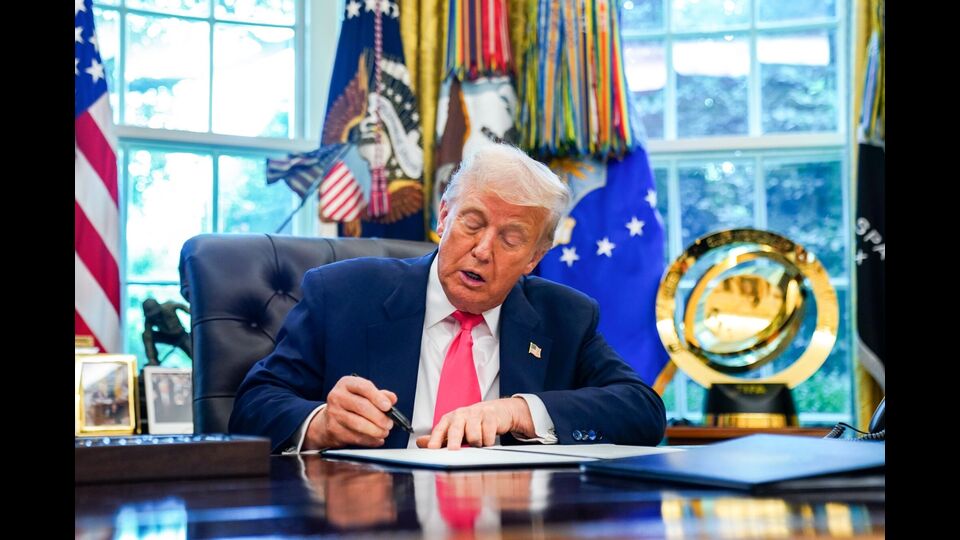
While these measures are undoubtedly necessary, many Indian analysts overlook a larger issue — the new ideological contestation on the global stage aimed at reshaping international law norms governing world trade. Many believe that US President Donald Trump has upended the rule-based international trading order established by the General Agreement on Tariffs and Trade (GATT) and the World Trade Organization (WTO).
However, there is a prevailing belief that this disruption is temporary. Once Trump leaves office, the status quo would be restored. This view, however, is overly sanguine. There appears to be a bipartisan consensus among both Republicans and Democrats in the US regarding the substance of Trump’s actions, even though they may differ in their approach. The Biden administration did little to revive the moribund WTO during its term from 2020 to 2024.
Trump has inaugurated a new chapter in the global imperial project, which his successor may continue. Efforts are underway to establish new rules for international trade. This was made clear by ambassador Jamieson Greer, the US Trade Representative. Greer posits that the US has initiated a new “Trump round” of trade negotiations that, unlike previous rounds at the GATT and WTO, will not rely on consensus-based decision-making.
The key elements of this new global trade order include legitimising American coercion for deeper market access, establishing stronger links between trade and non-trade issues like labour, and, most importantly, implementing unilateral enforcement by the US, as opposed to the apolitical dispute settlement system employed by the WTO. If these rules of coercive capitalism become codified as a new international trade order, it could be disastrous for countries in the Global South, including India. Therefore, it is essential to engage in an ideological battle on the global stage against the radical American populist right.
It is crucial to understand the intriguing relationship between imperialism and international law. The mainstream belief has been that there is a clear distinction between the imperial past and modern international law. The former is often viewed as a historical anomaly, while the latter is promoted as universal and liberal, representing a narrative of decolonisation and development. However, critical international lawyers argue that international law never severed its ties with its imperial and colonial history. Genealogy, they argue, plays a crucial role in shaping international law norms. Therefore, the expansion of capitalism has played a pivotal role in the growth of international law. As India’s foremost international lawyer, B S Chimni, argues, akin to the ‘spirit of capitalism’ — capitalism’s ability to reinvent itself in different phases — there is also a ‘spirit of international law’. This spirit allows international law to evolve continually, ably disguising imperial ambitions within the narrative of progress. On one hand, international law presents itself as a universal tool that promotes the global common good and aims to establish a just world order. On the other hand, it also reinforces the imperial agendas of the Global North.
The evolution of the multilateral trade order from the establishment of GATT in 1948 to the formation of the WTO in 1995 and beyond reflects the “spirit of international law.” This rule-based international trade system, influenced by the assertiveness of the decolonised world, made several concessions to developing countries by recognising principles such as non-discrimination, special and differential treatment, preferential market access, and a depoliticized dispute settlement system that aims to resolve trade disputes without resorting to coercive trade diplomacy.
Simultaneously, international trade law has promoted and exported American and European norms, leading to their universal adoption. A notable example is the treatment of intellectual property rights (IPR). Economist Robert Reich argues that private property is a fundamental element of the Western capitalist model based on free markets. Over time, the rules governing the protection of private property have expanded to include new types of property, such as IPR. International trade law has played a vital role in establishing binding rules for the global enforcement of IPR through the Trade-Related Aspects of Intellectual Property Rights (TRIPS) agreement within the WTO. This framework primarily benefits the corporate interests of countries in the Global North, often at the expense of those in the Global South.
Another significant example is agricultural trade. The US and the EU provide substantial subsidies to their agricultural sectors. They managed to include an Agreement on Agriculture in the WTO rulebook, allowing them to continue offering significant subsidies to their farmers.
Despite its weaknesses, the WTO systemoffers a platform for deeper engagement and the possibility of reform. It provides an opportunity to mainstream the development argument and hold the Global North accountable in a depoliticised international court. The consensus-based decision-making process has mostly prevented the adoption of rules inimical to the developing world. However, the emerging global trade order appears to be unabashedly imperial, abandoning any pretensions of development and equity and sacrificing the spirit of international law. It unapologetically aims to legitimise unilateralism and coercion, validating the connection between imperialism and international law that critical international lawyers draw.
Consequently, the Global South, particularly India, must engage in an ideological battle to defend the existing order. For India, the stakes extend beyond mere market access or a trade deal with the US. India must be at the vanguard in defending the WTO-based international trade system, which, while not perfect, is certainly preferable to the impending new imperial trade order.
Prabhash Ranjan is professor and vice-dean (research), Jindal Global Law School, OP Jindal Global University. The views expressed are personal.


