
 E-Paper



Right to clean air: Public health and respecting religious traditions need not be opposing ideas
It is not enough to issue directions, hold meetings and release advisories while the violations recur every year

 Prefer HTon Google


In September 2015, three toddlers, through their parents, moved the Supreme Court. The three were then between six and fourteen months old. They could not walk properly, let alone speak for themselves. Their parents were left with no choice but to approach the court because Delhi’s air was becoming increasingly unbreathable, and because they feared what it was doing to their children’s developing lungs.
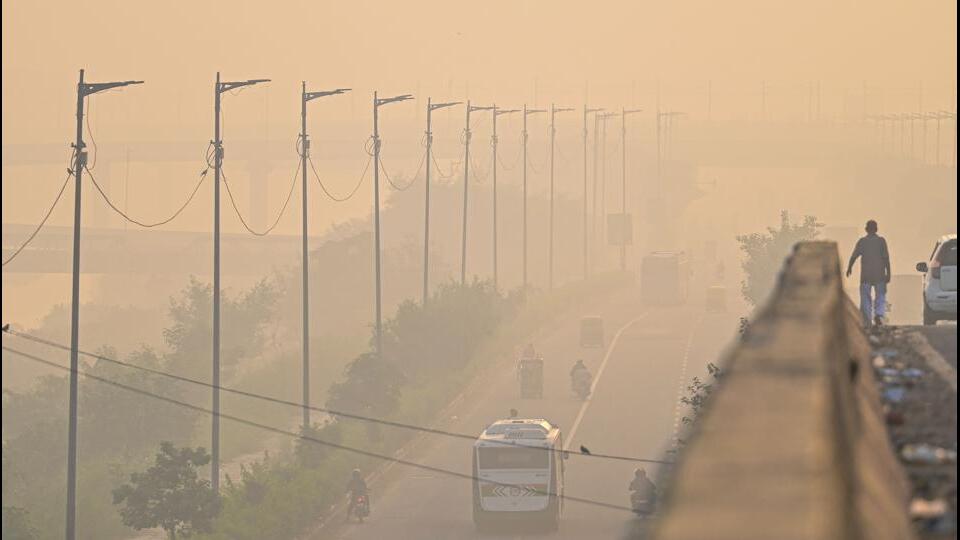
Their petition was extraordinary in its simplicity. They wanted the right to breathe clean air. The petitioners asked the Supreme Court to prohibit firecrackers, among several other measures to address Delhi’s growing pollution crisis. They argued that their lungs were still developing and that exposure to particulate matter and toxic substances could cause lasting damage.
It was a deeply personal fight that became a landmark environmental battle. Ten years later, the question is painfully familiar: what has really changed?
The Supreme Court allowed the sale and bursting of certified green firecrackers in Delhi-National Capital Region (NCR) between 6am and 7am and 8pm and 10pm on November 7 and 8, ahead of Diwali. A complete ban on firecrackers would be reinstated from November 9.
In 2015, the court initially rejected a complete ban, but the continuing deterioration in Delhi’s air quality eventually led to stronger judicial intervention. In November 2016, the court suspended the sale of firecrackers in Delhi-NCR.
In October 2017, a landmark judgment by Justice AK Sikri recognised the need for restrictions in view of the alarming pollution levels. The court subsequently explored alternatives, including green firecrackers, while repeatedly acknowledging the health implications of firecracker emissions.
There were judges who understood that environmental protection was not an optional extra or a matter of public convenience. It was fundamental to the right to life. In the later proceedings, Justice Abhay S Oka took significant positions on the need for stronger environmental safeguards.
These interventions were not always popular. Judges faced public criticism and, in some instances, personal abuse. But judicial responsibility cannot be measured by applause or social media approval. It must be measured by the Constitution and the protection it promises to every citizen, particularly the most vulnerable.
For parents, every judicial order brought a little hope. Every relaxation brought anxiety. Every Diwali brought the same familiar ritual: checking the AQI, shutting windows, keeping children indoors, worrying about coughing and wheezing, and wondering how long a child’s lungs could be expected to withstand this.
In 2018, the court permitted only specified green firecrackers, subject to conditions. Yet the distinction between a court- approved product and what was actually being manufactured, sold and burst on the streets remained a serious enforcement challenge. Green firecrackers were never a licence to pollute, nor were they proof of harmlessness.
By 2024, the Supreme Court was once again confronting the failure of restrictions and the persistent pollution crisis. The court extended a comprehensive firecracker ban across Delhi-NCR, including green firecrackers, and questioned whether there was sufficient scientific evidence to establish that these alternatives were genuinely safe.
Then in April 2025, the Supreme Court imposed a year-round ban on the manufacture, storage, sale and use of firecrackers across Delhi-NCR. But as Diwali approached, the Delhi government, led by Chief Minister Rekha Gupta, announced it would approach the Supreme Court seeking permission for certified green crackers, citing public sentiment and the importance of the festival. The Union government also supported a limited relaxation.
A government cannot have two standards for the same air: one that demands sacrifice from citizens and another that accommodates the firecracker trade. If there is an air emergency, it cannot be seasonal, selective or negotiable.
On October 15, 2025, a bench headed by Chief Justice BR Gavai permitted a temporary, conditional relaxation. Certified green firecrackers could be sold for a limited period and burst during specified hours around Diwali. What followed was hardly a surprise. The morning after Diwali, Delhi recorded PM2.5 levels of 488 μg/m3, more than three times the pre-Diwali level, in what was reported as the worst post-Diwali air quality in five years.
The pollution lingered, hospitals reported a rise in respiratory complaints, and the air-quality monitoring system itself became part of the controversy: 28 of Delhi’s 39 monitoring stations went blank after midnight, with missing data during precisely the hours when pollution was peaking.
The promised green Diwali instead exposed a greenwashing of public health, regulatory failure, and data transparency. By November 9, 2025, parents, doctors and citizens had been pushed to the streets, gathering at India Gate to demand clean air and accountability; some were detained.
For parents who had spent a decade fighting for their children’s right to breathe, this was a deeply troubling reversal. The court had once recognised the precautionary principle; now the emphasis appeared to have shifted towards accommodating the firecracker industry’s interests and festive sentiment.
The question was no longer simply whether firecrackers were harmful, but how much pollution we were prepared to accept. The irony is that the court repeatedly acknowledged the health risks.
Yet, in 2026, we are still here, asking the same questions. During the October 29 hearing, a bench of Justices MM Sundresh and Prasanna B Varale questioned the authorities about their failure to submit evidence of enforcement following last year’s relaxation. How many inspections? How many seizures? How many prosecutions? How many FIRs? Justice Sundresh observed that court orders become a mockery when they are not implemented on the ground. Orders without enforcement, the bench observed, become a mockery.
These were important observations.
The familiar cycle continues: restrictions, relaxation, inadequate enforcement, another hearing, another set of directions. Justice Vikram Nath remarked that Delhi’s air would be very bad
after Diwali. It may have been a passing observation, but for parents it sounded like an acceptance of an annual inevitability. Since when did a constitutional democracy begin treating toxic air after a festival as something we simply have to live with?
There is something particularly disturbing about this normalisation. We are not discussing an isolated inconvenience or a few days of discomfort. Firecrackers release particulate matter and a mixture of toxic chemicals and metals into an already polluted atmosphere.
The consequences do not stop at the boundaries of the homes where they are burst. Babies, schoolchildren, elderly people, patients with respiratory and cardiac conditions, outdoor workers and even those who never touch a firecracker breathe the same air.
And the burden is profoundly unequal. Those who can afford air purifiers, sealed homes and temporary escapes from Delhi have some protection. Millions of families do not. Their children have no choice but to breathe whatever is outside their windows.
We must also ask why the debate is repeatedly reduced to whether a complete ban is practical or whether people’s religious sentiments are being respected. Surely, protecting public health and respecting religious traditions need not be opposing ideas. A festival of light does not have to become a festival of smoke, noise and toxic emissions. Nor should the livelihoods of those in the firecracker industry be ignored; they deserve a just transition and alternative livelihood support. But no economic or cultural argument can erase the public’s right to health.
The responsibility does not rest with the judiciary alone. The government that designs elaborate Winter Action Plans, announces GRAP measures, restricts construction, curbs vehicles and asks citizens to change their lives to fight pollution was the one that approached the Supreme Court seeking relaxation for firecrackers last year. And during this year’s hearing, when questions were raised about enforcement, accountability, and the consequences of that relaxation, the silence from the state was deafening.
The state seems to have a plan for every winter, but no convincing answer for why it is willing to make an exception for firecrackers. People are expected to make sacrifices for clean air, while those responsible for protecting it struggle to explain their own contradictions. Governments, pollution control boards, CAQM, police and licensing authorities must enforce the law. There must be transparent data, inspections, seizures and prosecutions.
There must also be accountability when authorities fail to act. It is not enough to issue directions, hold meetings and release advisories while the same violations recur every year.
But the judiciary has a special responsibility. When children approach the highest court of the land seeking protection of their fundamental rights, their vulnerability cannot be lost in the competing claims of sentiment, commerce and administrative convenience. The precautionary principle must mean something. The right to life must mean something beyond the words in a judgment.
For parents, this has never been about taking away anyone’s celebration. It is about asking what kind of celebration we are willing to defend, and at whose expense. And here is the most heartbreaking part of this story. The three babies who approached the Supreme Court in 2015 are no longer babies.
Arjun, Aarav and Zoya are now approximately 11-12 years old. They should be growing up playing outdoors, cycling in parks, running with friends and enjoying their childhood without having to worry about the air entering their lungs.
Instead, they are growing up in a city where parents still check pollution levels before deciding whether their children can step outside.
A decade has passed. They have grown from infants into school-going children. The court proceedings have continued, judges have changed, governments have changed, bans have been imposed and relaxed, and festivals and celebrations have come and gone. But the air that they deserve to breathe freely remains a struggle. And they are not alone.
Millions of other children, who never filed a petition and whose names will never appear in a court order, are fighting the same invisible battle every single day. High time the voices of these children, their parents, and millions of others are heard—not as pleas for compassion, but as demands for a fundamental constitutional right that the state and the judiciary are duty-bound to protect.
The writer is Delhi-based environmental activist. The views expressed are personal


