
 E-Paper



Terms of Trade | Abhijit Sen: The equal opportunity dissenter
His life and work are an inspiration that the best controversies are those driven by objective intellectual dissent rather than an agenda which is driven by dogma.

 Prefer HTon Google


As personalities go, Abhijit Sen was more eccentric scientist than professor of economics. That he sported a long Dumbledore-like beard, smoked Charms and drank Old Monk was just one part of it. There was hardly a student at the Centre for Economic Studies and Planning, the economics department at Jawaharlal Nehru University (JNU) where Sen taught for more than three decades, who has not heard crazy stories about him.
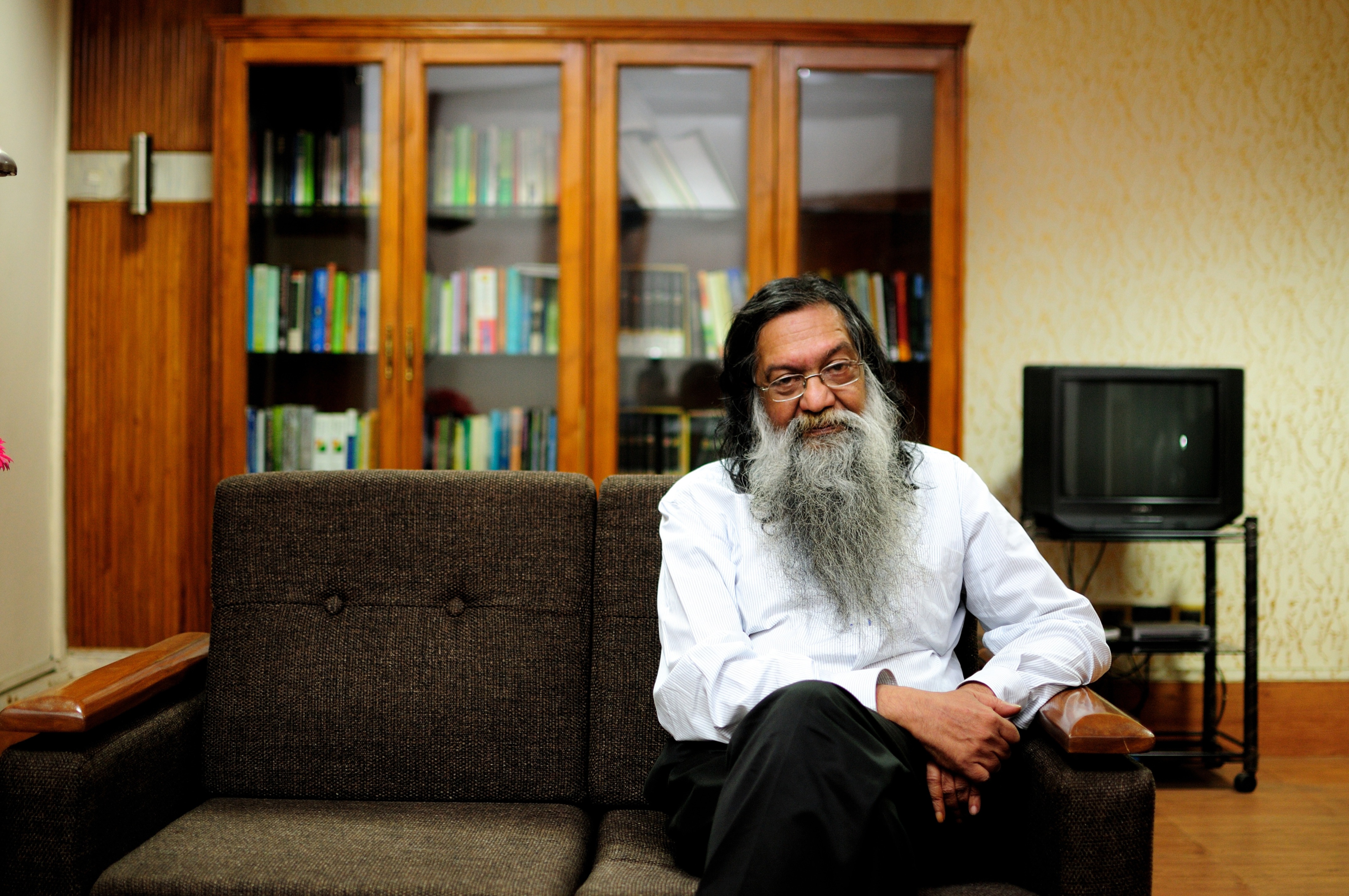
There are many. He once asked his PhD student why was not attending his MA lectures and roaming around in the department during the day. During an MPhil viva of one of his students, he apparently got bored, rolled the examiner’s report into a telescope and started looking at everyone through it. Not only had he taught all courses at the department – professional economists will realize how difficult this is – he apparently taught an entire microeconomics course without taking his hands out of his pockets (read without using the blackboard). If one succeeded in getting him to agree to address a post-dinner talk in the university, one had to stand guard in front of his house, or put in a request to Professor Jayati Ghosh, his wife, to make sure that he did not wander off somewhere at the time.
Whether or not these stories are true is beside the point. But all of us (this author studied economics at CESP) were more than willing to believe them. The reason was simple. Abhijit Sen was pretty much an enigma to the otherwise deeply partisan academic ecosystem at JNU. It was a place where, as naïve students, we would happily judge people by their stated ideologies rather than the merit of their work. Yet, Abhijit Sen, who couldn’t be pigeonholed was a revered figure.
That he was a JNU ‘radical’ who had had multiple stints in policymaking including the coveted position of being a Planning Commission member even after the Left parted ways with the United Progressive Alliance (UPA) government was only part of the reason. In fact, even his first stint in the Planning Commission was not just at the behest of the Left. As Sen told A K Bhattacharya of the Business Standard over dinner in 2013, both the Prime Minister’s office and the Communist Party of India (Marxist) asked Sen to take up that position when it was offered to him in 2004.
When in university, it was his intellect rather than the position of a Planning Commission member which mesmerized everyone. He was known to come up with the sharpest observations and questions during PhD presentations or conferences. To be sure, his official letterhead was perhaps useful for JNU students in getting letters of recommendation from a Planning Commission member for their passports to be made under the Tatkal quota.
Students are always known to make a big deal of their teachers and JNU is perhaps a few notches ahead of its peers in evoking such partisanship. Hence, the question: how should one see the legacy of Abhijit Sen in the discipline of economics in India? He was hardly a prolific writer. Like his student Himanshu wrote in the Indian Express, his body of unpublished work is far greater than what he published. His perfectionist streak was a major impediment here. His multiple policy stints also meant that he had to take a lot of time off from teaching. So is his legacy to be measured by the impressive policy-making positions and awards in his CV? There is a better answer to this question.
Abhijit Sen’s legacy in the field of economics is unique for he was an equal opportunity dissenter par excellence. His ideas in economics and policymaking were always informed by facts rather than dogma or notions of political correctness. And he was so good at dissenting with what he saw as wrong ideas of both the left and the right that neither side was willing to let go of his engagement. Abhijit Sen weighing in on an economic argument was perhaps the best and most honest peer review one could get.
Lest one gets confused, Abhijit Sen was not just a commentator on other people’s ideas. At a very early stage in his economics career, he had demonstrated original insight into one of the most debated and vexed questions of Indian economics. His doctoral research at the University of Cambridge – its summary findings were published in a two-part paper called Market failure and control of labour power: towards an explanation of 'structure' and change in Indian agriculture in the Cambridge Journal of Economics in 1981 – challenged established notions of both the left and right about Indian agriculture being driven solely by pre-capitalist or market relations. While landlords did exploit peasants working on their farms, the former also struggled to supervise the latter’s work, unleashing significant dynamics including mechanization in the process, he argued. Sen’s concluding sentences in the paper are as relevant today as they were four decades ago.
“But the main result of that section is nonetheless a cautionary one for Marxist analysis—the adverse effects of sharecropping etc. might have been historical in the sense that they have already, and perhaps irreversibly, affected the composition of rural society in a way detrimental to growth. The present problem of fragmentation and pauperization in many parts of India, although the outcome of a history of such arrangements, need not be resolved simply by getting rid of these arrangements. The more critical need in these regions today is perhaps for land consolidation and public investment”, he wrote at a time when the utopia about both the Green Revolution and the political promise of land reforms for the Left — the Left Front government had captured power in West Bengal just four years previously — was very strong.
The policymaker Abhijit Sen would never leave the dissenting trajectory the doctoral student Abhijit Sen undertook. Months after joining the Planning Commission in 2004, he along with his student Himanshu wrote another two-part paper called Poverty and Inequality in India in the Economic and Political Weekly. The paper questioned claims of a sharp reduction in poverty in the first decade after economic reforms and attributed the difference between their and official poverty numbers to the methodology of data collection and analysis. This paper is one of the pillars of the Great Indian Poverty Debate and its insights went into the subsequent measurement of poverty in India.
As if the dissent against the official poverty numbers was not enough, he also refused to accept the theory of poverty reaching astronomical levels by Utsa Patnaik, an eminent Marxist economist and a senior colleague from his own economics department (necessary disclosure: she was also this author’s research supervisor). In fact, Sen’s take on poverty and calorie adequacy always questioned the Left’s rhetoric in India. Yet, he was the best ally the left and people’s movements had within the sanitized walls of Yojna Bhawan.
Sen, in a way, preempted many of the ideas which the United Progressive Alliance took up during its term. As the Chairman of the Committee on Long Term Grain Policy, he recommended near universalization of the Public Distribution System (PDS) and asked for issue prices to be brought down to revive offtake from the PDS. This report was submitted in 2002 when India was facing the bizarre situation of overflowing granaries and very high undernutrition levels. The report also had the intellectual integrity to acknowledge that the Food Corporation of India was facing serious trouble and mismanagement and made various suggestions to overcome them. Similarly, while it recommended that the C2 cost measure (it also includes the imputed value of rent of land) be used to fix Minimum Support Prices – this continues to be the main demand of farmers’ organisations to date – he also made it clear that the procurement should be made less geographically skewed even if it meant withdrawing from high procurement regions.
How did Sen manage to maintain this kind of objectivity in his reasoning? The best answer to this question comes from The Report of the Expert Committee on the Impact of Futures Trading on Agricultural Commodity Prices. Sen was the chairman of this committee which submitted its report at the peak of the 2008 global food price spike. The report itself was inconclusive on the role of futures trading on agricultural prices due to a lack of substantive proof. “The period during which futures trading has been in operation is too short to discriminate adequately between the effect of opening up of futures markets and what might simply be the normal cyclical adjustment”, it said.
However, Sen penned a long supplementary note to the report which is a must-read for anyone who wants to apply textbook economic wisdom to solving real-world problems in a third-world country.
“Both the literature on futures trading and empirical facts analysed in this report suggest that there are inherent difficulties if futures markets are introduced for commodities where the government actively attempts to influence prices and is also a large player in physical trade. Although in the longer run there are possible benefits from combining futures-based options with MSP operations as suggested in the Report, it is clearly necessary in the immediate inflationary situation that there be a clear statement of the government’s intent to maintain and expand the current system of public procurement and PDS in order to ensure remunerative prices to farmers and affordable prices to consumers. In this context, combining prudence with the benefit of doubt, the best course of action would be to identify those commodities where there is possibility of futures trading affecting expectations that may influence inflation in essential commodities and insulate these from futures”, it said.
Once again, Sen’s position was a simultaneous dissent from the positions of both the left and the right. A careful reading of the supplementary note suggests that Sen had the unique gift of breaking down any argument into first principles and was also extremely punctilious about following Sherlock Holmes’s warning against theorizing before one had data. This is exactly why he was one of the biggest champions of maintaining the sanctity of India’s statistical institutions. Two anecdotes come to my mind.
The first time we heard Abhijit Sen’s name in our MA classroom was when Jayati Ghosh was talking about NSS data and a first-generation student from Rajasthan told her that in his village people often give wrong responses to the NSS surveyors. Jayati’s first reaction was, “Oh my God, Manik (as Abhijit Sen was known informally) has spent his entire life trying to make sense of those data sets. He will be heartbroken if he hears this”. That India’s data collection needs to become better is a widely accepted criticism. Abhijit Sen was always invested in this problem.
The last time I spoke with Abhijit Sen (over the telephone) was when the government decided to scrap the Consumption Expenditure Survey (CES) report for 2017-18 on November 15, 2019. In the one-and-half decades I had known him, I had never seen him so worked up. He was shouting and kept repeating that this was completely unacceptable. “There have been controversies regarding CES data in the past and I have been part of these controversies, but never has data been withheld and a report being junked… In fact, the best way to resolve such controversies is to release the data transparently and let everybody who is familiar with such numbers, look at it”, he said.
There will not be an Abhijit Sen to create a controversy around the CES data when it is finally released. But his life and work should be an inspiration that the best controversies are those driven by objective intellectual dissent rather than an agenda which is driven by dogma. Of course, this is easier said than done and this is exactly why it will be very difficult to fill the void left by Professor Abhijit Sen.
Every Friday, HT’s data and political economy editor, Roshan Kishore, combines his commitment to data and passion for qualitative analysis in a column for HT Premium, Terms of Trade. With a focus on one big number and one big issue, he will go behind the headlines to ask a question and address political economy issues and social puzzles facing contemporary India
The views expressed are personal


