
 E-Paper



Terms of Trade | Can world’s third largest economy carry the weight of its greatest democracy?
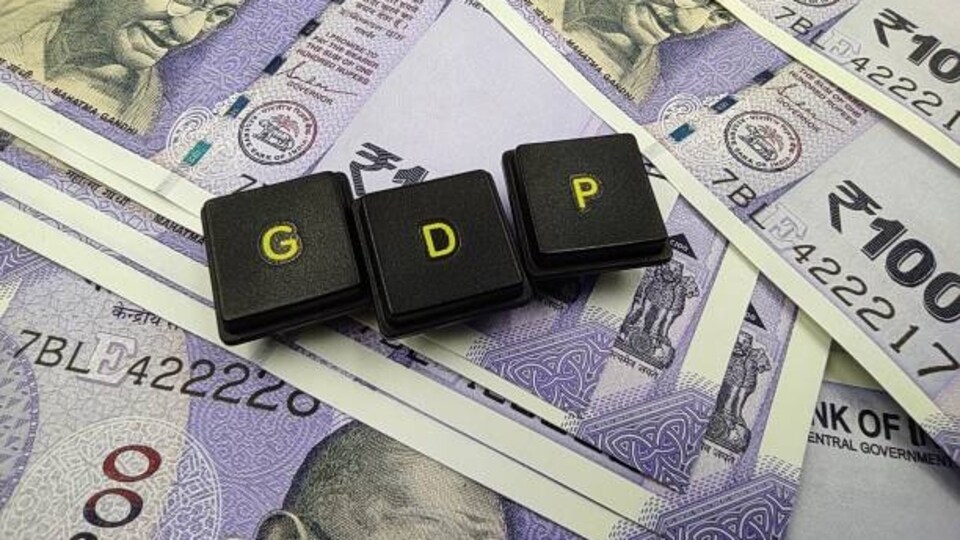
Given the skewed nature of growth benefitting a very small part of the population, a rise in GDP may be unable to provide minimum entitlements to all voters

 Prefer HTon Google


Delivering his 10th Independence Day speech from the Red Fort, Prime Minister Narendra Modi reiterated his “guarantee” that India will become the world’s third largest economy in his third term. One critique holds that this is political exploitation of what is, at the moment, an irreversible statistical trend, but it is difficult to blame any politician for trying to take credit for something good under their rule. Modi also went on to add that India will emerge as a developed country by the time it completes 100 years of its independence. This is a far more controversial and unlikely claim than India’s GDP becoming the third largest in the world in the next few years.
Read more: What India has to do to become a developed country
In fact, it can be said with a lot of confidence that the intersection of politics and economics in India, both in the short and medium term, is more likely to be driven by the challenge of helping an overwhelming majority of Indians who cannot meet even basic, forget developed country living standards. There is more than enough evidence to support this claim. The Indian State, notwithstanding its economic prowess, had to distribute free food grains to over 800 million people after the pandemic. While the additional food quota has been rolled back, it continues to distribute free food under the National Food Security Act (NFSA). There is a massive political traction for subsidised provision of every other necessity; electricity, cooking gas, and transport (whether bus tickets or free scooters to students) are just a few of them. The occasional moral high ground, which the Bharatiya Janata Party, especially the prime minister takes about freebies notwithstanding, all political parties are pragmatic enough to realise that this needs to be done to win elections. The question is how much of this is affordable?
This is where the question of fiscal capacity comes into play. While India’s economic growth has given a big boost to the fiscal headroom for rolling out big-ticket welfare programmes, economic expectations of state support have actually increased rather than decreased with India’s upward mobility in the world economy. It is increasingly becoming clear that in a business-as-usual scenario, both the Centre and the states will find it increasingly difficult to keep giving such benefits to voters (to make up for the failure to achieve an egalitarian economic transformation) to win support without cutting back on necessary investments in physical and social infrastructure.
The 15th Finance Commission had expressed serious concern on this question, especially vis-à-vis the Centre being fiscally overstretched because of taking more and more fiscal commitments on matters which are on the state list. What it did not say explicitly was that such spending has brought clear political rewards for the party at the Centre. The BJP has aced this game much better than the Congress. The states, on the other hand, have been insisting that the Centre has been violating the spirit of the Finance Commission devolutions by shifting a large part of the central revenue to what is called the indivisible pool. To be sure, none of these are exactly new developments.
What could add a new twist to these debates is a letter written by the Karnataka government to the ministry of finance, the contents of which were reported in the Deccan Herald on August 14. The crux seems to be that Karnataka is arguing that a large part of its GSDP is on account of incomes generated in cities like Bengaluru (and it, therefore, does not accrue to a large majority of residents in rural areas). Poorer states enjoy a bigger share of central transfers under the finance commission framework. An HT analysis of the latest Karnataka election results – which showed that the Congress did particularly well in poorer districts of the state – underlines this argument. The letter also argues that because states like Karnataka generate a lot of income for migrant workers, their positive role on this front should be rewarded under the fiscal federalism framework. To be sure, one could argue that without the influx of cheap labour from poorer states, the economies of rich and demographically older southern states will increasingly find themselves in crisis.
It needs to be reiterated that the arguments made in the Karnataka government’s letter are not a state specific problem. More and more political parties are realising that even performing well on the so-called growth standards is not going to generate enough resources for them to be able to provide tangible gains to an overwhelming share of the electorate, which is what matters as far as prospects of re-election are concerned. To give an example, states such as Karnataka and Tamil Nadu are at the forefront of the electronic manufacturing push (such as the latest iPhones) in India. But the employment and mass income impact of these success stories will not even run into hundreds of thousands. Of course, the fact that Goods and Services Tax (GST) has changed the incidence of India’s indirect taxes from the point of production to consumption has further tilted the scales against the states which have done well on the manufacturing front.
While the 16th Finance Commission and its terms of reference are yet to be constituted, the Karnataka government’s letter suggests that it will have to deal with these emerging fault lines in India’s fiscal federalism and broader political economy framework. The central contradiction here is whether India’s upward mobility in terms of rise in headline GDP numbers, given the skewed nature of growth which benefits a very small part of the population, will generate enough fiscal ballast to ensure democratic legitimacy by providing bare minimum entitlements to a large number of voters. As of now, there is very little to instil optimism on this front. This, rather than the binary narratives of economic boom and gloom are the question to reckon with in India’s political economy landscape.
Every Friday, HT’s data and political economy editor, Roshan Kishore, combines his commitment to data and passion for qualitative analysis in a column for HT Premium, Terms of Trade. With a focus on one big number and one big issue, he will go behind the headlines to ask a question and address political economy issues and social puzzles facing contemporary India.
The views expressed are personal


