
 E-Paper



Terms of Trade | In India, the limits of democratic plumbing
Turning to institutional fixes without doing the hard work of politics will not bring sustainable political change


When the drafters of the Indian Constitution decided that India will follow a universal franchise-based democratic model in 1950, they took a huge leap of faith. Just a little over 10% of the country was literate. India had undergone a violent partition on religious lines. Feudal oppression, rooted in caste-based divisions, was a reality.
Did India stand a chance as a democracy?
Not many, at least in the western countries, thought so. And yet, in the 75th year of its independence, India has emerged as almost a unique exception to much of the decolonised world. Not only has it managed to preserve its democratic framework – the only exception is the two-year emergency, but that too saw a peaceful transition of power – but it has also made it more inclusive (at least on the critical caste question) and deeper (in terms of the third tier of governance).
On certain questions, such as preventing the vulnerable from being robbed of their right to vote (the Indian lexicon for this is booth capturing) there has been remarkable progress. Even on questions of democracy between elections, such as the central government arbitrarily dismissing state governments or rule-based transfer of resources between different tiers of government, we have had a progressive evolution if one were to make the comparison over a long arc of history.
To be sure, one can argue that this is the proverbial “glass is half-full” view of Indian democracy. Elections are becoming more and more expensive and the representatives elected through them are richer than the average voter. The share of women in legislatures at every level continues to be woefully inadequate. In the period after 2014, religious minorities, especially Muslims are facing a de-facto political disenfranchisement.
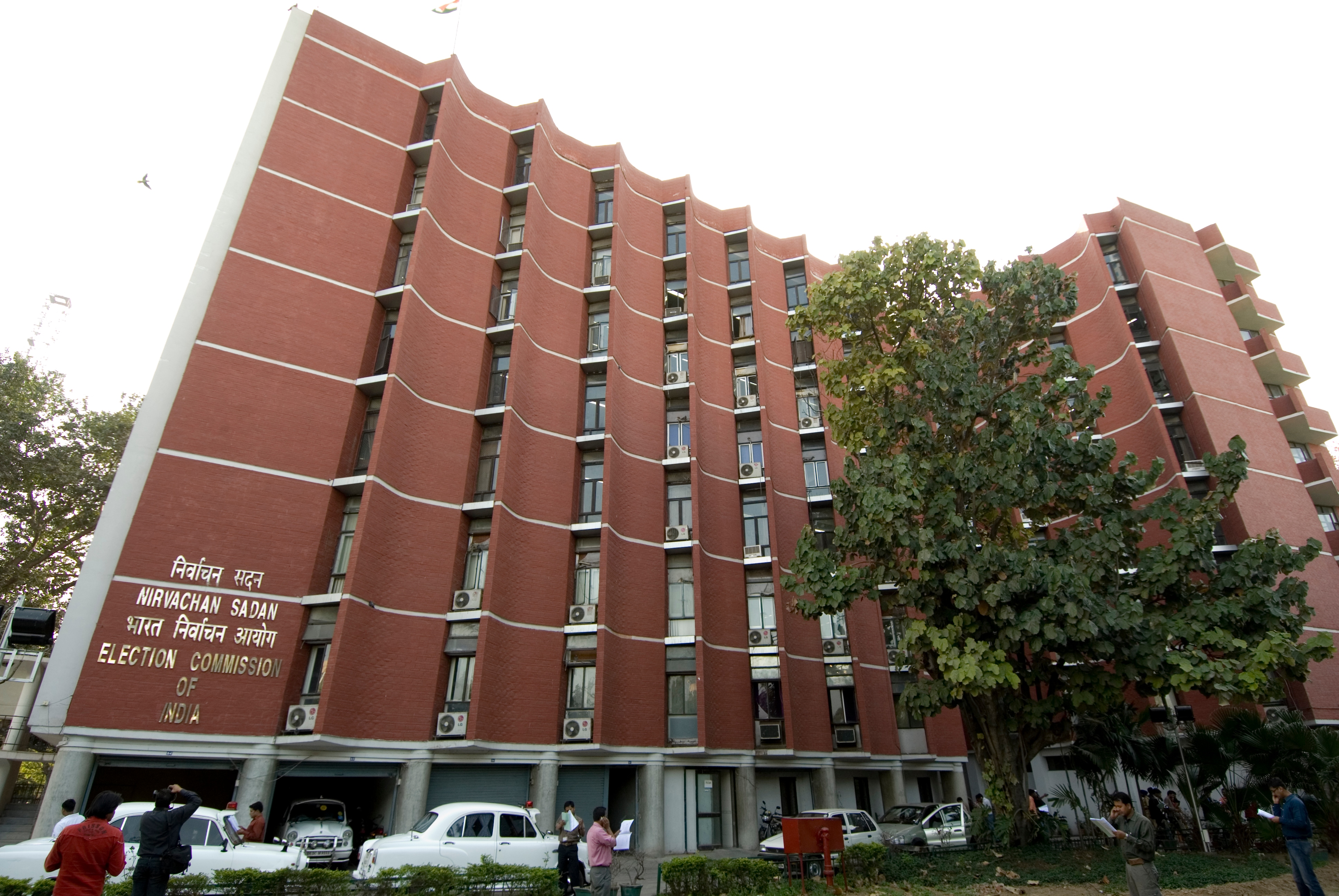
The Election Commission of India (ECI)'s latest proposal to amend the Model Code of Conduct (MCC) for elections – it asks political parties to come clean on the fiscal implications of the promises in their manifesto – suggests that there is another growing threat to India’s democratic framework. The rapid proliferation of freebies to win elections has led to a situation where, we are told, political competition is threatening the long-term fiscal sustainability of the Indian state. By implication, this also poses a threat to the prosperity of our future generations.
While one can argue that the ECI is being naïve in believing that the problem can be solved by getting parties to put the implications of such promises in the public realm, the occasion gives a good opportunity to ask a more macro question about Indian democracy. Can all its problems be fixed by taking the plumbing route of mostly the judiciary or the ECI, and in some cases even the legislature, passing directives to purge them from our democratic framework?
The question, one must admit, is a cynical one. The institutions which are trying to find a plumbing fix to our democracy have been created by democratic processes and are (mostly) well within their rights to pass such strictures. Many such institutional interventions have actually changed Indian democracy for the better. Many others – ECI asking candidates to declare their financial and criminal backgrounds is a good example – have at least improved transparency even if they have not changed things on the ground. Most of these interventions are the result of years, in some cases even decades, of painstaking research, advocacy and eventual consensus building by private citizens or associations driven by genuine concern. While credit must be given to such actors for all they have done, this is a question which must be asked.
Democracy, in its crudest form, entails that the majority view should always prevail. Democracy, as it is desired, especially in its progressive version, wants institutional checks to make sure that the majority does not end up crushing the basic human rights of the minority. What complicates matters between these two extremes, especially in the first-past-the-post democratic systems such as India’s, is the fact that the executive’s legislative majority need not even be based on the support of majority of the electorate.
Of course, it is entirely possible that the majority of voters who vote for a political party do not necessarily endorse its policies which are to the detriment of minority rights but are also unwilling to change political loyalties because of such policies. While this tension is often highlighted by the so-called liberal camp, there is another, often ignored, inherent tension in democracies which work under capitalism (this includes the entire democratic spectrum in today’s world).
Can the minority of “haves” subvert the democratic system to prioritise its material interests to the detriment of “have-nots”?
This kind of subversion can work simultaneously through two channels — an organic intellectual hegemony of the privileged elite or a quid-pro-quo based institutional capture of the executive and legislature through the political finance route. While it is not very fashionable to articulate this view today, this was once a widely discussed topic in social sciences. English sociologist Ralph Miliband’s 1969 book The State in Capitalist Society is a cult classic on the subject.
There is a good case to argue that most of the problems which affect India’s democracy are the result of these two channels. If the majority agreed with the liberal critique that the current regime is acting against the interest of minorities, it would not enjoy political power. Similarly, if voters were concerned about political parties frittering away future sustainability and prosperity by throwing freebies to win elections, they would punish rather than reward such attempts.
Does this make democracy a lost cause in India? Not necessarily. Public opinion is not something which is fixed for eternity. A lively democracy, and this is where capitalist democracies, notwithstanding their Marxist criticism, have proved better than theoretically egalitarian communist regimes, is one which guarantees freedom for diverse political opinions to articulate and canvass support for divergent views about what governments ought to do.
While this freedom is always subject to constitutional checks and balances, India’s own historical experience is testimony to the fact that democratic aspirations, when they have crossed a critical threshold, have the ability to transform constitutionally permissible limits. Of course, such transformations can take both progressive or regressive directions depending on one’s ideological framework.
Most of the plumbing attempts to fix Indian democracy’s problems are nothing but institutional actors trying to transform Indian democracy without mobilising adequate public opinion. While some of them do succeed, it is only natural that this short-cut route will not work for a whole lot of things.
It is useful to end by quoting Lenin, even at the risk of scandalising most people who swear by democratic values. “Of course, an intellectual, or a Left Bolshevik, can try to talk his way out of difficulties”, but “politics begin where millions of men and women are; where there are not thousands, but millions, that is where serious politics begin”, he said presenting the political report of the Central Committee to the Seventh Congress of the Russian Communist Party in 1918, the first after it had captured power in the 1917 October revolution.
Irrespective of whether one agrees with the ideas of Lenin and his successors about communism and the fate of democracy in communist regimes, everybody, especially the champions of finding plumbing fixes to problems of Indian democracy will do well to go with their ideas where there are millions of men and women and not just thousands. The same logic applies to those who disagree with the hegemonic attempts to short-circuit democratic processes as well.
Every Friday, HT’s data and political economy editor, Roshan Kishore, combines his commitment to data and passion for qualitative analysis in a column for HT Premium, Terms of Trade. With a focus on one big number and one big issue, he will go behind the headlines to ask a question and address political economy issues and social puzzles facing contemporary India.
The views expressed are personal


