
 E-Paper



The case of former Pakistan PM Imran Khan: US amnesia on democracy
Washington will likely view a managed political accommodation for Imran Khan more favourably than his release that precipitates renewed confrontation

 Prefer HTon Google


Three years after his arrest, Pakistan’s former Prime Minister Imran Khan remains incarcerated, with no definitive indication that his release is imminent. Although recent speculation has centred on the possibility of a medical release, these discussions remain contingent on broader political calculations rather than legal momentum.
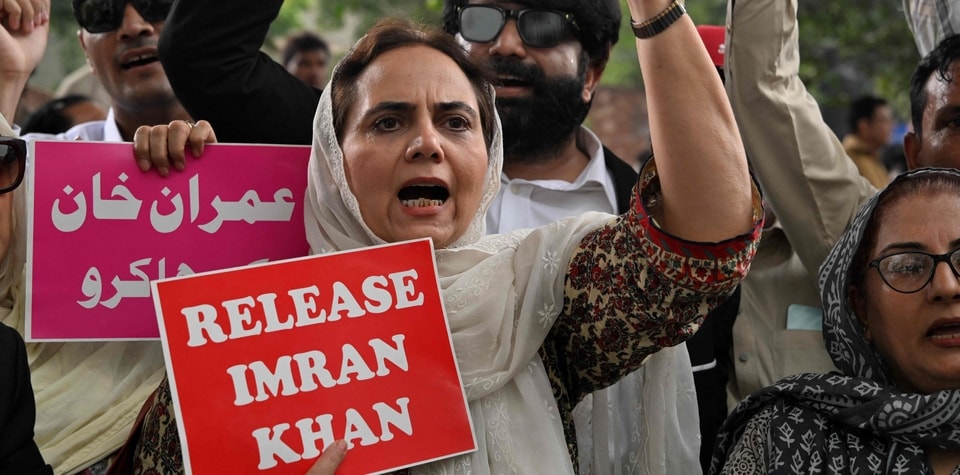
At 73, Khan continues to be held primarily in solitary confinement at Adiala Jail in Rawalpindi, serving sentences in multiple cases, including the Toshakhana and Al-Qadir Trust convictions, which both he and the Pakistan Tehreek-e-Insaf (PTI) insist are politically engineered by Pakistan’s military establishment in concert with the Shehbaz Sharif government. Khan continues to face dozens of additional legal proceedings, ensuring that even favourable outcomes in individual cases would not necessarily secure his freedom. His deteriorating health has injected new urgency into the debate. Reports throughout 2026 suggest that Khan has suffered severe vision loss in one eye following central retinal vein occlusion, with his family and advisers attributing the damage to delayed medical intervention. They have also repeatedly highlighted prolonged isolation, restricted access to lawyers and family members, and worsening overall health. Against this backdrop, PTI has sought to mobilise public opinion through nationwide protests, particularly around the symbolic three-year anniversary of Khan’s imprisonment.
Also read: Police search 26 locations in Kashmir linked to Jamaat-e-Islami activists
Imran Khan's fate rests with judiciary
Recent media reports suggest that informal discussions are underway regarding a possible release on humanitarian or medical grounds. This would resemble political accommodations extended to figures such as Nawaz Sharif. Yet, the prospects remain uncertain. The government insists that Khan’s fate rests with the judiciary while rejecting the case for medical bail. Equally significant is the widespread belief that Khan is unlikely to accept conditions such as political silence or exile, while the military establishment appears reluctant to release a leader who continues to command significant popular support and has consistently resisted political compromise. Given the slow pace of judicial appeals and the absence of a broader political settlement, claims of an imminent release remain speculative.
Pak-US ties
The trajectory of US-Pakistan relations has become increasingly detached from Pakistan’s domestic political contestation. Since Donald Trump’s return to office, bilateral engagement has been rebuilt primarily through Pakistan’s military leadership rather than its civilian political class. Army chief Asim Munir has emerged as Washington’s principal interlocutor, reflecting a broader shift toward a security-driven relationship centred on counterterrorism cooperation, regional crisis management, and military engagement, including continued support for Pakistan’s F-16 fleet. Within this framework, Khan’s potential release would matter less as a democratic milestone than as a variable affecting Pakistan’s internal stability.
A carefully negotiated release, particularly one accompanied by political restraint or temporary exile, could help reduce domestic polarisation and recurring political mobilisation that continue to complicate governance and economic recovery. Such an outcome would likely be viewed in Washington as contributing to the stability of a strategically useful partner without fundamentally altering existing patterns of bilateral cooperation.
Conversely, a politically empowered Khan returning to active politics would introduce fresh uncertainty into Pakistan’s internal balance of power. His popularity could challenge the military-backed political order that has underpinned Pakistan’s recent engagement with the US. While some Republican lawmakers and figures close to the Trump administration have advocated Khan’s release, official US policy has treated his legal predicament as an internal Pakistani matter. Washington’s broader strategic engagement has remained anchored in State-to-State, and increasingly military-to-military, relations rather than support for any particular political actor. US-Pakistan relations remain driven far more by strategic utility than by democracy promotion or human rights conditionality. A managed political accommodation would be viewed more favourably than a release that precipitates renewed confrontation between Khan and the military establishment.
Khan has consistently argued that his removal through the April 2022 no-confidence vote was facilitated by US pressure arising from disagreements over Pakistan’s foreign policy, particularly his independent approach toward Russia and broader geopolitical positioning. Central to this narrative has been the so-called diplomatic “cypher,” documenting a March 2022 conversation in which US official Donald Lu reportedly suggested that bilateral relations would improve following Khan’s removal. While the US has denied orchestrating regime change, this has remained a defining feature of PTI’s political narrative.
Ironically, Khan’s imprisonment has coincided with an improvement in US-Pakistan relations. As Pakistan’s military leadership restored close ties with Washington, external pressure over Khan’s detention steadily diminished. Although the Biden administration witnessed congressional concern, human rights criticism, and international scrutiny, including findings by the UN Working Group on Arbitrary Detention, these concerns never fundamentally altered the strategic calculus governing bilateral relations.
Under the second Trump administration, this trend has become even more pronounced. Engagement has increasingly focused on Pakistan’s military leadership, elevating security cooperation and regional diplomacy over governance concerns. While individual American lawmakers and political figures have continued to advocate Khan’s release, official US policy has largely prioritised maintaining constructive relations with the country’s existing power structure. Khan’s own history of anti-American rhetoric has further limited the emergence of bipartisan support for him within Washington. As US-Pakistan ties have deepened through military channels, international leverage over Khan’s incarceration has correspondingly weakened.
The debate surrounding Imran Khan’s possible release reflects the broader realities of Pakistan’s political system. Legal arguments and humanitarian considerations remain secondary to the calculations of the country’s civil-military balance. Any meaningful change in Khan’s status will thus emerge through political negotiation rather than judicial resolution alone.
Similarly, the evolution of US-Pakistan relations underscores a familiar pattern in international politics: strategic interests have consistently outweighed democratic concerns. Washington’s renewed engagement with Pakistan has been constructed around the post-Khan political order, with the military establishment serving as the principal pillar of bilateral cooperation. Unless Pakistan’s internal political equilibrium undergoes a significant transformation, Khan’s future — and the international response to it — will continue to be determined primarily by domestic power politics rather than external pressure.
Harsh V Pant is vice president, ORF. The views expressed are personal


