
 E-Paper



The Opposition needs to think about five Cs to fight the BJP in India
India’s Opposition needs five Cs if it wants to pose a serious challenge to the BJP: Cult, Capitalism, Culture, Caste, and Contradiction.


The forthcoming election cycle, which will also include the state of Uttar Pradesh, will, in many ways, set the tone for the national contest in 2024.
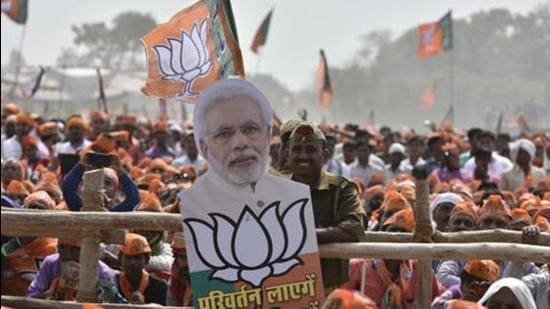
It was the Bharatiya Janata Party’s (BJP) 2017 victory in Uttar Pradesh which led Nitish Kumar of the Janata Dal-United to part ways with the Rashtriya Janata Dal in Bihar and put an end to all hopes of a united front tactics against the BJP in 2019. It is always hazardous to predict electoral outcomes. But it can be said that the BJP does not appear to be particularly vulnerable, at least in Uttar Pradesh and other Hindi-speaking states, at the moment.
What will it take to revive the Opposition in India? Politics is the art of the possible and, unlike what a lot of people like to believe, there are no quick fix solutions to it. It is also important to realise that while every electoral outcome matters, politics is more than just individual election results. One should expect more and more election related adjustments, both within and between parties, as the next election cycle comes closer.
But here are five Cs which India’s Opposition needs to engage with if it wants to pose a serious challenge to the BJP, which is India’s undisputed political hegemon at the moment.
Cult: The political fortunes of today’s BJP cannot be imagined without Narendra Modi. As much as the Opposition likes to attack and criticise Modi, he is pretty much a cult figure in Indian politics today. Consider this fact. If Modi manages to win the 2024 elections for the BJP, he would be the first prime minister since Jawaharlal Nehru to have won three consecutive general elections. In terms of mass appeal and recognition among the masses, Modi is perhaps at par with Nehru and Indira Gandhi. The last time the Congress won a Lok Sabha majority was in 1984 when there was a sympathy wave after Indira Gandhi was killed by her bodyguards while in office.
That the BJP performs much better in national elections than state elections is a clear proof of the fact that Modi’s cult is a political trump card for the BJP.
There is no one in the Opposition who can successfully offer a counter to this cult at the moment. The situation was almost similar in the first half of the 1970s. The economy was in a crisis and popular discontent was rising. But the Opposition did not have any active politician to match Indira Gandhi’s cult. They had to bring Jayaprakash Narayan back from political retirement to solve this crisis. As a freedom fighter and a former comrade of Mahatma Gandhi, he had the moral authority to assume this mantle and offer another pole to counter Indira’s cult. There is no JP to be brought back, even if the Opposition wanted to, today. This means two things. Either the Opposition waits for Modi to step down, or it mounts an attack without a counter-cult. The feasibility of the latter project brings into play the other four Cs.
Capitalism: Nobody, not even the communist parties, seriously believes that there is any alternative to capitalism in India. In fact, three decades of economic reforms have made sure that there will not even be a return to the State-controlled capitalist model which India adopted after Independence.
Neither of these developments mean that Indians do not have economic expectations from the State or that they are in love with the kind of capitalism that exists in India. In fact, one can argue that the crisis of Indian capitalism has never been graver than what it is today.
Almost all the low-hanging fruits of economic reforms have already been plucked. Efforts such as formalisation by diktat, which has been at the core of the current government’s economic philosophy, have hurt rather than help the cause of growth. The policy-administered shock to the informal sector, along with the fiscal conservatism of the government in the aftermath of the pandemic, has perhaps done long-term damage to the Indian economy’s growth potential. The IMF’s latest World Economic Outlook slashing India’s potential growth rate by 25 basis points – one basis point is one hundredth of a percentage point – to 6% is the first institutional recognition of this fact. The multilateral trading system is mired in a deep crisis and protectionism in the advanced economies will continue to generate headwinds for export led growth.
Going forward, politics needs to strike a fine balance between rejuvenating India’s growth prospects and matching poor people’s aspirations through short-term measures such as cash/in-kind transfers – they are on the list of political promises by every party in all kinds of elections – which do not do much to add to India’s long-term growth potential. This balance will not come until political parties start actively championing the cause of long-term investment in the economy and social sector spending.
Another challenge which Indian capitalism will have to deal with is the growing conflict between big and small capital. India’s big business, especially those at the top of the pyramid, is thriving. Unfortunately, it looks like a zero-sum game at the moment, where the improvement in big business’s fortunes is coming at the cost of a growing squeeze on smaller entrepreneurs and an overwhelming mass of workers. Because the rich do not spend as much as the poor, the squeeze on smaller stakeholders in the economy does not bode well for future demand and therefore growth. This is also an unsustainable trajectory in a democracy, as rising inequality and now even poverty, will create social tensions and conflict.
Whether the Opposition can handle this tension or not will depend a lot on its ability to evolve a different political funding model and move away from the norm of big-business funding political parties. This is a model the BJP has almost completely monopolised in any case.
Caste: BR Ambedkar is India’s most important and influential social-reformer. But his cherished dream of Annihilation of Caste is as unviable and irrelevant as the vision of Nehruvian socialism in today’s India.
Caste identities are here to stay and they continue to be the central fault line in politics, especially at the grass root level. Given the historical link between caste and class – the socially deprived did not own land in India – the political advances by lower castes after the adoption of universal franchise has been an egalitarian influence in India’s political economy.
However, policies such as reservations etc. have perhaps hit the limits of their benefits in India. This is not because reservations are ineffective in helping those who gain from it or hurt the cause of merit and productivity, a common rhetoric used by those who oppose it. The real problem is there aren’t enough jobs to be given to the vast section of the population which enjoys reservations in theory. As the State withdraws more and more from the economy, this pool will only contract going forward.
The political parties which exploited the gains of the deprived caste mobilisation in the pre-reform years refuse to see this reality. This is accompanied by the absence of any serious thinking by such parties on the transformation of Indian capitalism, especially in agriculture. An HT analysis published on September 22 had argued that caste is the biggest impediment to building a strong farmers’ movement in India. Also, Other Backward Classes (OBCs) are far from a homogenous lot today and the economic divergence is beginning to show up in politics, with lower OBCs increasingly seeking a different path from the dominant OBCs.
The Mandal era parties are also unwilling to acknowledge the strategic recalibration that the BJP and its ideological parent, the Rashtriya Swayamsevak Sangh (RSS), have made on the caste question, which is completely at odds with their perceived image as an upper-caste party. The Prime Minister is a lower OBC and the President a Dalit today. Any credible historical account of the RSS will confirm that its efforts to woo the socially backward Hindus is a project which was started even before the BJP came into being in 1980.
The fact that the BJP does not have to accommodate Muslims also makes the task of handling the tension between upper caste and lower caste political representation easier. The Opposition’s uncritical endorsement of Mandal politics, ironically, will only make sure that a sizable chunk of upper caste votes will continue to go the BJP despite greater accommodation of OBCs within its ranks.
These two developments mean that the hopes of repeating a 1990 style Mandal-polarisation to defeat the BJP are extremely unlikely. None of this means that caste will not matter in Indian politics, especially at the grassroots level. But it is unlikely to be the game-changer in a fight against the BJP.
Culture: Some people might scoff at the choice of the term culture against communalism. The BJP’s success, after all, is contingent on achieving and maintaining a rainbow coalition of the Hindu voters. However, there are now enough indications to show that cultural differences offer a better vantage point to understand the BJP’s success or lack of it.
The BJP is still struggling to breach the Dravidian firewall to its politics. Even in a state such as West Bengal, where the Trinamool Congress managed to stall the BJP’s advance in the 2021 assembly elections, regional sub-nationalism and the attack of the BJP being a party of “outsiders” played an important role.
What is a disadvantage for the BJP in non-Hindi speaking states becomes a huge advantage in the Hindi belt. To be sure, the BJP is strong in non-Hindi speaking states such as Karnataka too. But its support base is more vulnerable and local leaders and groups such as B. S. Yediyurappa and the Lingayayts play and important part.
The BJP’s political genius lies in the fact that it has successfully exploited entrenched cultural beliefs (such as intolerance to beef-eating and inter-faith marriages) to further its agenda of precipitating a religious polarisation. The BJP is pragmatic enough to avoid confrontation on even its core issues when they are in violation of established cultural norms. Its stance vis-a-vis beef eating in Kerala is a classic example. Such calibrations, however, are more tactical than strategic in nature. The cultural intervention to build a homogeneous Hindutva identity continue.
The RSS-BJP duo has also been extremely clever and farsighted in appropriating cultural icons of various sections of the Hindu society as well. Many of them could actually be used to make a case against the political ideas of the RSS-BJP ironically. A lot of this is the result of decades of political experience the RSS has acquired from grassroots activism in these regions and the complete absence of a synchronised cultural intervention from the other side of the political spectrum.
The Hindi-speaking regions offer a natural advantage to the BJP’s conservative and divisive politics because they have not had a history of social reform movements. However, marrying electoral politics with a campaign attacking established cultural practices as retrograde or even illiberal is a recipe for disaster for the Opposition, especially when a strong political force like the BJP is mounting a strong defence of such values. Once again, this is an agenda which has to be taken up in a consistent manner at the level of cultural intervention.
Contradiction: The moralist view on politics often accuses it of indulging in hypocrisy. A more pragmatic take can describe the same thing as the art of handling contradictions. All successful political personalities have been masters of the art. Mahatma Gandhi and his party, the Indian National Congress, was funded by India’s richest capitalists. Yet he had a massive following among the poor. Communists are the biggest ideological adversaries of the RSS-BJP in India. Yet, the two came together on more than one occasion to dislodge the Congress from power.
The BJP is managing its own set of contradictions, both at the macro and micro level, today. Its claims of delivering maximum welfare benefits are accompanied by what is perhaps unprecedented economic misery today. Its strategy of political empowerment of the hitherto underrepresented social groups will have to deal with consequences of the BJP becoming an extremely centralised party and regional political leaders increasingly becoming figureheads. Its tactical design of toying with communal polarisation to game elections will have to confront the threat of a social rupture beyond repair and a severe impairment of civil liberties. Both of these can hurt economic growth and undermine national security in the long-term.
The existence of these contradictions, however, do not necessarily mean that they will overwhelm the BJP and its politics. The BJP will only be cornered when such contradictions are precipitated via the routes of the four Cs of cult, capitalism, caste and culture discussed above. Doing this will require a marriage of a new political line with practice.
We will know this is beginning to happen when there is a vibrant debate within the Opposition’s ranks instead of the existing sycophancy driven endorsement of what has become an ossified leadership trying to do the same things again and again in the expectation of achieving a different result every time.
India’s Opposition would do well to pay heed to something Mao Zedong wrote in 1937 in his essay, On Contradiction, “Opposition and struggle between ideas of different kinds constantly occur within the Party; this is a reflection within the Party of contradictions between classes and between the new and the old in society. If there were no contradictions in the Party and no ideological struggles to resolve them, the Party’s life would come to an end”.
The views expressed are personal
 ABOUT THE AUTHORRoshan Kishore
Roshan Kishore is the Data and Political Economy Editor at Hindustan Times. His weekly column for HT Premium Terms of Trade appears every Friday.


