
 E-Paper



Trump and politicising of policing in America’s cities
Crime and its handling have become highly politicised. There is always the suspicion that figures have been massaged with the connivance of those in authority

 Prefer HTon Google


US President Donald Trump’s latest “war on crime in cities” will likely win the hearts of many in the country’s urban population, who are exercised over the high rates of street crime. Gun control is mainly on paper, and firearms account for a substantial number of homicides.
Trump’s resolve to make US cities safer is, on the face, laudable. The average white American seems to feel unsafe and impotent without a gun in possession for self-defence. But Trump’s campaign comes at a time when crime is reportedly declining in some cities, such as Washington DC and Chicago. This is why his “war on crime” is raising eyebrows.
Some observers see Trump’s move to take over policing in the larger cities, especially Democrat-run ones — albeit statutorily for a maximum of 90 days at a time — as soaked in politics. Crime control in the US is a state/city subject, and the federal government has only a marginal say. Federal agencies such as the FBI, Secret Service, department of homeland security may all perform partial police functions, but are not charged with handling routine crime.
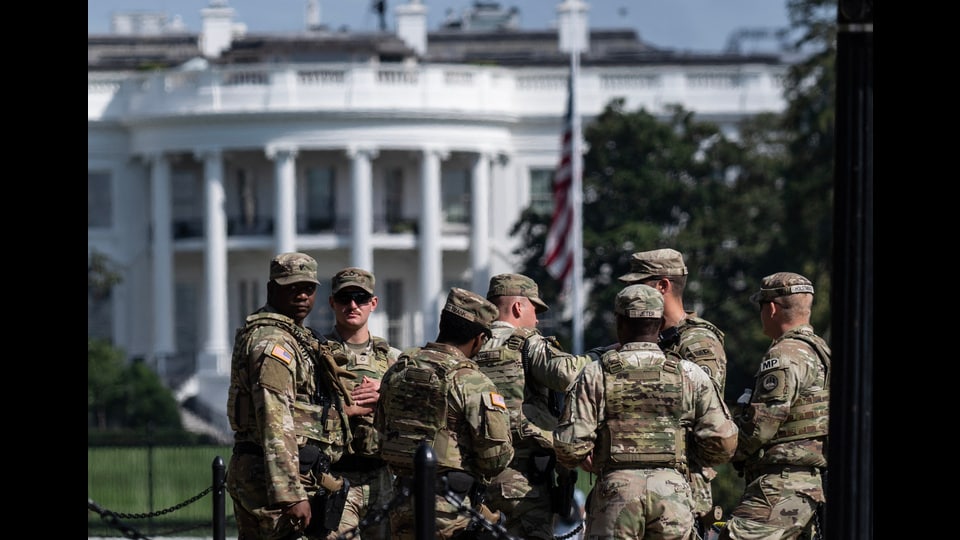
Trump, in his second term, first took the National Guards (NG) to Washington DC, pushing a slew of questionable measures to bring down crime. He has cast aside constitutional propriety to do this. NG, an armed contingent, is a kind of reserve force jointly constituted by the federal government and the states, available to either of them to meet any contingency, including natural calamities. It is jointly managed by the US president and state governors. It has been deployed during several past civil disturbances and natural calamities. But this is possibly the first time that it has been deployed to combat crime such as homicide and rape. Initial reports point to a slight drop in such crime after the NG troops were posted for patrol duty in the US capital. The point is such decline is likely not sustainable.
Democrat mayors rightly resent such blatant interference in their exclusive domain. The US has nearly 18,000 stand-alone police departments, each under an elected mayor. The police chief (variously titled in the different forces) is appointed by the mayor and remains in office under the latter’s pleasure.
However invidious it may be, the temptation to compare our own capital’s crime problem with that of Washington DC is irresistible. The 90,000-strong Delhi Police has a geographical area (42 sq kms) to cover and a 26 million population to protect. The Washington DC Police Department has much smaller manpower (4,000), polices 176 sq. kms, and has little more than half a million people to service.
Both capitals have a nagging crime problem. Delhi reported 504 murders last year and 2,076 rapes. Washington DC reported 186 homicides in 2024, a significant drop from 265 in 2023. Sexual offences showed a 45% drop. Interestingly, the White House recently claimed that Washington had a much higher homicide rate than Delhi, Islamabad, Paris and London. This comparison is theatrical. A few discerning criminal justice watchers have rebutted the statement saying that the world over, violent crime has shown a downward trend and Washington DC is no exception.
Crime and its handling have become highly politicised. Statistics reveal only a part of the picture. There is always the suspicion that figures have been massaged with the connivance of those in authority. This perception of a lack of ethics on the part of public officials is compounded by the non-reporting of crime by some victims, especially women. This is a societal problem hard to reverse.
RK Raghavan is a former CBI director. The views expressed are personal


