
 E-Paper



Shotputter Manpreet Kaur tests positive for ‘cocktail’ of banned drugs
Manpreet Kaur will lose her spot in the team for the World Championships in London from August 4-13, and faces a four-year suspension if found guilty

 Prefer HTon Google


In a major embarrassment for the Athletics Federation of India (AFI), leading shotputter Manpreet Kaur has tested positive for a “cocktail” of banned drugs during the Asian Grand Prix at Jinhua (China) in April.
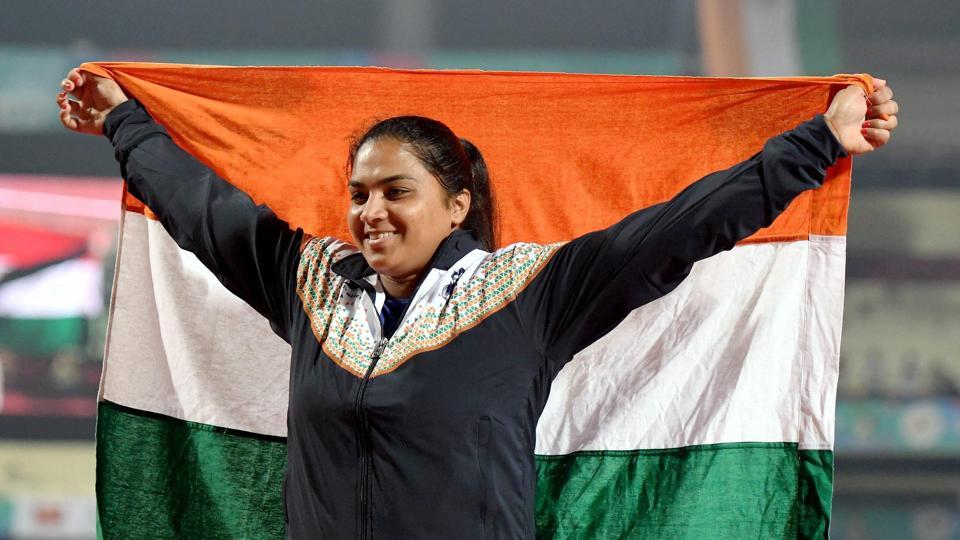
A day after news trickled that she had tested positive for a stimulant --- dimethylbuthlamine --- at the Federation Cup in Patiala in June, the national champion courted more trouble for another doping violation --- in the first leg of the Asian Grand Prix.
AFI chief Adille Sumariwala confirmed the development, saying, “The thrower has been provisionally suspended as she failed the test for steroid. She has been debarred from the national camp and competition too.”
The national record holder’s sporting career is now at the crossroads. She also loses her spot in the team for the World Championships in London from August 4-13, and faces a four-year suspension if found guilty.
READ | Manpreet Kaur fails dope test, but remains eligible for shot put event at World meet
In the season-opening competition in the Chinese city of Jinhua, Manpreet clinched gold with a big throw of 18.86m, which temporarily pitchforked her to the top of the world ranking. It was also her personal best and a national record. But with the dope violation, she will lose her gold medal.
Manpreet had been performing consistently ever since her Asian GP exploits and continued to dominate the domestic circuit. She went on to clinch gold at the Asian Championships in Bhubaneswar from July 6-9.
Warning
Last year, UK Anti-Doping had cautioned its athletes of ‘dimethlbutylamine’ as it was present in a number of food supplements. The athletes were told that it could lead to health problems and also doping violation.
Perhaps, this warning was overlooked by the India shotputter. According to sports medicine expert Ashok Ahuja, there is no guarantee for food supplements to be free from prohibited substances. “In an explosive event like shotput, stimulants give an edge to an individual. It helps gain speed, a big advantage. But unlike steroid, it doesn’t stay in the body for long. That’s why it is the preferred substance these days,” he said.
Ahuja added, “Since the substance has been found in the athlete’s system, it’s difficult to escape punishment. Moreover, there have been two offences in six weeks.”
READ | SAI orders fitness test for department coaches, but confusion prevails
Training camp
Last year, after two top Rio-bound athletes --- sprinter Dharambir Singh and shotputter Inderjeet Singh, who were training abroad --- failed dope tests, AFI made it mandatory for all top athletes to attend the national camp or risk losing their national berth.
Manpreet too had been training outside the national camp. Her coach-cum-husband Karamjeet Singh has been travelling with her. Despite qualifying for the 2016 Olympic Games, she continued to train outside the national camp. Then she insisted her coach should also be included in the coaching staff. After some resistance, the AFI agreed to include Karamjeet in the camp.
After Rio, she bunked the camp, but following AFI’s warning that those missing the national camp will not be considered for the Asian Championships, she returned in April.
Sumariwala said absenteeism was one of the biggest problems the federation had to tackle. “There is this wife-husband culture. Top athletes want their husbands in the national camps otherwise they want to train outside. When they train outside, there is no monitoring. In the camp, there is regular testing. It is kind of deterrent for athletes,” he said.


