
 E-Paper



NaMo, Nitish similar in approach to development: French economist
Boillot explained that this concept of dominant state was a factor that was highlighted in Kautilya’s Arthashastra, which had all elements of theories of a modern state.


Despite having diametrically opposite political views, Prime Minister, Narendra Modi and Bihar chief minister, Nitish Kumar have similar lines of functioning on issue of development, feels renowned French economist from CEPII- France, JJ Boillot.
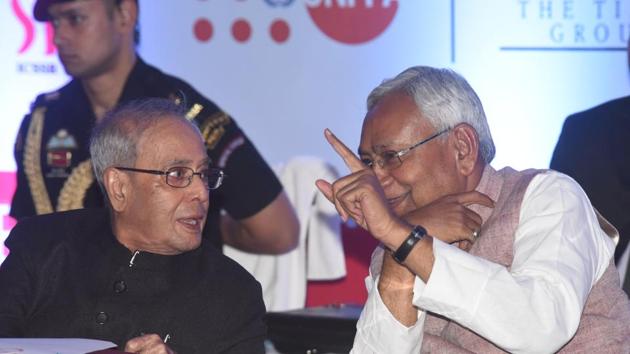
“Prime Minister Narendra Modi and Bihar chief minister Nitish Kumar have similar pattern of functioning on issues of development, This similarity is despite the diametrically opposite political views that these two leaders subscribe to,” said Boillot, while addressing the lecture on ‘Arthashastra - the paradox of modernity in ancient times & beyond,’ on the occasion of silver jubilee celebrations of Asian Development Research Institute (ADRI) here on Friday.

Later speaking to HT after the address, Boillot elaborated that the point of similarity between Modi and Kumar is that the concept of a “dominant state” is prevalent in mode of functioning of both these leaders.
“Of course policies of both the Prime Minister and Bihar chief minister are people-centric and both have high regard for morality. But policies pursued by both them have reflections of a dominant state,” Boillot said.
He explained that this concept of dominant state was a factor that was highlighted in Kautilya’s Arthashastra, which had all elements of theories of a modern state.
However, he added, that the concept of “dominant state” in the long run will not be a favourable factor for overall economic growth of the nation or any state.
“This creates hindrances to freedom of entrepreneurs and is not favourable for success of a flourishing liberal economy,” he said.
Similarly, he said that he do not subscribe to the idea of a certain section of economists who feel that the theory British economist John Maynard Keynes is till applicable in the current economic concept of India.
“Keynesian theory again advocates the dominance of the state, which I have already said is not an ideal factor for growth of a liberal economy,” Boillot said.

Stay updated Bihar Lok Sabha Result and with all the Breaking News and Latest News from Bengaluru. Click here for comprehensive coverage of top cities including Delhi, Mumbai, Hyderabad, and more across India . Stay informed on the latest happenings in World News.


