

 E-Paper


Photos| Designed to flood: Why waterlogging ails Mumbai’s suburbs
Vasai, Virar, and Nalasopara, far off Mumbai suburban areas saw flooding after heavy rainfall for three days on the trot from last Sunday. Thousands of residents of the areas found themselves cut off from Mumbai where most of them travel to work via the suburban rail network. The tracks were under water throwing the suburban rail services out of order. As residents braved water shortages, extended power cuts, urban planners highlighted poor planning coupled with ignoring local geographical and environmental factors as key causes for this persisting problem.
1 / 8
 View Photos in a new improved layout
Updated on Jul 17, 2018 11:15 am IST
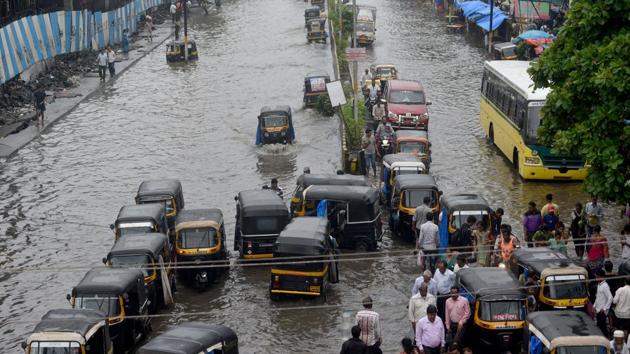
A view of a waterlogged street after heavy rain at Station Road, Nallasopara in Maharashtra. As Vasai, Virar and Nallasopara areas saw days of flooding after heavy rainfall last week, urban planners pointed fingers at poor planning coupled with ignoring geographical and environmental factors. (Satyabrata Tripathy / HT Photo)
2 / 8
 View Photos in a new improved layout
Updated on Jul 17, 2018 11:15 am IST
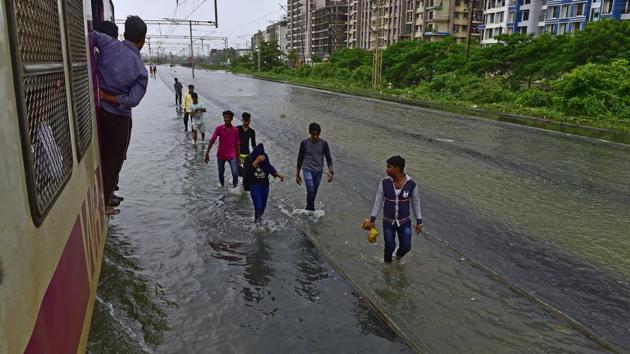
Waterlogging on the railway track between Vasai and Nallasopara on July 11, 2018. When it rains, thousands of residents of the Virar, Vasai and Nallasopara areas find themselves cut off from Mumbai where most of them travel to work via the suburban rail network. The tracks are often under water throwing suburban rail services out of order. (Vijayanand Gupta / HT Photo)
3 / 8
 View Photos in a new improved layout
Updated on Jul 17, 2018 11:15 am IST
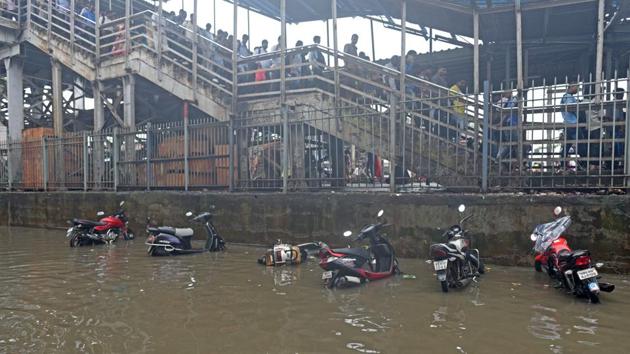
Knee-deep waterlogging at Station Road, Nallasopara on July 15, 2018. As real estate prices in the Maximum City skyrocketed, suburbs adjoining Mumbai saw a spike in unchecked and poorly monitored construction activity for residential and commercial spaces in the last decade. Its effects are now visible in these cities, feel experts. (Satyabrata Tripathy / HT Photo)
4 / 8
 View Photos in a new improved layout
Updated on Jul 17, 2018 11:15 am IST
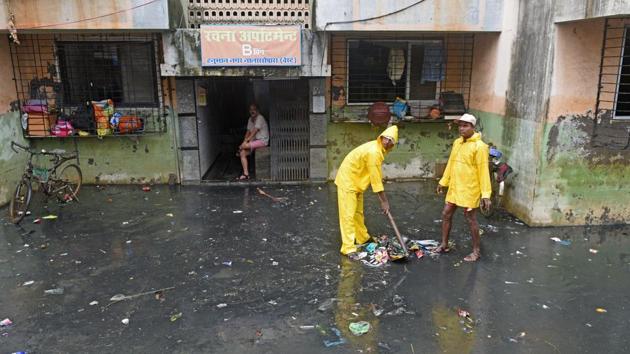
Municipal workers clear garbage as water breaches houses in Hanuman Nagar, Nallasopara. Sulakshana Mahajan, senior urban planner, said that drainage channels that take water down to the sea get blocked by excessive construction and civic authorities do not clear them. She pointed out, that in development plans, such channels are generally not marked, or topography is not considered, which becomes a major issue. (Satyabrata Tripathy / HT Photo)
5 / 8
 View Photos in a new improved layout
Updated on Jul 17, 2018 11:15 am IST
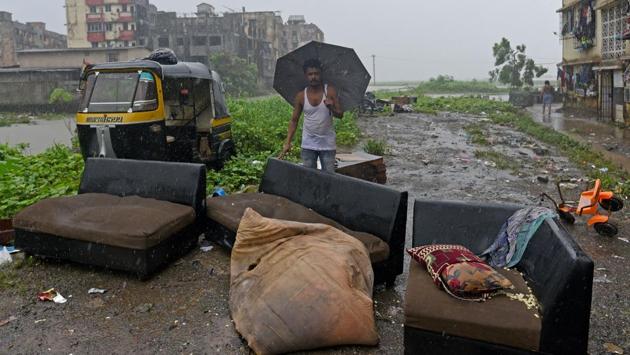
Mohamad Jamil has his furniture pulled out of the house after rainwater made its way in. Hitendra Thakur, MLA from Vasai and chief of Bahujan Vikas Aghadi that runs the Vasai-Virar Municipal Corporation, said that development alone should not be held responsible for the flooding. He argued that geographical factors, high tide too played a role in the scale of waterlogging last week. (Satyabrata Tripathy / HT Photo)
6 / 8
 View Photos in a new improved layout
Updated on Jul 17, 2018 11:15 am IST
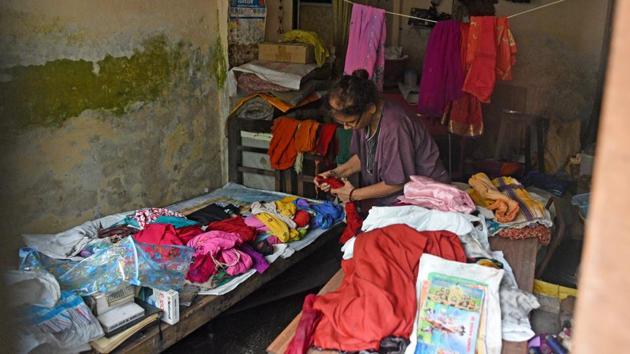
A Nallasopara resident arranges her belongings to evade incoming rainwater. Pankaj Joshi, executive director of Mumbai-based Urban Design Research Institute (UDRI) echoed Mahajan’s view. “Other than Mumbai, very little heed is paid to environmental position —which is a low-lying area, which is flood-prone area, which is the watershed, etc.” (Satyabrata Tripathy / HT Photo)
7 / 8
 View Photos in a new improved layout
Updated on Jul 17, 2018 11:15 am IST
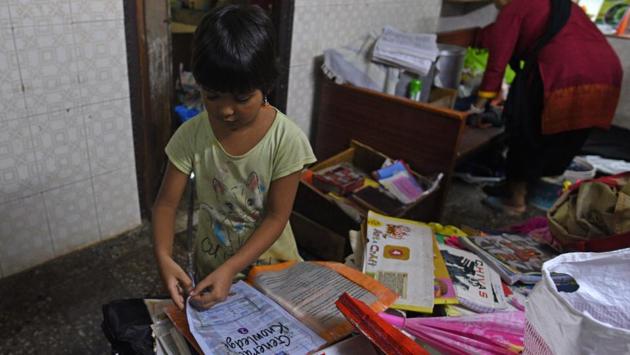
Residents of Vasai and Virar ended up braving longer power cuts and water shortage. In some areas of Vasai, the power cut lasted more than 36 hours. Supply was disconnected early on Tuesday after water entered the electrical substation at Vasai, affecting 16 feeders. Children were forced to skip school, adults couldn’t check-in to work, and once inverters died news became hard to come by. (Satyabrata Tripathy / HT Photo)
8 / 8
 View Photos in a new improved layout
Updated on Jul 17, 2018 11:15 am IST