
 E-Paper



Photos: India could add 9.4GW solar power in 2017, 90% hike over 2016
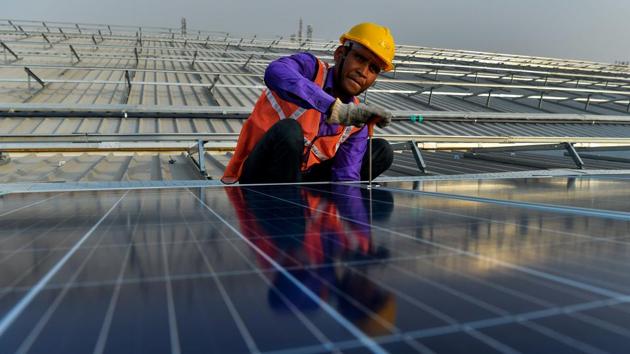
In a report released by Bridge to India(BTI), India is expected to add 9.4 gigawatts (GW) to its solar power capacity in 2017. However rising competition has brought tariffs down as the sector faces headwinds from module price rises, tender cancellations and GST. Despite this, as per BTI’s India Solar Compass predicts higher forecasts than earlier this year and expects this trend to continue through 2017. (AFP)
Updated on: Aug 18, 2017 2:22 PM IST

Share via


Copy link

1/8
 View Photos in a new improved layout
Updated on Aug 18, 2017 2:22 PM
In a report released by Bridge to India(BTI), India is expected to add 9.4 gigawatts (GW) to its solar power capacity in 2017. However rising competition has brought tariffs down as the sector faces headwinds from module price rises, tender cancellations and GST. Despite this, as per BTI’s India Solar Compass predicts higher forecasts than earlier this year and expects this trend to continue through 2017. (AFP)
2/8
 View Photos in a new improved layout
Updated on Aug 18, 2017 2:22 PM
Earlier in May, BTI released in its India Solar Handbook 2017 estimating and addition of 8.8GW to solar energy projections for 2017 with India on track to be become the third biggest solar market globally, overtaking Japan this year. (REUTERS)
3/8
 View Photos in a new improved layout
Updated on Aug 18, 2017 2:22 PM
Chief Economic Adviser (CEA) Arvind Subramanian has said that such an over emphasis on renewable energy would result in reducing viability of coal-fired thermal power plants.The rate of increase in coal consumption in India is now the slowest it’s been since 2000, leading analysts to propound that India could be looking at peak coal consumption within the next 5 to 10 years. (Amit Dave/REUTERS)
4/8
 View Photos in a new improved layout
Updated on Aug 18, 2017 2:22 PM
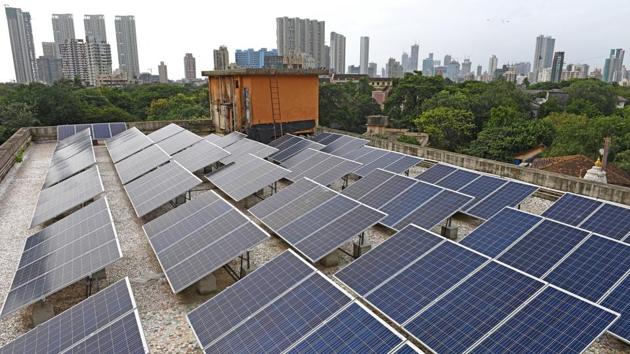
BTI’s managing director Vinay Rustagi said, ‘Rooftop solar is also showing robust growth as solar power becomes increasingly more attractive with falling costs. All this is acting as a huge pull for international investors and equipment suppliers.’ However, he added that the challenge lies in sustaining the growth as distribution companies seem to be frozen in the headlights with falling tariffs and weak power demand. (Satyabrata Tripathy/HT Photo)
5/8
 View Photos in a new improved layout
Updated on Aug 18, 2017 2:22 PM
India’s solar power tariffs hit a new low of Rs 2.44 per unit in May at the auction of 500MW of capacity at the Bhadla solar park in Rajasthan. According to The National Institution for Transforming India (NITI Aayog) such lower tariffs have the potential to derail India’s emerging solar ecosystem such as the much needed job market. India’s 100 gigawatt (GW) solar energy drive by 2022 has the potential to create as many as 1 million full time jobs. (REUTERS)
6/8
 View Photos in a new improved layout
Updated on Aug 18, 2017 2:22 PM
Solar energy also offers an opportunity for around 304 million Indians who don’t have access to electricity. India has a 750 gigawatt potential on account of enjoying 300 sunny days a year with an average solar radiation range of 4-7 per kilowatt-hour. (Ajay Verma/REUTERS)
7/8
 View Photos in a new improved layout
Updated on Aug 18, 2017 2:22 PM
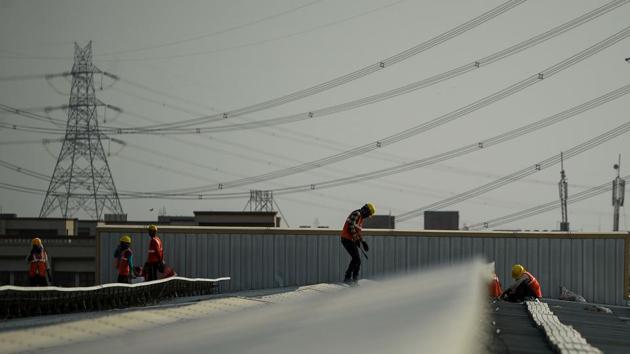
According to BTI’s managing director the need of the hour is for central government and regulators to ensure that tender allocation and project contractual structures are robust and not prone to short term fluctuations. (AFP)
8/8
 View Photos in a new improved layout
Updated on Aug 18, 2017 2:22 PM


