
 E-Paper



Photos: India crosses 1 million Covid-19 infections; over 25,600 deaths
The addition of 36,247 new Covid-19 cases on July 16 has taken India’s total infections past the 1 million cases mark, behind only the United States and Brazil. India’s journey to this grim milestone took 137 days with half of the cases recorded during the nationwide lockdown. On the way to this development, India has seen its national weekly average testing rate rise to reach the WHO’s ideal band and the current case fatality rate is at 2.5%.
Updated on: Jul 17, 2020 3:07 PM IST


Share via


Copy link

1/9
 View Photos in a new improved layout
Updated on Jul 17, 2020 3:07 PM
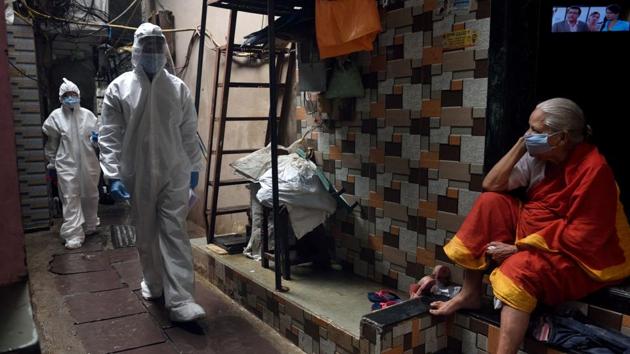
A woman looks at municipal health care workers making the rounds of Dharavi during a screening exercise for Covid-19 in Mumbai on July 16. India has become only the third country in the world — after the United States and Brazil — to hit a million Covid-19 infections, with 36,247 new cases taking the country’s tally to 1,004,652 by end of day on July 16. (Satish Bate / HT Photo)
2/9
 View Photos in a new improved layout
Updated on Jul 17, 2020 3:07 PM
Labourers work to build a new quarantine centre in Guwahati on June 14. Experts estimate the next million cases to take less than a month — the doubling rate stands at 20.6 days — and say the focus now needs to shift to rural parts of the country that traditionally have been beyond the reach of adequate health care mechanisms, and where new hot spots may emerge. (Anupam Nath / AP)
3/9
 View Photos in a new improved layout
Updated on Jul 17, 2020 3:07 PM
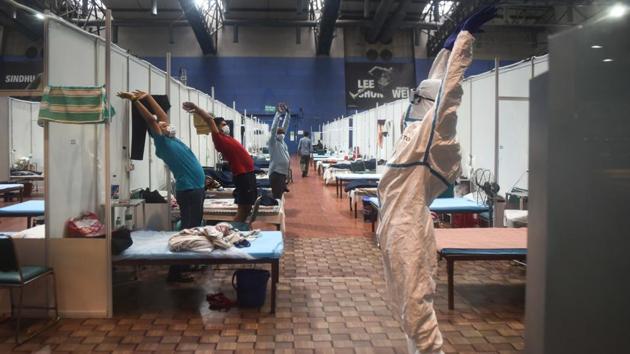
A health worker coordinates a yoga session at the Common Wealth Games Village Sports Complex Covid care centre in New Delhi on July 16. India had 343,268 active cases as of July 16 and the case fatality rate (CFR) — the proportion of people who succumbed to the illness from among known infections — was 2.5%, reported HT . This is lower than the 3.9% CFR for the US and 3.8% for Brazil. (Sanchit Khanna / HT Photo)
4/9
 View Photos in a new improved layout
Updated on Jul 17, 2020 3:07 PM
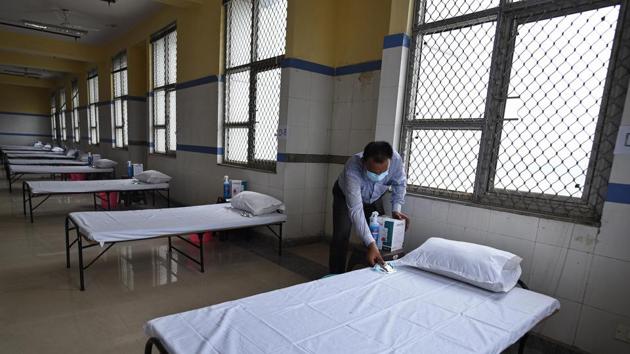
A worker sets up beds in a Covid-19 isolation facility at Balak Ram Hospital in New Delhi on July 16. India took 137 days to log a million cases, and half of these were recorded during a hard nationwide lockdown announced on March 24. Officials and experts said that the lockdown bought the country time to set up isolation centres, add hospital beds and beef up testing infrastructure. (Biplov Bhuyan / HT Photo)
5/9
 View Photos in a new improved layout
Updated on Jul 17, 2020 3:07 PM
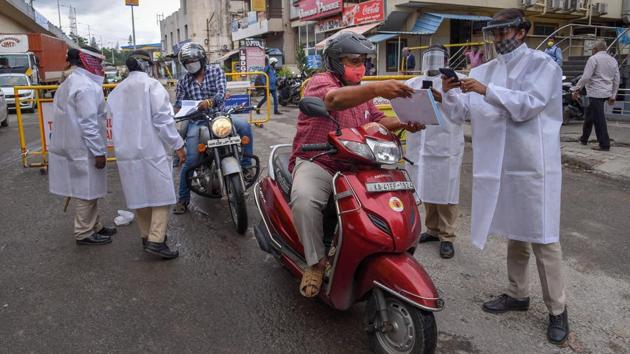
Police screen commuters during reinforced lockdown due to surge in COVID-19 cases in Bengaluru on July 16. In the last week, India has added an average of 30,076 cases a day, up from 23,895 a day in the seven-day period before that. Several states have opted to bring back regional or complete lockdowns of late including Karnataka, Bihar and Assam. (Shailendra Bhojak / PTI)
6/9
 View Photos in a new improved layout
Updated on Jul 17, 2020 3:07 PM
A mural of Covid-19 front line workers in New Delhi on July 15. India’s average weekly test positivity rate has risen from 7.7% in mid-June to 10.1% at present, but there are sharp differences across the country. Maharashtra has a test positivity rate close to 20%, while Uttar Pradesh’s is less than 4%. WHO identifies 8-12% as the ideal range for test positivity rate in a country with an active outbreak. (Vipin Kumar / HT Photo)
7/9
 View Photos in a new improved layout
Updated on Jul 17, 2020 3:07 PM
Health care staff check the temperature and pulse rate of residents in Mumbai on July 15. “Only two states, Maharashtra and Tamil Nadu, constitute 48.15% of country’s total active case load. Of the total 36 states and UTs, only 10 states constitute 84.62% of the total active case load,” the Union health ministry said in a statement on July 16. (Satyabrata Tripathy / HT Photo)
8/9
 View Photos in a new improved layout
Updated on Jul 17, 2020 3:07 PM
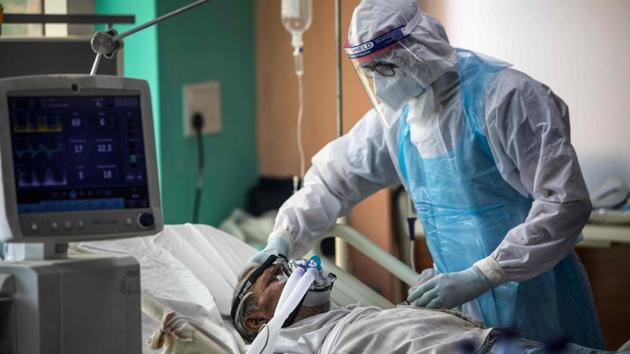
A medical staff looks after a COVID-19 patient at the ICU of the Sharda Hospital in Noida on July 15. An analysis of active infections by HT shows that urban centres are significantly more affected and account for a majority of active cases. Just 10 cities account of 52.7% of all active cases in the country. Active cases directly reflect the pressure on the health care system in any region. (Xavier Galiana / AFP)
9/9
 View Photos in a new improved layout
Updated on Jul 17, 2020 3:07 PM


