
 E-Paper



Photos: 25 years since the genocide in Rwanda
Rwanda on Sunday commemorates the 25th anniversary of the genocide in which at least 800,000 mainly Tutsi people were beaten, hacked or shot to death in 100 days of slaughter. A quarter of a century on, the east African nation has recovered economically, but the trauma still casts a long, dark shadow. On Sunday, as is the tradition every April 7 -- the day the genocide began -- President Paul Kagame will light a remembrance flame at the Kigali Genocide Memorial, where more than 250,000 victims are thought to be buried.
Updated on: Apr 7, 2019 2:41 PM IST


Share via


Copy link

1/15

 View Photos in a new improved layout
Updated on Apr 7, 2019 2:41 PM
Rwandan refugees cross Rusumo border to Tanzania from Rwanda May 30, 1994 carrying their belongings even goats, mattresses and cows. The bloodshed that claimed 800,000 Tutsi and moderate Hutu lives began 25 years ago on April 7, 1994, when a plane carrying Rwandan President Juvenal Habyarimana, Burundi President Cyprien Ntaryamira and a French air crew was shot down. (Jeremaiah Kamau / REUTERS)
2/15
 View Photos in a new improved layout
Updated on Apr 7, 2019 2:41 PM
Rwanda Patriotic Front (RPF) rebels inspect the wreckage at the site of the plane where Rwandan and Burundian presidents were killed, on May 27, 1994. Habyarimana was on his way back from peace talks in Tanzania with Tutsi rebels of the RPF, who had been waging an insurgency since 1990. (Corrine Dufka / REUTERS)
3/15
 View Photos in a new improved layout
Updated on Apr 7, 2019 2:41 PM
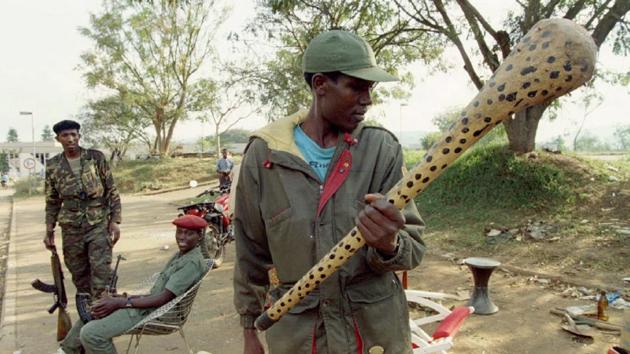
An RPF rebel observes a nail-spiked club found near a militia checkpoint which was abandoned after the rebel victory in Kigali, Rwanda on July 7, 1994. The very next day after the Rwandan President’s death, soldiers killed the moderate Hutu Prime Minister, as well as 10 Belgian paratroopers guarding her and other top officials in the Hutu-dominated coalition government. (Corrine Dufka / REUTERS)
4/15
 View Photos in a new improved layout
Updated on Apr 7, 2019 2:41 PM
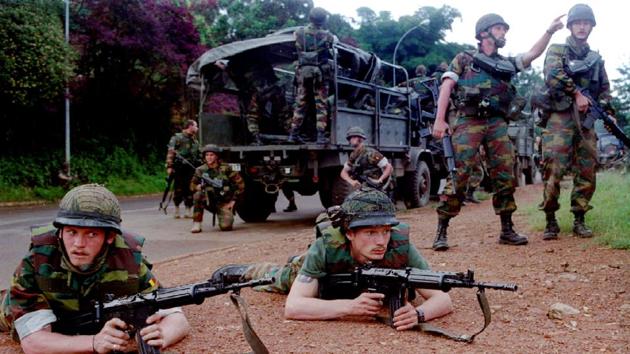
Belgian troops prepare to inspect the city of Kigali on April 11, 1994 on the sixth-day of tribal bloodbath raging in the central African state. Lists of those to be killed -- mostly Tutsis but also opposition Hutus -- were distributed. Soldiers and Hutu militiamen set up roadblocks and launched a house-to-house search for their targets. (Stringer / REUTERS)
5/15
 View Photos in a new improved layout
Updated on Apr 7, 2019 2:41 PM
RPF rebels load mortars and other ammunition onto a truck before advancing after their victory in taking the Kanombe barracks on May 23, 1994. The Mille Collines radio station spread anti-Tutsi propaganda, referring to them as “cockroaches”. Officials and media outlets incited people to kill, loot and rape. Men, women and children were killed with machetes, grenades and bullets. (Corrine Dufka / REUTERS)
6/15
 View Photos in a new improved layout
Updated on Apr 7, 2019 2:41 PM
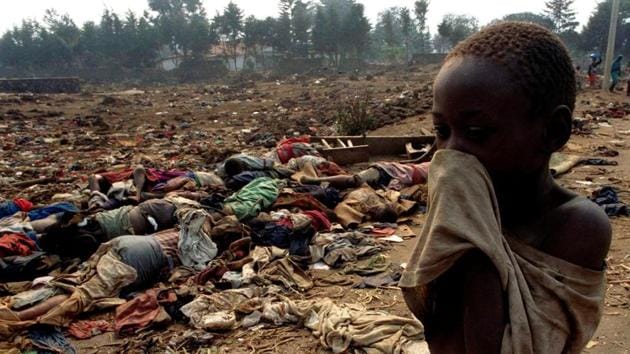
A Rwandan boy covers his face from the stench of dead bodies on July 19, 1994. By April 18, the Red Cross said tens of thousands of people, perhaps hundreds of thousands, had died. A UN peacekeeping operation, unable to stop the massacres, was reduced on April 21 from about 2,500 to 270 men. A week later, Doctors Without Borders (MSF) said a “genocide” is under way. (Corrine Dufka / REUTERS)
7/15
 View Photos in a new improved layout
Updated on Apr 7, 2019 2:41 PM
Ugandan fishermen pile up corpses for burial at Kasensero village, 208 kilometres southwest of Kampala, Uganda on May 20, 1994. The bodies were carried by Akagera river from Rwanda into Lake Victoria. On June 22, France deployed Operation Turquoise, a UN-mandated force tasked with halting the killing. It had little effect. (Stringer / REUTERS)
8/15
 View Photos in a new improved layout
Updated on Apr 7, 2019 2:41 PM
Rwandan government soldiers atop a tank equipped with a 90mm gun flee civilians in front of advancing RPF forces, July 17, 1994. On June 30, the UN Human Rights Commission’s special rapporteur said the slaughter legally qualified as “genocide” and appeared to have been planned. (Corrine Dufka / REUTERS)
9/15
 View Photos in a new improved layout
Updated on Apr 7, 2019 2:41 PM
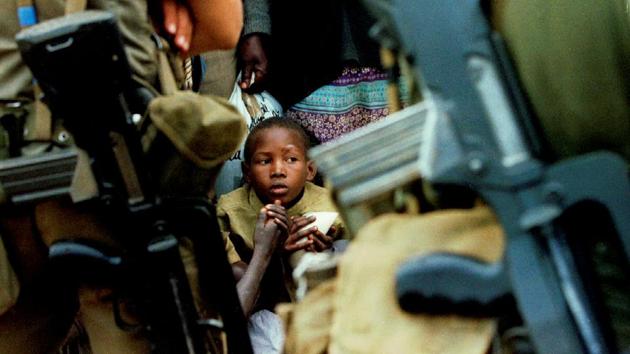
A Hutu girl sits tensely within a crowd of some 10,000 Rwandan refugees, stopped from crossing into Zaire after the border was closed while French troops patrol the border area on August 21, 1994. On July 4, soldiers of the mainly Tutsi RPF seized the capital Kigali ending the killings. Hundreds of thousands of Hutus, fearing reprisals, fled to Zaire, today’s Democratic Republic of Congo. (Corrine Dufka / REUTERS)
10/15
 View Photos in a new improved layout
Updated on Apr 7, 2019 2:41 PM
An amputee moves past three Tutsi refugees huddled together to protect themselves against the cold and damp in this camp in southern Rwanda, May 20 1994. In November 1994, the UN created the International Criminal Tribunal for Rwanda to try the main perpetrators in neighbouring Tanzania. (Corrine Dufka / REUTERS)
11/15
 View Photos in a new improved layout
Updated on Apr 7, 2019 2:41 PM
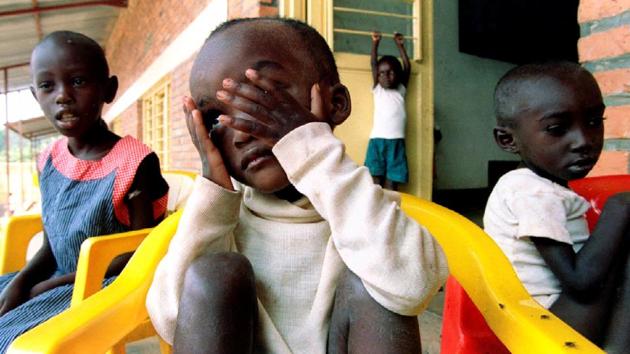
Children whose family were killed by Hutu militia sit within an orphanage near the capital Kigali, July 11, 1994. In May 1998, Jean Kambanda, who was Prime Minister during the killings, plead guilty to genocide and crimes against humanity. He was the first to admit responsibility. (Corrine Dufka / REUTERS)
12/15
 View Photos in a new improved layout
Updated on Apr 7, 2019 2:41 PM
Rwandan refugees carry food supplies given out from the Red Cross, July 28, 1994. In September 1998, the court became the first international tribunal to hand down a conviction for genocide, finding a former town mayor guilty of inciting the massacre of more than 2,000 Tutsis. It went on to sentence several dozen people, including some to life in jail, eventually closing in 2015. (Ulli Michel / EUTERS)
13/15
 View Photos in a new improved layout
Updated on Apr 7, 2019 2:41 PM
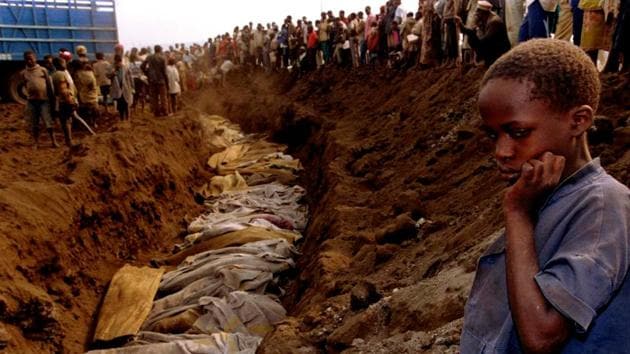
A Rwandan refugee girl stares at a mass grave where dozens of bodies have been laid to rest on July 20, 1994. From March 2005, community-run courts called “gacaca” began trials for people suspected of participating in the genocide. Nearly two million people were brought before 12,000 courts, with 65% convicted. The courts closed in 2012. (Corrine Dufka / REUTERS)
14/15
 View Photos in a new improved layout
Updated on Apr 7, 2019 2:41 PM
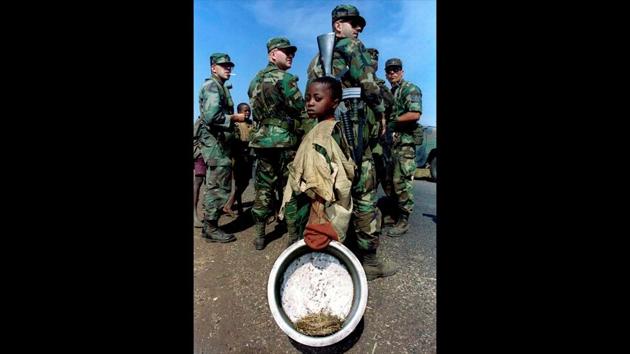
A Rwandan boy waits to collect water in front of a group of US soldiers, as the Americans set up a water distribution point in Kibumba refugee camp, on August 2, 1994. RPF leader Paul Kagame was chosen to be president in April 2000, following the resignation of Pasteur Bizimungu, a Hutu who had served in the post since July 1994. Kagame remains in power today. (Stringer / REUTERS)
15/15
 View Photos in a new improved layout
Updated on Apr 7, 2019 2:41 PM


