

 E-Paper


Photos: 30 years on, Russia views Afghan war with pride
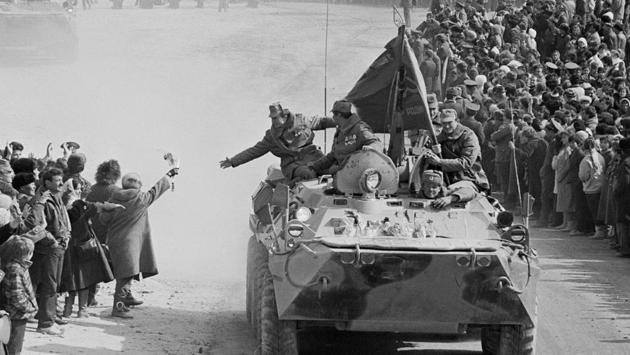
When the last Soviet tanks rumbled back home across a bridge on the border with Afghanistan this day 30 years ago, it was widely hailed as a much-anticipated end to a bloody quagmire. Since then, Moscow's view of the war has changed radically. As Russia prepares to mark Friday's anniversary of the Soviet withdrawal, many see the 10-year Soviet war in Afghanistan as a necessary and largely successful endeavor.
1 / 11
 View Photos in a new improved layout
Updated on Feb 15, 2019 11:00 am IST
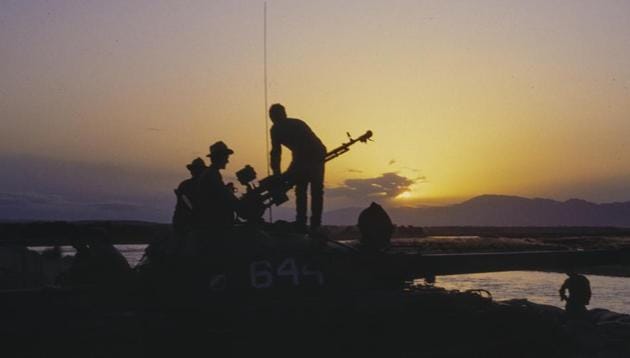
Soviet soldiers stand atop of a tank during sunset in Afghanistan in September 1984. Like Russia’s campaign in Syria, the Afghan war is widely perceived as legitimate action against US-backed militants. And in a twist of history, Russia has emerged as an influential power broker, mediating between Afghan factions and jockeying for influence amid a US-led coalition embroiled for more than 17 years. (Alexander Zemlianichenko / AP File)
2 / 11
 View Photos in a new improved layout
Updated on Feb 15, 2019 11:00 am IST
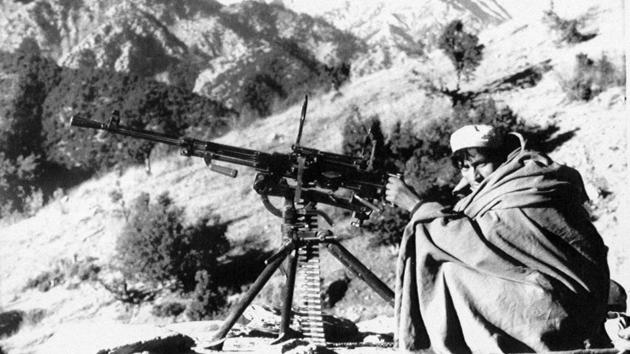
An Afghan rebel gets ready to fire at position on January 1, 1988. Ata Mohammad Noor, a former warlord and governor of the northern Balkh province, attended a meeting last week in Moscow that brought together former Afghan officials, opposition figures and the Taliban. “I don’t think that Russia would like to repeat what it did in the past. It’s totally different today,” Noor said to The Associated Press. (David Stewart-Smith / AP File)
3 / 11
 View Photos in a new improved layout
Updated on Feb 15, 2019 11:00 am IST
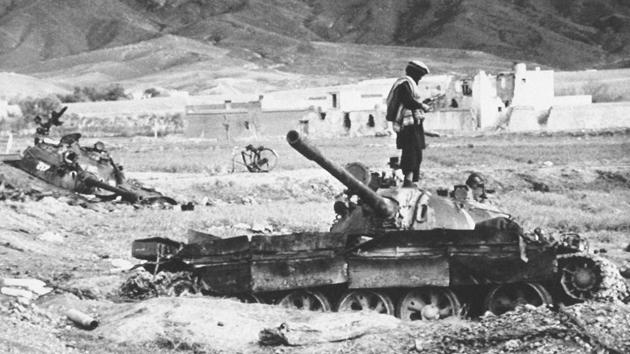
“On the other side, there have been 40 years of war in our country, and the Afghan people are all tired of war. People would support any country that would step forward to bring peace.” The statement carries particular weight coming from a man who played a key role in defeating the Soviet army and proudly recalls his mujahideen fighters destroying countless Red Army tanks and dozens of warplanes. (Joe Gaal / AP File)
4 / 11
 View Photos in a new improved layout
Updated on Feb 15, 2019 11:00 am IST
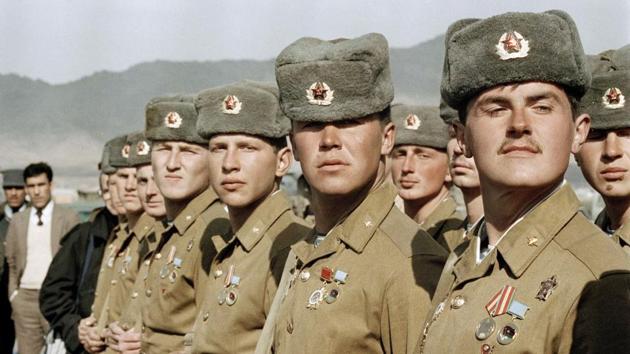
The last Soviet unit stands stationary at Kabul airport, just before leaving Afghanistan. The Soviet Union invaded Afghanistan in December 1979, driven by fears that the US could try to establish a foothold next to Soviet republics in Central Asia. Moscow’s initial plans for a quick operation were derailed by fierce rebel resistance. The Soviet Union lost more than 15,000 troops, according to official data. (Laurent Rebours / AP File)
5 / 11
 View Photos in a new improved layout
Updated on Feb 15, 2019 11:00 am IST
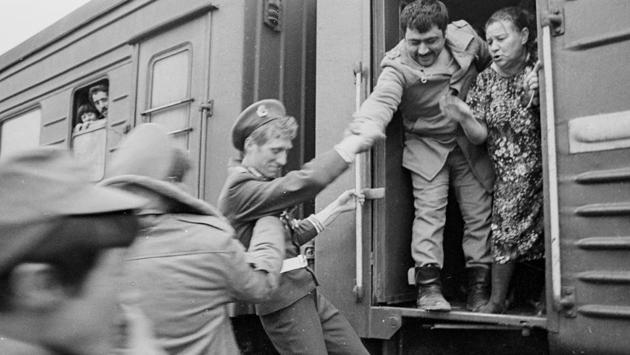
The intervention drew strong international condemnation and imposed a heavy burden on the struggling Soviet economy. Soviet leader Mikhail Gorbachev ordered the pullout amid his efforts to conduct liberal reforms and end confrontation with the West. Afghanistan’s communist government collapsed shortly after the breakup of the Soviet Union. (Alexander Zemlianichenko / AP)
6 / 11
 View Photos in a new improved layout
Updated on Feb 15, 2019 11:00 am IST
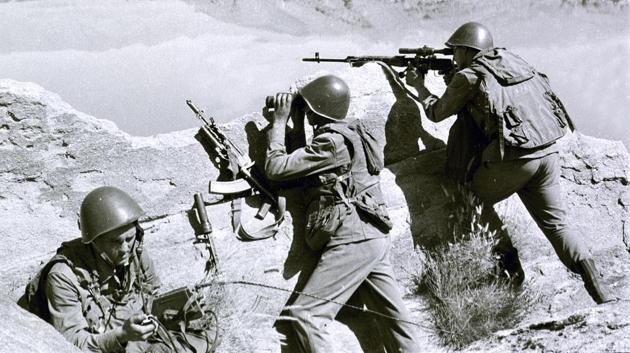
Soviet soldiers observe the highlands in 1988. “The tragedy of Afghanistan was one of many other tragedies caused by the Soviet breakup,” Nikita Mendkovich, a Moscow-based expert on Afghanistan said. Mendkovich emphasized the changing public perception of the war, saying that it’s now widely seen as “painful, but necessary and even inevitable.” (Alexander Sekretarev / AP File)
7 / 11
 View Photos in a new improved layout
Updated on Feb 15, 2019 11:00 am IST
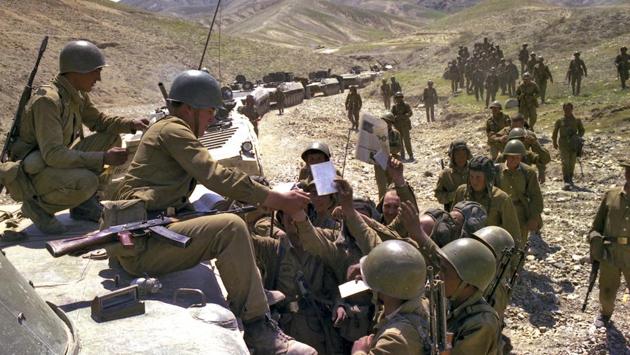
Soviet soldiers get fresh newspapers and mail. Zamir Kabulov, President Vladimir Putin’s envoy for Afghanistan acknowledged that the Soviet Union made many errors in Afghanistan, driven by communist dogmas and ignoring local conditions. “The Soviet leadership has become hostage of its own decision,” he said. “They wanted to look at Afghanistan as a new socialist state. That was a mistake.” (Leonid Yakutin / Defense Ministry Press Service via AP)
8 / 11
 View Photos in a new improved layout
Updated on Feb 15, 2019 11:00 am IST
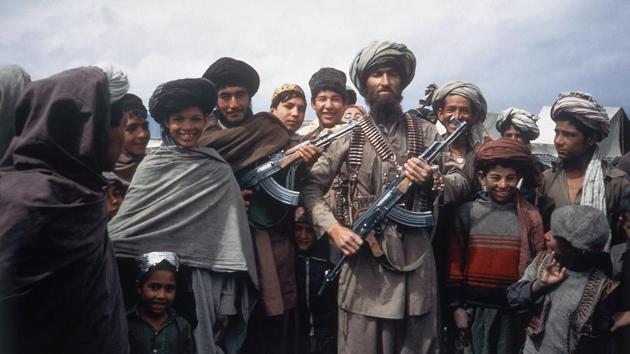
Mujahideen tribesmen at a border camp near Wana in Afghanistan on April 1, 1984. In one example, Kabulov recalled how Soviet advisers stubbornly tried to conduct a socialist-style land reform, distributing tracts that belonged to tribal leaders to farmers, who then turned it back to original owners. Kabulov charged that the US ignored the Soviet lessons in trying to foster the creation of a Western-style democracy. (Christopher Gunness / AP File)
9 / 11
 View Photos in a new improved layout
Updated on Feb 15, 2019 11:00 am IST
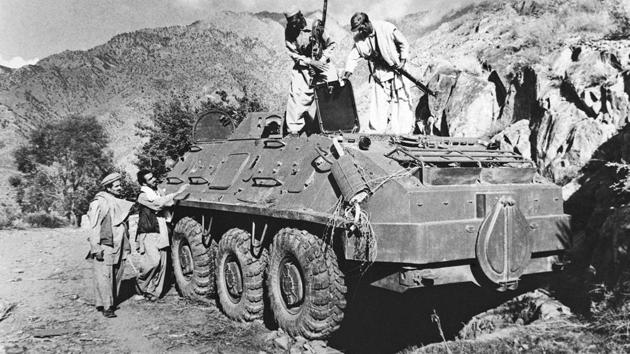
Mujahideen inspect a Soviet tank captured in near Asmar. Noor, who joined the mujahiideen when he was 19 and became a warlord with 20,000 men under his command, recalled formations of Soviet helicopter gunships sweeping overhead like “flocks of birds.” He said the deliveries of US Stinger missiles to the mujahedeen played a significant role, allowing them to strike Soviet jets. (Steve McCurry / AP File)
10 / 11
 View Photos in a new improved layout
Updated on Feb 15, 2019 11:00 am IST
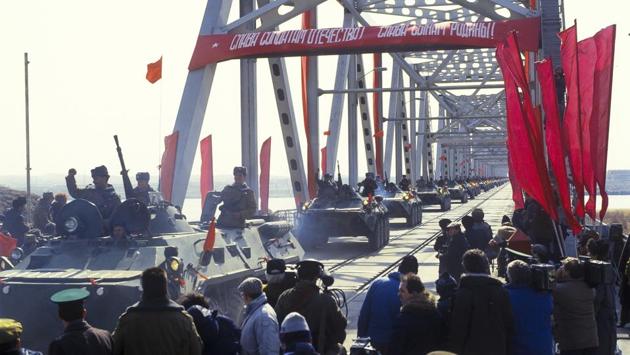
Soviet Army soldiers wave as they cross a bridge on the border between Afghanistan and then Soviet Uzbekistan. Noor described the Soviet pullout as a source of pride for Afghans. “The withdrawal of the Soviet Union was a historic day,” he said. “A poor nation with lots of problems, we defeated a superpower.” (Leonid Yakutin / Defense Ministry Press Service via AP)
11 / 11
 View Photos in a new improved layout
Updated on Feb 15, 2019 11:00 am IST