
 E-Paper



Photos: A new dawn for shamanism in Mongolia after Soviet repression
Banned for 70 years under Communist rule, shamanism has experienced resurgence in Mongolia since 1992, when the ancient practice became protected by the country's constitution. Shamans or buus, it is believed, are chosen by their ancestral spirits to serve as a bridge to the living world; a conduit to provide healing, knowledge, and advice. Modern-day Shamans are typically consulted for advice in business deals, illness, or personal difficulties. Shamans employ tools, including headdresses and mouth harps, to induce trances for the spirits to use their bodies and voices.
Updated on: Jul 6, 2018 1:41 PM IST


Share via


Copy link

1/13
 View Photos in a new improved layout
Updated on Jul 6, 2018 1:41 PM
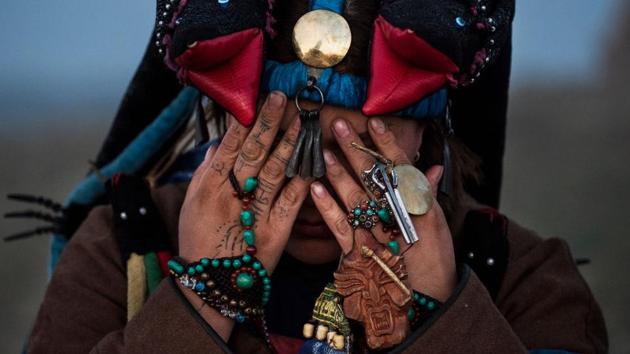
A Mongolian Shaman or Buu, prays during a ceremony outside Ulaanbaatar at sunrise. Banned for 70 years under Communist rule, shamanism has seen resurgence in Mongolia since 1992, when the ancient practice became protected under the constitution. This folk religion dates back as far back as the region’s recorded history. (Kevin Frayer / Getty Images)
2/13
 View Photos in a new improved layout
Updated on Jul 6, 2018 1:41 PM
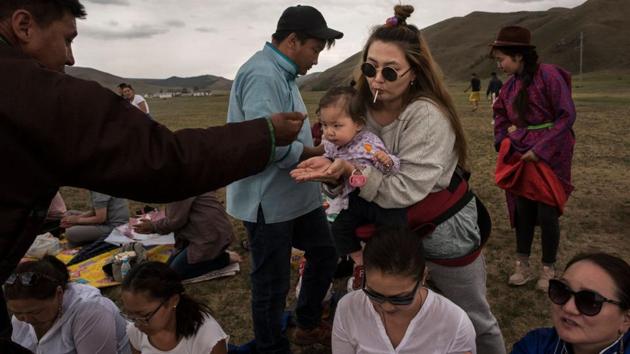
A follower of Shamanism takes rice as a blessing during a ceremony. While there is no concrete history of Mongolian Shamanism’s origins, as Buddhism gained dominance backed by the influence of the Yuan Dynasty, shamanistic traditions found themselves transformed into a sociocultural hybrid. (Kevin Frayer / Getty Images)
3/13
 View Photos in a new improved layout
Updated on Jul 6, 2018 1:41 PM
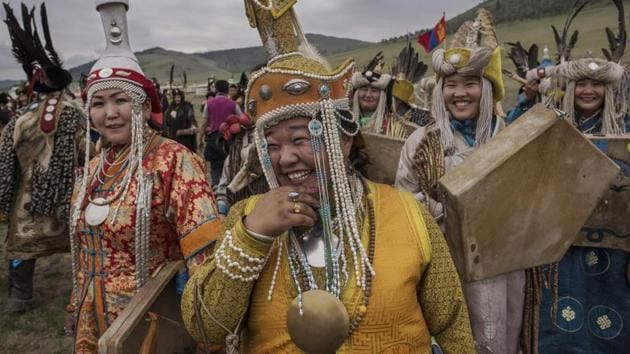
Shamans gather before a fire ritual meant to summon spirits and mark the summer solstice. The eventual Soviet domination over the Mongolia’s People Republic brought with it repression for all forms of shamanism and religion in general. (Kevin Frayer / Getty Images)
4/13
 View Photos in a new improved layout
Updated on Jul 6, 2018 1:41 PM
Soviet rule wiped away native culture and physical traces of Mongolian past. But once the USSR crumbled, a return to shamanism offered many a way to reinvent themselves and rekindle a Mongolian identity. While there are no official numbers, it is believed there are over 10,000 shamans in Mongolia today, and many have formed collectives. (Kevin Frayer / Getty Images)
5/13
 View Photos in a new improved layout
Updated on Jul 6, 2018 1:41 PM
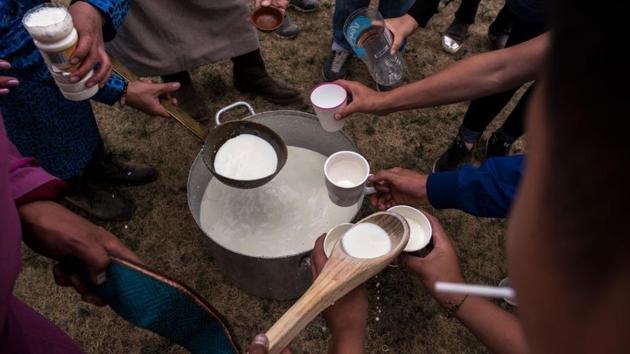
Followers of shamanism take milk to be thrown in the air as an offering before the fire ritual. Also known as galiin tahilga, the fire ritual is a multi-purpose ritual that is meant to bring blessings or heal someone at a remote location. (Kevin Frayer / Getty Images)
6/13
 View Photos in a new improved layout
Updated on Jul 6, 2018 1:41 PM
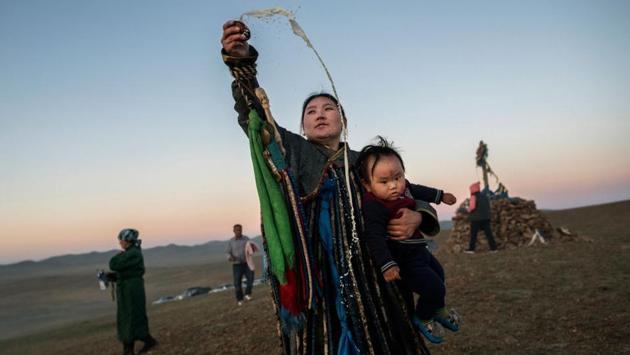
People take cupfuls of milk, tea or vodka and throw them upward to Father Heaven and a small bit upon Mother Earth as part of the ritual. Food offerings are arranged and those participating think about what issues and problems they have in life, note them down on a piece of paper which is then packed in a bag. (Kevin Frayer / Getty Images)
7/13
 View Photos in a new improved layout
Updated on Jul 6, 2018 1:41 PM
Shamans beat drums around a large fire meant to summon the spirits. People who do the shamanic work circle around the flames as other participants wait and watch the proceedings from a distance. (Kevin Frayer / Getty Images)
8/13
 View Photos in a new improved layout
Updated on Jul 6, 2018 1:41 PM
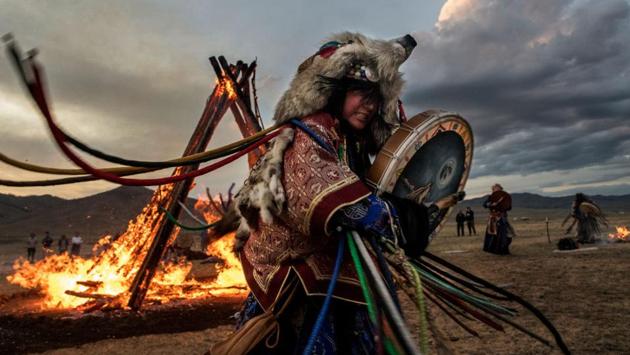
Continuing drumming, a state of ecstasy is reached where the shamans experience altered consciousness. Shamans, it is believed, are chosen by their ancestral spirits to serve as a bridge to the living world; a conduit to provide healing, knowledge, and advice. (Kevin Frayer / Getty Images)
9/13
 View Photos in a new improved layout
Updated on Jul 6, 2018 1:41 PM
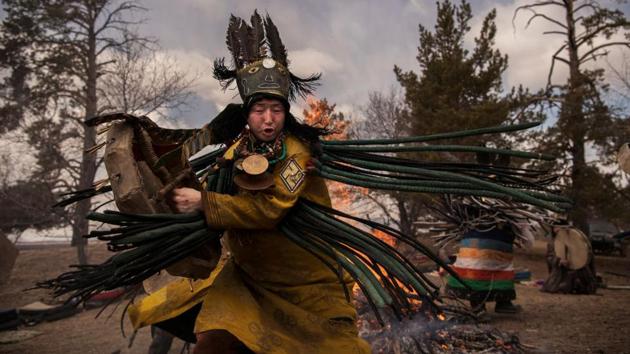
As one nears this higher state of being and enters a world of trance, it is customary to pray and sing a song welcoming and praising the fire spirits who have been summoned to assist in the rituals. (Kevin Frayer / Getty Images)
10/13
 View Photos in a new improved layout
Updated on Jul 6, 2018 1:41 PM
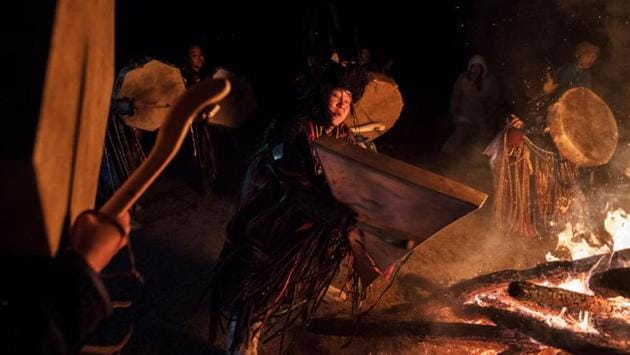
The ritual proceeds with participants on the edge coming forward into the circle and asking the spirits a solution for their problems. The ceremonial leaders then encircle the fire and the bags containing letters are hurled away. (Kevin Frayer / Getty Images)
11/13
 View Photos in a new improved layout
Updated on Jul 6, 2018 1:41 PM
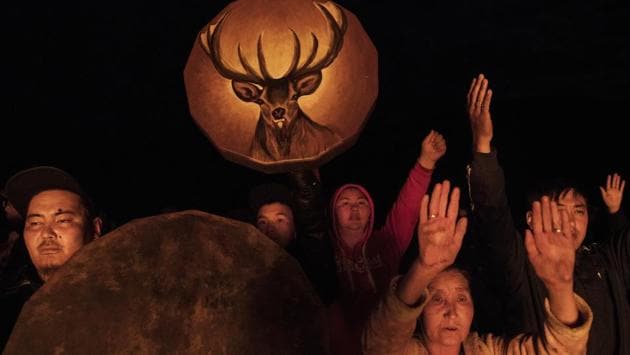
After the ritual, the bags are returned to the participants or kept in a sacred place. Today, modern-day shamans are more typically consulted for advice in business deals, illness, or personal difficulties. Shamans employ tools, including headdresses and mouth harps, to induce trances for the spirits to use their bodies and voices. (Kevin Frayer / Getty Images)
12/13
 View Photos in a new improved layout
Updated on Jul 6, 2018 1:41 PM
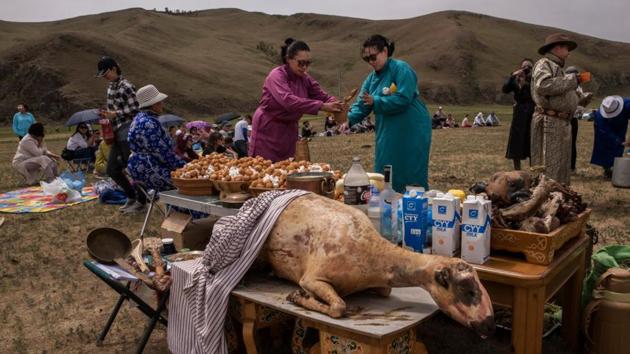
Once the rituals are over and the fire extinguished, preferably using earth, the food and drinks kept on the table as offerings are passed around and consumed. (Kevin Frayer / Getty Images)
13/13
 View Photos in a new improved layout
Updated on Jul 6, 2018 1:41 PM


