

 E-Paper


Photos: Amazon’s Tembe paint their bodies for rituals and war
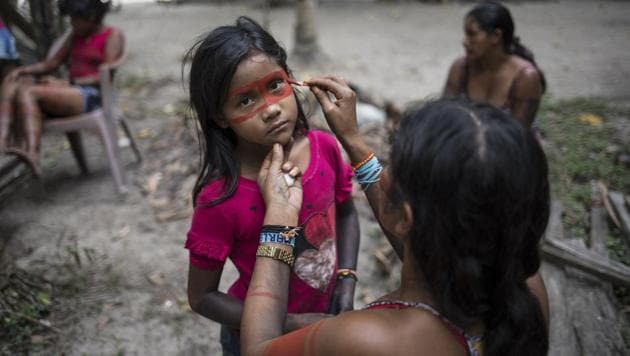
For generations, the Tembe indigenous people of Brazil's Amazon rainforest have painted their bodies for rites of passage, weddings and to symbolise that they're ready for war. According to Tembe people, the body paintings are a symbol of their link to nature. The designs on their skins include stars, half-moons and suns. Sometimes, they are geometrical or take the shape of butterflies or the paws of jaguars that roam the jungle. The indigenous reserve is officially protected, but it’s constantly under siege by loggers who illegally try to extract prized hardwood.
1 / 8
 View Photos in a new improved layout
Updated on Oct 02, 2019 04:34 pm IST
A child stands still as a woman paints a red mask around her eyes in preparation for a gathering of tribes in the Alto Rio Guama Indigenous Reserve by the Tembe tribes in the village Tekohaw, Para state, Brazil. The Tembe indigenous people of Brazil’s Amazon rainforest for generations have painted their bodies for rites of passage, weddings and to symbolize that they’re ready for war. (Rodrigo Abd / AP)
2 / 8
 View Photos in a new improved layout
Updated on Oct 02, 2019 04:34 pm IST
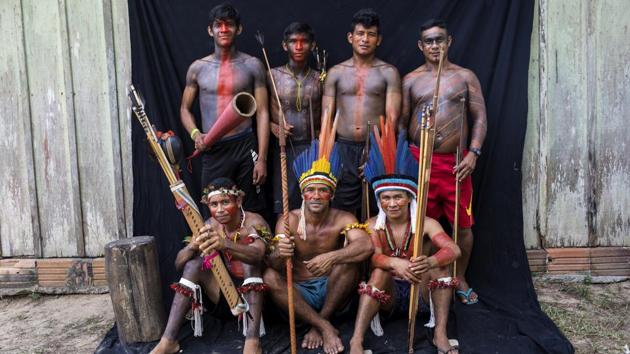
Tembe warriors pose for a portrait during a meeting of Tembe tribes in the Tekohaw village. The indigenous reserve is officially protected, but it’s constantly under siege by loggers who illegally try to extract prized hardwood. The members of the tribe hold meetings to devise plans to keep the invaders at bay. (Rodrigo Abd / AP)
3 / 8
 View Photos in a new improved layout
Updated on Oct 02, 2019 04:34 pm IST
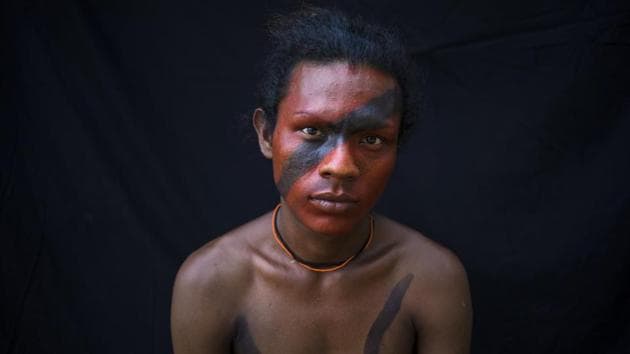
Genilson Tembe, 22, poses for a portrait during a gathering of Tembe tribes in the Tekohaw village. The members of the tribe use the black dye extracted from the Jenipapo tree to mark the moment when the young reach adulthood and daub themselves in the red dye from the urucum seeds to prepare for battle. (Rodrigo Abd / AP)
4 / 8
 View Photos in a new improved layout
Updated on Oct 02, 2019 04:34 pm IST
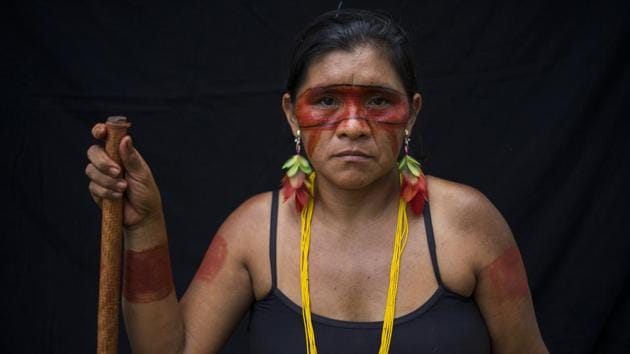
Sandra Tembe, 46, poses for a portrait. “The body paintings are a symbol of out link to nature,” said Sandra, who is the director of the school at Tekohaw village. Tembe children attend school and learn about the tribe’s traditions while they grow up speaking Portuguese and their native Tenetehara tongue that is part of the Tupi-Guarani family of languages. (Rodrigo Abd / AP)
5 / 8
 View Photos in a new improved layout
Updated on Oct 02, 2019 04:34 pm IST
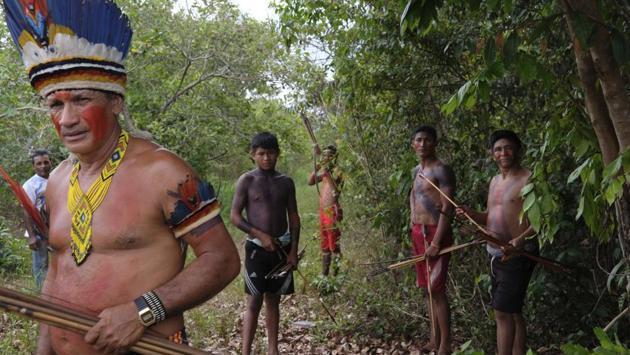
Sergio Muxi Tembe, chief of the Tekohaw village, stands with members of his tribe as they wait for police to arrive on the Alto Rio Guama indigenous reserve. “We want the federal government to assume its responsibility and guarantee the right that we have to live in our lands, to live in peace,” he said, in reference to the loggers who constantly threaten the reserve. (Rodrigo Abd / AP)
6 / 8
 View Photos in a new improved layout
Updated on Oct 02, 2019 04:34 pm IST
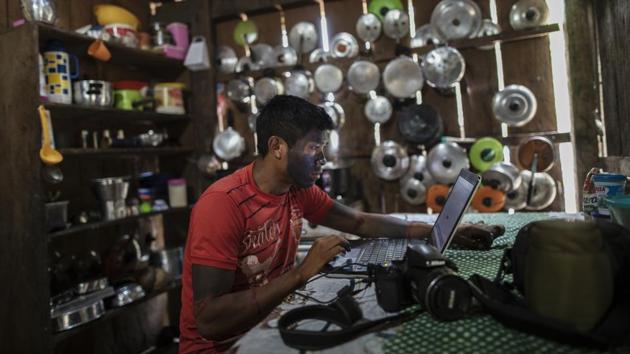
Local photographer Orerero Tembe edits his coverage of a meeting of the Tembe tribes in the Tekohaw village. In a Brazilian state ravaged by deforestation and thousands of fires, the Tembe shoot photos and video to document the cutting of trees in their land by loggers and share them on social media. (Rodrigo Abd / AP)
7 / 8
 View Photos in a new improved layout
Updated on Oct 02, 2019 04:34 pm IST
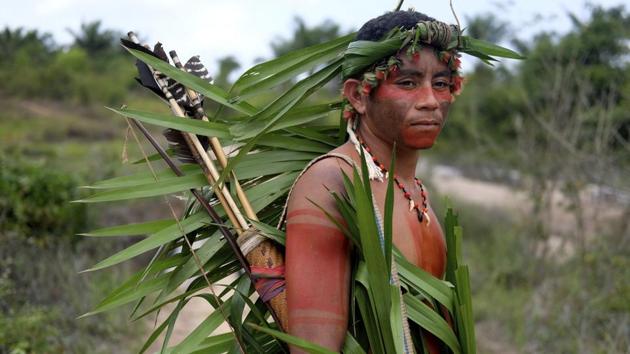
Tembe warrior Ronilson Tembe poses for a portrait. Women have organised in associations and gained an influential role as social activists fighting for the preservation of the environment and indigenous rights. “Women teach children knowledge about their culture, the way the tribe is organised, customs and coexistence in the village,” Sandra said. “Women are also “an important part of the fight for their territory.” (Luis Andres Henao / AP)
8 / 8
 View Photos in a new improved layout
Updated on Oct 02, 2019 04:34 pm IST