
 E-Paper



Photos: Apple sleuths hunt Northwest for varieties believed extinct
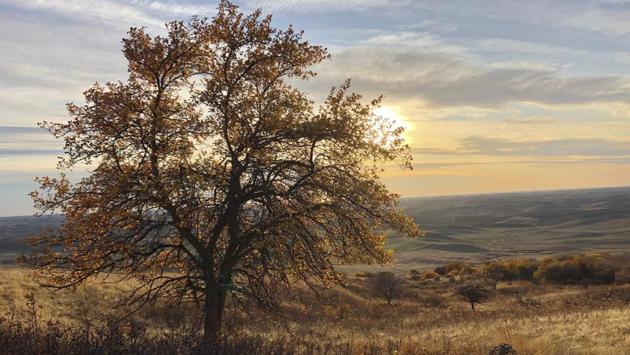
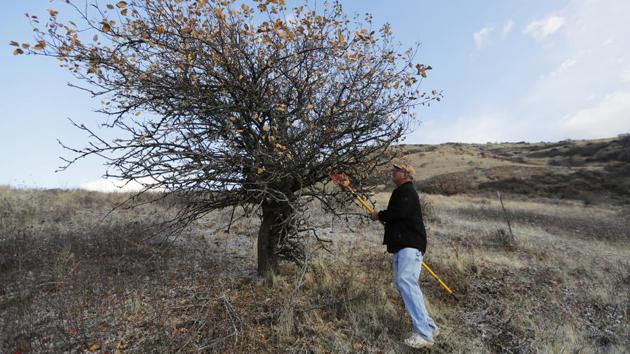
The apple tree stands alone near the top of a steep hill, wind whipping through its branches as a perfect sunset paints its leaves a vibrant gold.It has been there for more than a century, and there is no hint that the tree or its apples are anything out of the ordinary. But this scraggly specimen produces the Arkansas Beauty, a so-called heritage fruit long believed to be extinct until amateur botanists in the Pacific Northwest tracked it down three years ago.
Updated on: Nov 21, 2019 1:10 PM IST


Share via


Copy link

1/10
 View Photos in a new improved layout
Updated on Nov 21, 2019 1:10 PM
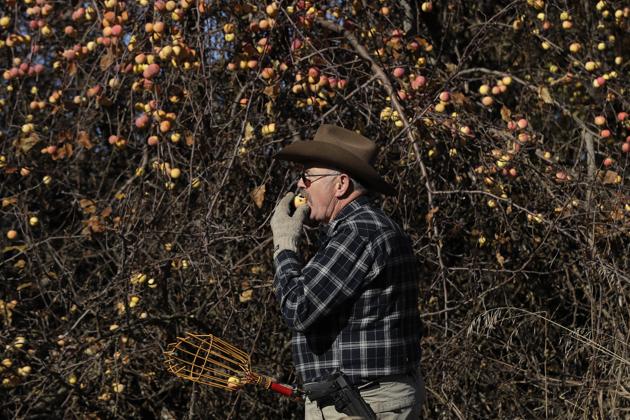
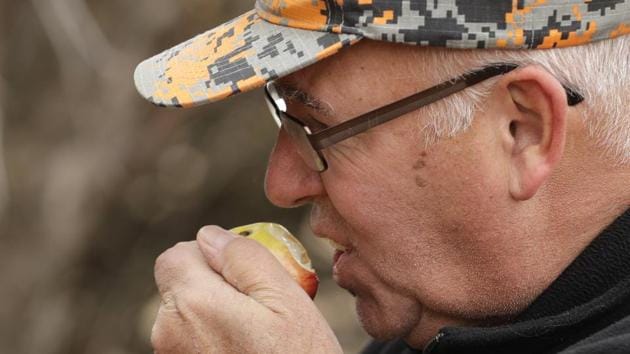
Botanist E.J. Brandt, of The Lost Apple Project, bites an apple he picked from a tree in an orchard near Troy, Idaho. Brandt and fellow botanist David Benscoter have rediscovered at least 13 long-lost apple varieties in homestead orchards, remote canyons and windswept fields in eastern Washington and northern Idaho that had previously been thought to be extinct. (Ted S. Warren / AP)
2/10
 View Photos in a new improved layout
Updated on Nov 21, 2019 1:10 PM
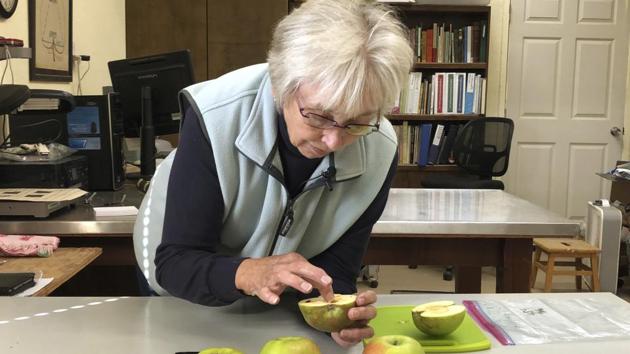
Joanie Cooper, of the Temperate Orchard Conservancy, examines a rare apple in her lab in Molalla, Oregon. Cooper and her colleagues have helped identify many of the 13 "lost" apple varieties that have been rediscovered in recent years by the Lost Apple Project in eastern Washington and northern Idaho. “You have to have varieties that can last, that can grow, produce fruit, survive the heat and maybe survive the cold winter, depending on where you are,” Cooper said. “I think that’s critical.” (Gillian Flaccus / AP)
3/10
 View Photos in a new improved layout
Updated on Nov 21, 2019 1:10 PM
The apple tree stands alone near the top of a steep hill, wind whipping through its branches as a perfect sunset paints its leaves a vibrant gold. It has been there for more than a century, and there is no hint that the tree or its apples are anything out of the ordinary. But this scraggly specimen produces the Arkansas Beauty, a so-called heritage fruit long believed to be extinct until amateur botanists in the Pacific Northwest tracked it down three years ago. (Gillian Flaccus / AP)
4/10
 View Photos in a new improved layout
Updated on Nov 21, 2019 1:10 PM
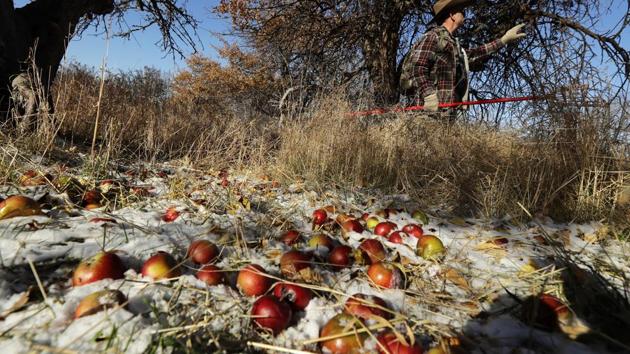
E.J. Brandt and David Benscoter, who together form the nonprofit Lost Apple Project, log countless hours and hundreds of miles in trucks, on all-terrain vehicles and on foot to find orchards planted by settlers as they pushed west more than a century ago. The two are racing against time to preserve a slice of homesteader history: The apple trees are old, and many are dying. Others are being ripped out for more wheat fields or housing developments for a growing population. (Ted S. Warren / AP)
5/10
 View Photos in a new improved layout
Updated on Nov 21, 2019 1:10 PM
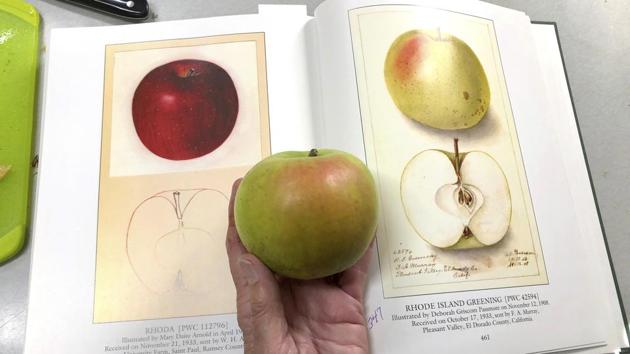
Apples from newly discovered trees are placed in a Ziploc baggie and carefully labeled with the tree’s latitude and longitude and the date the fruit was collected. The apples are then shipped to the Temperate Orchard Conservancy more than 400 miles (640 kilometers) away in Molalla, Oregon, for identification. There, experts work to identify them using a trove of U.S. Agriculture Department watercolors and old textbooks. (Gillian Flaccus / AP)
6/10
 View Photos in a new improved layout
Updated on Nov 21, 2019 1:10 PM
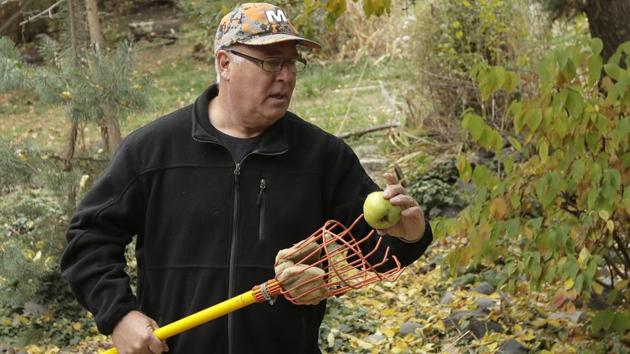
Benscoter, who retired in 2006 after a career as an FBI agent and an IRS criminal investigator, pursues leads on lost apples with the same zeal he applied to his criminal cases. In one instance, he found county fair records that listed winners for every apple variety growing in Whitman County, Washington, from 1900 to 1910 — an invaluable treasure map. In another, he located a descendant of a homesteader with a gigantic orchard by finding a family history she posted online. (Ted S. Warren / AP)
7/10
 View Photos in a new improved layout
Updated on Nov 21, 2019 1:10 PM
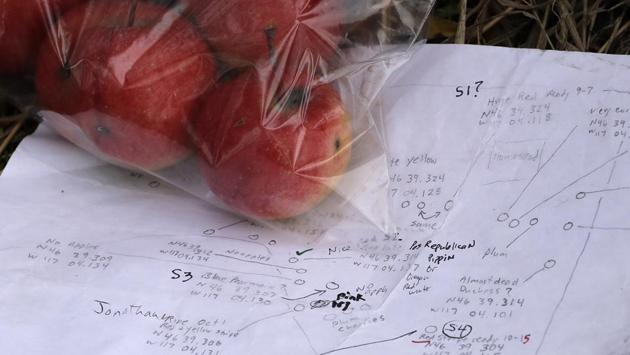
North America once had 17,000 named varieties of domesticated apples, but only about 4,000 remain. The Lost Apple Project believes settlers planted a few hundred varieties in their corner of the Pacific Northwest alone. The Homestead Act of 1862 gave 160 acres (65 hectares) to families who would improve the land and pay a small fee, and these newcomers planted orchards with enough variety to get them through the long winter, with apples that ripened from early spring until the first frosts. (Ted S. Warren / AP)
8/10
 View Photos in a new improved layout
Updated on Nov 21, 2019 1:10 PM
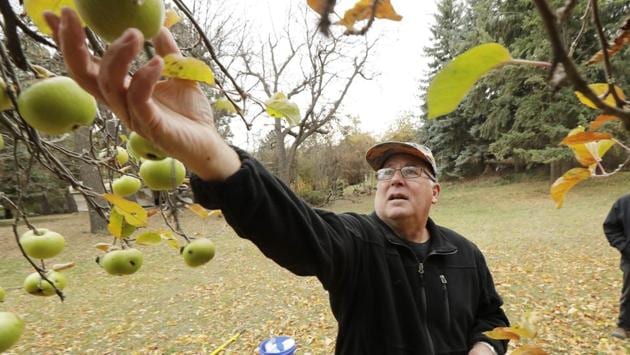
Once a variety is identified as “lost,” the apple detectives return to the field to take cuttings that can be grafted onto root stock and planted in the conservancy’s vast orchard, to be preserved for future generations. The trees could eventually boost genetic diversity among modern-day apple crops as climate change and disease take an increasing toll, said Joanie Cooper, a botanist at the Temperate Orchard Conservancy who’s helped identify many of the lost varieties found in northern Idaho and eastern Washington. (Ted S. Warren / AP)
9/10
 View Photos in a new improved layout
Updated on Nov 21, 2019 1:10 PM
For Benscoter and Brandt, however, the biggest joy comes in the hunt. Brandt collected the apples, hoping one was the Enormous Pippin, a lost variety he saw listed in the sales ledger. Months later, he learned he had instead found the Regmalard, a yellowish apple with vibrant red splashes on its speckled skin. It hadn’t even been on his radar. (Ted S. Warren / AP)
10/10
 View Photos in a new improved layout
Updated on Nov 21, 2019 1:10 PM


