
 E-Paper



Photos: As China’s mountains get hotter, hunt for ‘cure-all’ fungus gets harder
In recent years, cordyceps companies in Qinghai have been paying locals millions of yuan for the right to cordon off an entire mountain each season. But the cordyceps harvest has waned in Qinghai, the biggest producing region in China. Higher temperatures, less seasonal snow, and receding glaciers have led to warmer mountains, making it less hospitable for the fungus, which thrives in soils that are cold but not frozen, about 5 degrees Celsius (41 degrees Fahrenheit).
Updated on: Jul 03, 2019 1:25 PM IST

Share via


Copy link

1/12
 View Photos in a new improved layout
Updated on Jul 03, 2019 1:25 PM
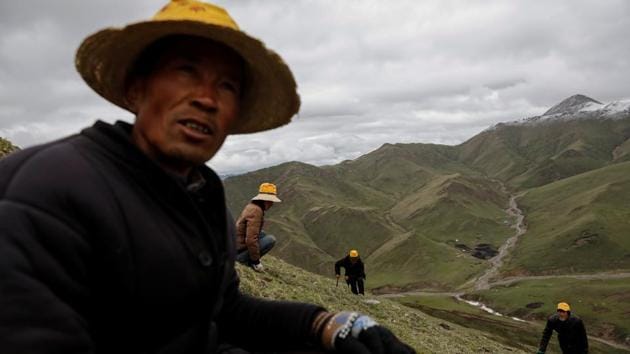
Cordyceps picker Xing Hairen, 51, looks on as others scan the ground to find Ophiocordyceps sinensis, a fungus believed to possess aphrodisiac and medicinal powers, on a mountain in the Amne Machin range. For Ma Junxiao, an ethnic Hui Muslim farmer from remote western China, the daily climb up sheer mountain slopes to look for this tiny fungus is vital to his family’s subsistence. (Aly Song / REUTERS)
2/12
 View Photos in a new improved layout
Updated on Jul 03, 2019 1:25 PM
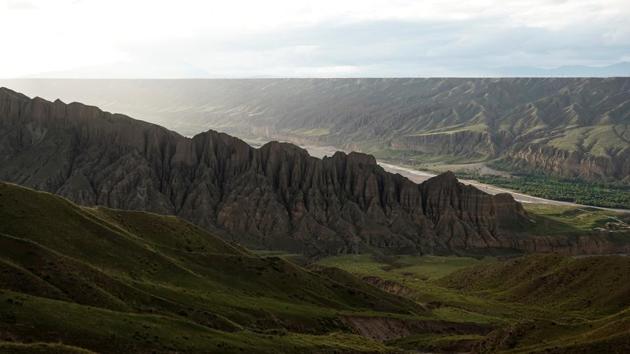
Each spring, Ma travels more than 600 kilometres by road from his village in Gansu to a jumbled knot of nameless peaks in neighbouring Qinghai province. There, he joins an army of about 80 people hired by a local company to find and pick Ophiocordyceps sinensis. In recent years, cordyceps companies in Qinghai have been paying locals millions of yuan for the right to cordon off an entire mountain each season. (Aly Song / REUTERS)
3/12
 View Photos in a new improved layout
Updated on Jul 03, 2019 1:25 PM
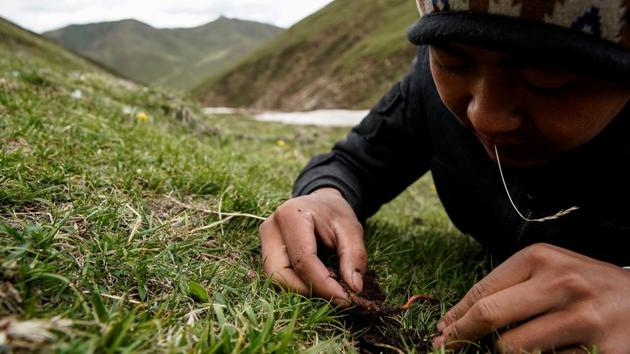
A picker digs out a cordycep. But the cordyceps harvest has waned in Qinghai, the biggest producing region in China. In the last two years, Ma’s cordyceps income has more than halved to 7,000-8,000 yuan ($1,018-$1,164) per season as the fungus grew scarcer. (Aly Song / REUTERS)
4/12
 View Photos in a new improved layout
Updated on Jul 03, 2019 1:25 PM
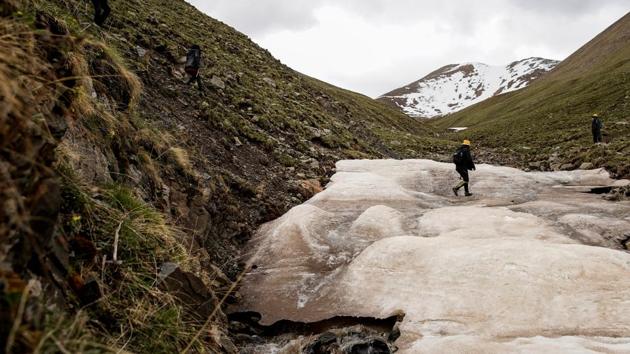
Cordyceps pickers search the ground on a frozen section of a river. One reason for the decline: higher temperatures, less seasonal snow, and receding glaciers leading to warmer mountains, making it less hospitable for the fungus, which thrives in soils that are cold but not frozen, about 5 degrees Celsius. “The glaciers are gone, and so are the cordyceps,” said Ma, 49, who has been picking in Qinghai for 14 years. (Aly Song / REUTERS)
5/12
 View Photos in a new improved layout
Updated on Jul 03, 2019 1:25 PM
Women remove soil from cordyceps. Glaciers on the Qinghai-Tibet plateau have shrunk 15% in the past half a century as gains in local temperatures outstripped the global average by three-fold, Chinese state media reported last year. Demand for the cordyceps has increased sharply in the last decade as an emerging Chinese middle class seeks it to cure everything from kidney disorders to impotence, despite a lack of scientific evidence. (Aly Song / REUTERS)
6/12
 View Photos in a new improved layout
Updated on Jul 03, 2019 1:25 PM
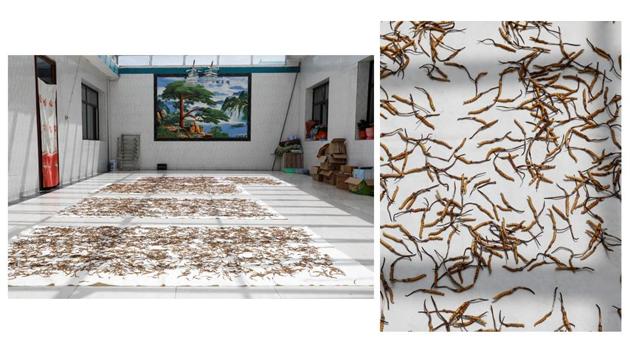
Cordyceps are laid out to dry at a trader’s house. A global fad for plant-based superfoods has also stoked interest. Found in the Himalayas, Tibet and Qinghai’s high-altitude grasslands, the caterpillar fungus, as cordyceps is also known, has become the most important source of income for local communities, offering hundreds of seasonal jobs for the poor and a path to riches for commercial harvesters. (Aly Song / REUTERS)
7/12
 View Photos in a new improved layout
Updated on Jul 03, 2019 1:25 PM
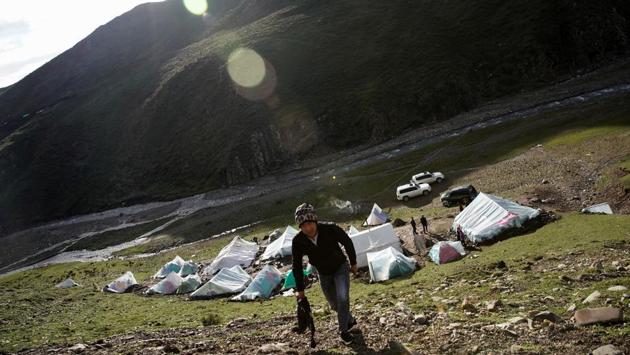
A base camp of cordyceps pickers is seen on a mountain in the Amne Machin range. At the market peak in 2010, the street price of cordyceps was more than $100,000 per kilogramme, launching a craze and enticing herders and farmers like Ma to flock to the mountains. Some experts say the enthusiasm has led to overharvesting on top of a less-hospitable climate, despite official insistence on sustainable production. (Aly Song / REUTERS)
8/12
 View Photos in a new improved layout
Updated on Jul 03, 2019 1:25 PM
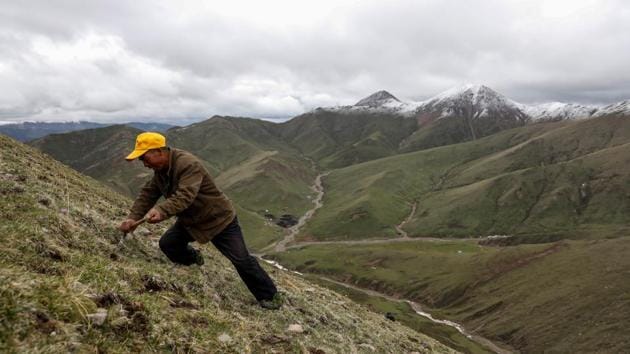
Ma Junxiao scans the ground to find cordyceps. This year, with cordyceps harder to find, Ma has had to climb as high as 4,500 metres (15,000 feet) to find fungus for which he is paid 6 yuan per piece. “I have two sons, and they run a noodle shop in Jiangsu province on the coast. Almost all of my cordyceps income goes towards sustaining that shop,” he told Reuters. (Aly Song / REUTERS)
9/12
 View Photos in a new improved layout
Updated on Jul 03, 2019 1:25 PM
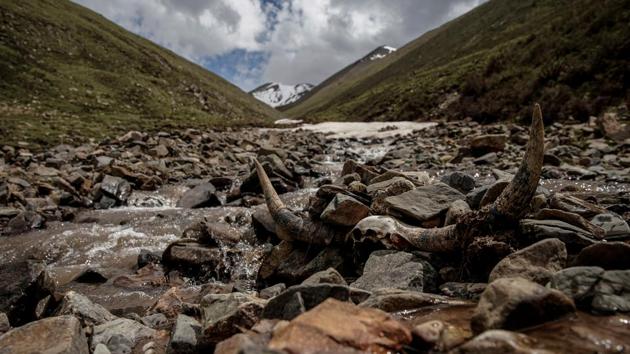
A yak skull lies in the Amne Machin range. Grass-dwelling caterpillars deliver the fungus when they migrate, arriving as early as summer, after which the fungus lays dormant in its host through the frigid winter. Spring awakens the fungus, which kills the caterpillar. It then develops a small brown stem from the desiccated body, poking out of the ground and eventually releases spores that caterpillars eat, restarting the process. (Aly Song / REUTERS)
10/12
 View Photos in a new improved layout
Updated on Jul 03, 2019 1:25 PM
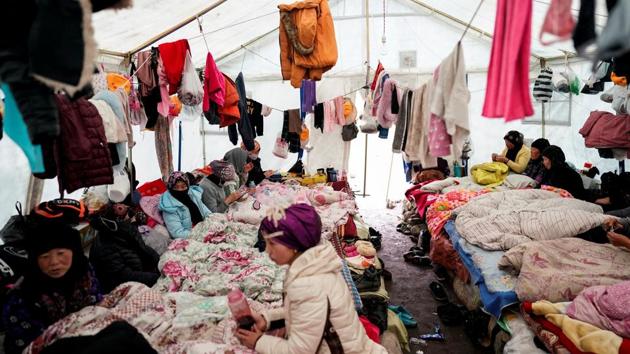
Cordyceps pickers at rest. An official tally of Qinghai’s cordyceps production is not available every year. At the provincial government’s bureau of agriculture and rural affairs, an official declined to give any data for 2010-2013 and 2015, saying such statistics were “sensitive.” Output fell to 41,200 kg in 2018 from 43,500 kg a year earlier. That’s a fraction of the 150,000 kg reported by provincial media for 2010 and 2011. (Aly Song / REUTERS)
11/12
 View Photos in a new improved layout
Updated on Jul 03, 2019 1:25 PM
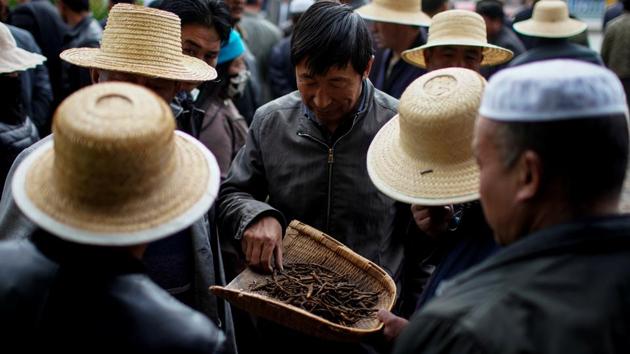
Buyers check the quality of cordyceps at a trade market in Hainan Tibetan Autonomous Prefecture. Each piece of the fungus is sold for at least 20 yuan to visiting buyers from Xining, Qinghai’s capital. When the commodity finally reaches a store in Guangdong, the price of the fungus will have multiplied many times. (Aly Song / REUTERS)
12/12
 View Photos in a new improved layout
Updated on Jul 03, 2019 1:25 PM


