
 E-Paper



Photos: Bolivia steps up anticipating demand for lithium in electric cars
Bolivia is getting ready to produce lithium, key for China's electromotive industry. The South American nation, with its Salar de Uyuni salt flats sits on the world’s largest lithium reserves but has so far failed to convert the raw resource into the prized compound used in electric batteries. With the rise of the electric car, demand is only expected to rise and Bolivia, in partnership with European and Chinese firms, is in the works to set itself up as a key supplier.
Updated on: Sept 20, 2019 4:26 PM IST


Share via


Copy link

1/10

 View Photos in a new improved layout
Updated on Sept 20, 2019 4:26 PM
Aerial view of a truck on a road crossing the flooded southern zone of the Uyuni Salt Flat, Bolivia. Over 3,600 metres above sea level on the blinding white plain of the world’s largest salt flat, landlocked Bolivia is dramatically ramping up production of lithium to cope with soaring global demand for the prized electric-battery metal. (Pablo Cozzaglio / AFP)
2/10
 View Photos in a new improved layout
Updated on Sept 20, 2019 4:26 PM
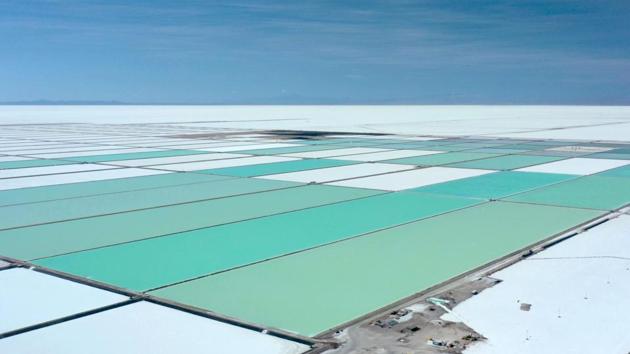
Evaporation pools of the new extraction complex. Bolivia, sits on one of the world’s largest lithium reserves, at the Salar de Uyuni -- or Uyuni Salt Flats -- ready to take full advantage in the coming age of the electric car. But while it sits at the apex of South America’s “lithium triangle,” along with Chile and Argentina, Bolivia has not had the capacity to produce the metal on a commercial scale. (Pablo Cozzaglio / AFP)
3/10
 View Photos in a new improved layout
Updated on Sept 20, 2019 4:26 PM
Aerial view of the old salt gate in the southern zone of the Uyuni Salt Flat. That will change when its Llipi plant comes online in 2020. The factory, guarded by the army because of the metal’s value, will have an annual production capacity of 15,000 tons of lithium carbonate, project manager Marco Antonio Condoretty told AFP. (Pablo Cozzaglio / AFP)
4/10
 View Photos in a new improved layout
Updated on Sept 20, 2019 4:26 PM
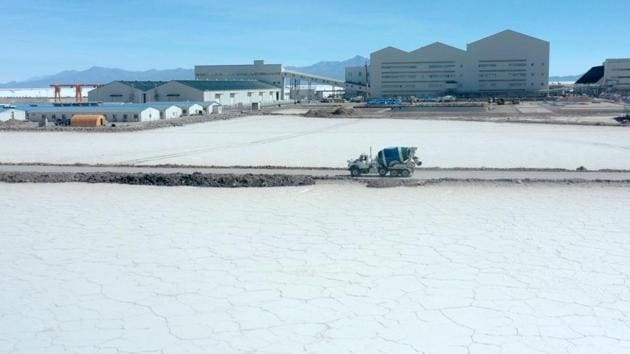
Construction workers pour concrete on the foundations of the new state-owned lithium extraction complex. State company Yacimientos de Litio Bolivianos (YLB), established by the government of President Evo Morales in 2008 to exploit lithium in the salt flats, aims to make Bolivia the fourth-largest producer by 2021. Morales is counting on lithium to serve as the economic engine that lifts his country out of poverty. (Pablo Cozzaglio / AFP)
5/10
 View Photos in a new improved layout
Updated on Sept 20, 2019 4:26 PM
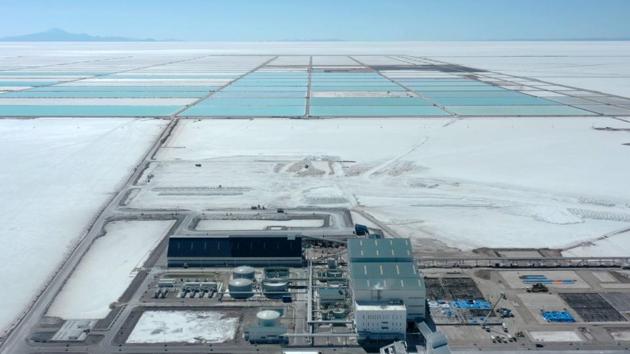
YLB teamed up last year with German company ACI Systems to help develop the Uyuni complex. It’s part of a plan to form strategic partnerships that “bring their technology and guarantee outlets,” said Condoretty. The joint venture will manufacture electric-vehicle batteries in Bolivia for the European market. Bolivia said earlier this year that Uyuni alone likely has at least 21 million metric tons of lithium, more than double previous estimates. (Pablo Cozzaglio / AFP)
6/10
 View Photos in a new improved layout
Updated on Sept 20, 2019 4:26 PM
Until now, the Salar de Uyuni has been a major tourist attraction, and environmentalists have raised concerns about the landscape being irreparably altered by exploiting the lithium deposits underneath. But Condoretty insisted that lithium exploitation would use “clean technologies” and affect only about 3% of the salt flat. (Pablo Cozzaglio / AFP)
7/10
 View Photos in a new improved layout
Updated on Sept 20, 2019 4:26 PM
China’s Xinjiang TBEA Group came on board with YLB in another joint venture in February to help extract lithium from Bolivia’s two other salt flats, in Coipasa and Pastos Grandes. China is the world’s biggest consumer of lithium, with 63% of the market, according to Ingred Garces, professor of engineering at Chile’s Antofagasta University. (Pablo Cozzaglio / AFP)
8/10
 View Photos in a new improved layout
Updated on Sept 20, 2019 4:26 PM
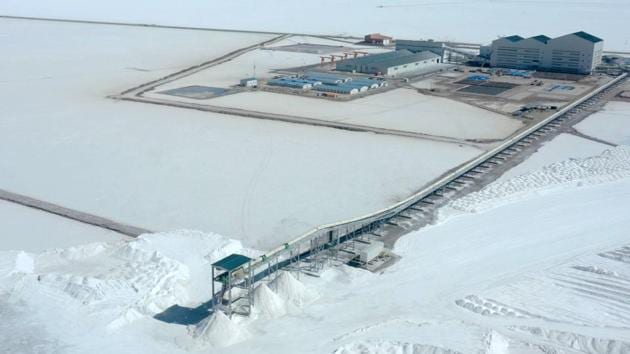
Piles of salt, a byproduct from lithium extraction, at the lithium extraction complex. With its voracious appetite for lithium, the Asian giant has positioned itself at the centre of the world’s main deposits of the metal. By 2025, China will need 800,000 tons of lithium carbonate per year to meet the growing demand for electric vehicles. (Pablo Cozzaglio / AFP)
9/10
 View Photos in a new improved layout
Updated on Sept 20, 2019 4:26 PM
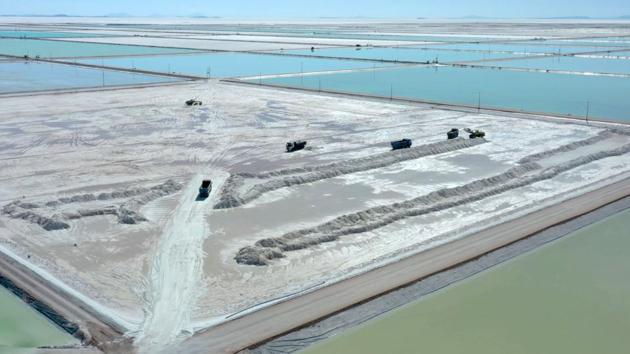
Trucks load brine from the evaporation pools. China’s Tianqui Lithium Corp. took a 24% stake in Chilean producer SQM last December, placing itself inside the “Lithium Triangle,” which has 80% of the globe’s known deposits. Worldwide production grew 23% in 2018 to more than 85,000 tons. (Pablo Cozzaglio / AFP)
10/10
 View Photos in a new improved layout
Updated on Sept 20, 2019 4:26 PM


