
 E-Paper



Photos: Decades of recovery ahead for bushfire wildlife loss in Australia
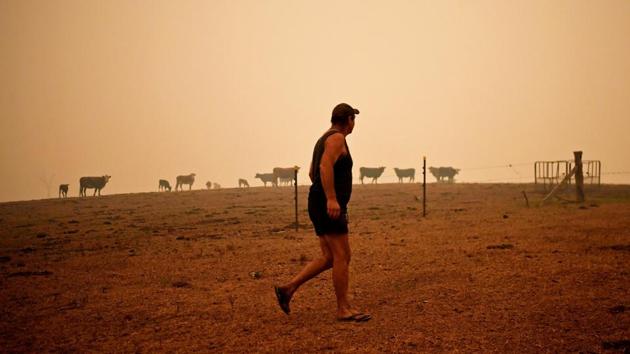
Wildfires raging across Australia have had a devastating impact on the country's unique flora and fauna, with some estimates putting the death toll at nearly half a billion animals in one state alone, and experts believe it could take decades for wildlife to recover. The crisis has focused attention on climate change, which scientists say is creating a longer and more intense bushfire season, and the Australian government has faced widespread criticism over its response and wider environmental policy.
Updated on: Jan 6, 2020 4:18 PM IST


Share via


Copy link

1/8
 View Photos in a new improved layout
Updated on Jan 6, 2020 4:18 PM
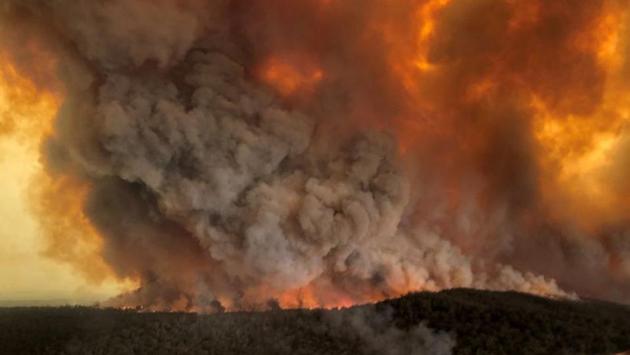
Smoke billows during bushfires in Bairnsdale, Victoria. The fires raging across Australia have had a devastating impact on the country’s unique flora and fauna, with some estimates putting the death toll at nearly half a billion animals in one state alone, and experts believe it could take decades for wildlife to recover. (Glen Morey/REUTERS)
2/8
 View Photos in a new improved layout
Updated on Jan 6, 2020 4:18 PM
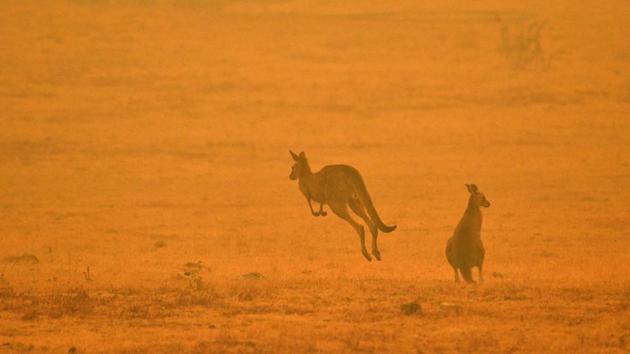
A kangaroo jumps in a field amid smoke from a bushfire in Snowy Valley on the outskirts of Cooma. Unprecedented temperatures across the continent have made this season’s fires particularly deadly, killing at least 20 people. (Saeed Khan/AFP)
3/8
 View Photos in a new improved layout
Updated on Jan 6, 2020 4:18 PM
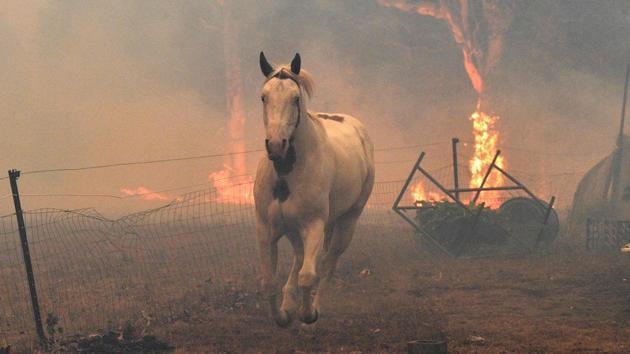
A horse tries to move away from the bushfires at a residential property near the town of Nowra, in New South Wales. The crisis has focused attention on climate change, which scientists say is creating a longer and more intense bushfire season, and the Australian government has faced widespread criticism over its response and wider environmental policy. (Saeed Khan/AFP)
4/8
 View Photos in a new improved layout
Updated on Jan 6, 2020 4:18 PM
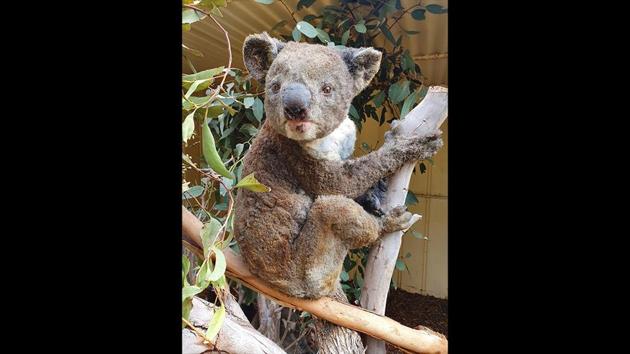
A rescued koala sits on a tree branch, in Kangaroo Island. Harrowing footage of desperate koalas drinking from water bottles handed to them by rescuers and kangaroos standing helpless in fire-ravaged towns and charred forests were seen across the world. There is some hope, however, as experts believe scorched forests can recover, and populations of koalas, kangaroos and other badly affected species may be able to return. (AP/PTI)
5/8
 View Photos in a new improved layout
Updated on Jan 6, 2020 4:18 PM
Professor Andrew Beattie from Macquarie University near Sydney told AFP he believes the animal death toll nationwide could be in the billions, “if you think of mammals, and birds, and reptiles, amphibians and say the larger insects such as butterflies... We can be pretty sure that in large parts of these very expansive fires, most of the wildlife will be dead,” the emeritus professor from the department of biological sciences said. (Tracey Nearmy/REUTERS)
6/8
 View Photos in a new improved layout
Updated on Jan 6, 2020 4:18 PM
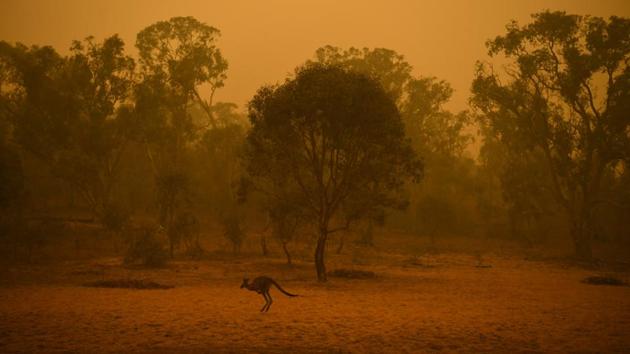
A kangaroo jumps in bush land surrounded by smoke in Canberra. Koala populations have been hit particularly hard because they live in trees, feed only on certain types of eucalypti and cannot move quick enough away from the flames. Even before this year’s bushfire crisis, numbers in New South Wales and Queensland had already dropped by 42% between 1990 and 2010, according to the federal threatened species scientific committee. (Lukas Coch/REUTERS)
7/8
 View Photos in a new improved layout
Updated on Jan 6, 2020 4:18 PM
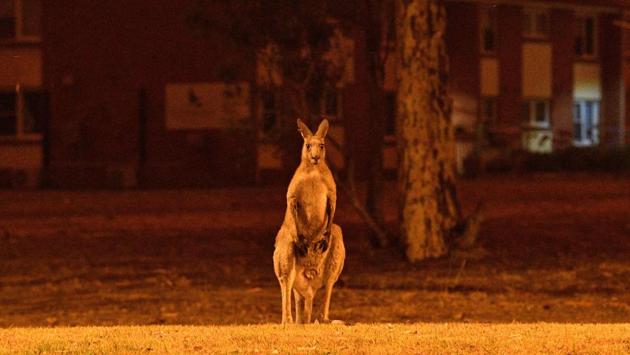
Previous studies have found that fires do not spread across the landscape uniformly, and some places are left unscathed even if areas around them are totally devastated. “It’s those areas that are untouched or have suffered less where wildlife tends to accumulate if they can get there,” Beattie told AFP, adding that if there are enough of these, the burnt forests should regenerate over time but only if conditions improve quickly. (Saeed Khan/AFP)
8/8
 View Photos in a new improved layout
Updated on Jan 6, 2020 4:18 PM


