
 E-Paper



Photos: Germany marks 30th anniversary of the fall of Berlin Wall
Germany on Saturday marked the 30th anniversary of the fall of the Berlin Wall that separated East and West Germany, with President Frank-Walter Steinmeier thanking Eastern European neighbours for enabling a peaceful revolution. The toppling of the wall, which had divided the Communist-ruled East and the capitalist West in Berlin for nearly three decades and became a potent symbol of the Cold War, was followed a year later by the reunification of Germany in 1990.
Updated on: Nov 9, 2019 7:36 PM IST


Share via


Copy link

1/9

 View Photos in a new improved layout
Updated on Nov 9, 2019 7:36 PM
West Berliners in front of the Berlin Wall as the East German border guards demolish a section of the wall to open a new crossing point between East and West Berlin, near the Potsdamer Square, in Berlin. Germany on Saturday marked the 30th anniversary of the fall of the Berlin Wall that separated East and West Germany, with President Frank-Walter Steinmeier thanking Eastern European neighbours for enabling a peaceful revolution. (Gerard Malie / AFP File)
2/9
 View Photos in a new improved layout
Updated on Nov 9, 2019 7:36 PM
People touch remains of the Berlin Wall at the Wall memorial on Bernauer Strasse in Berlin, on November 08, 2019. The toppling of the wall, which had divided the Communist-ruled East and the capitalist West in Berlin for nearly three decades and became a potent symbol of the Cold War, was followed a year later by the reunification of Germany in 1990. (Fabrizio Bensch / REUTERS)
3/9
 View Photos in a new improved layout
Updated on Nov 9, 2019 7:36 PM
Two women reach their finger through a hole of the remains of the Berlin Wall at the Wall memorial, on November 8, 2019. “Together with our friends, we remember with deep gratitude the events 30 years ago,” Steinmeier said during a ceremony at the Bernauer Strasse Berlin Wall Memorial, which was also attended by Chancellor Angela Merkel and heads of state from Poland, Hungary, Slovakia and the Czech Republic. (Fabrizio Bensch / REUTERS)
4/9
 View Photos in a new improved layout
Updated on Nov 9, 2019 7:36 PM
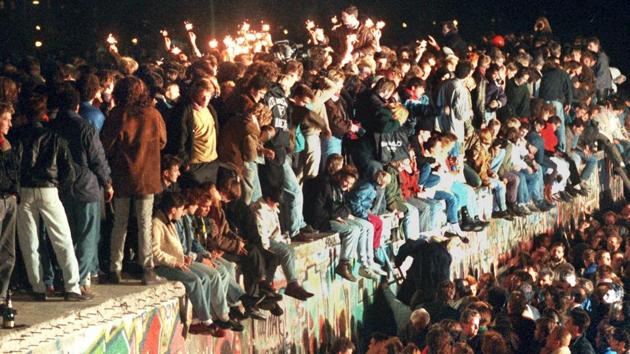
Young East Berliners celebrate atop the Berlin Wall, on November 11, 1989. “Without the courage and the will to freedom of the Poles and Hungarians, the Czechs and Slovaks, the peaceful revolutions in Eastern Europe and Germany’s reunification would not have been possible,” Steinmeier said. (AFP File)
5/9
 View Photos in a new improved layout
Updated on Nov 9, 2019 7:36 PM
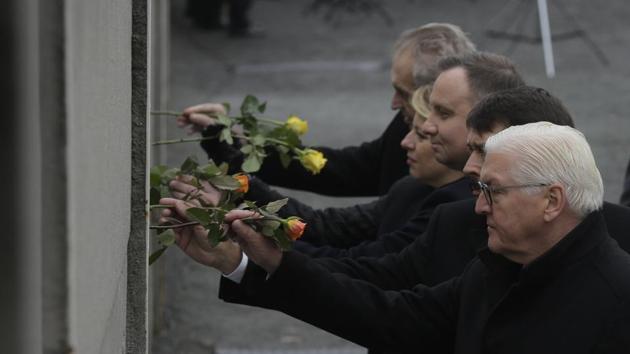
(R-L) The Presidents Frank-Walter Steinmeier of Germany, Janos Ader of Hungary, Andrzej Duda of Poland, Zuzana Caputova of Slovakia and Milos Zeman of the Czech Republic, put flowers in a crack inside the Berlin Wall during a commemoration ceremony to celebrate the 30th anniversary of the fall of the Berlin Wall at the Wall memorial site at Bernauer Strasse. (Markus Schreiber / AP)
6/9
 View Photos in a new improved layout
Updated on Nov 9, 2019 7:36 PM
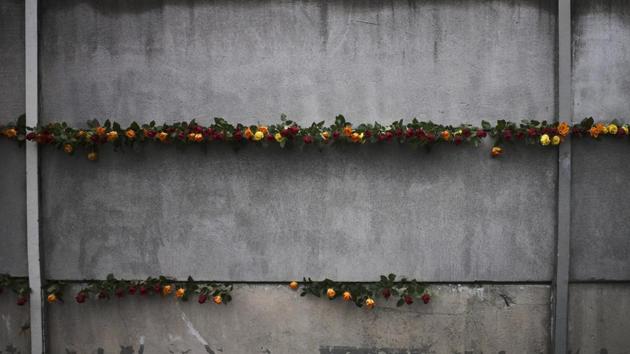
In August 1989, Hungarian border guards for the first time allowed people from East Germany to cross freely into Austria, paving the way for the fall of the Berlin Wall three months later and with it the end of the Iron Curtain. (Markus Schreiber / AP)
7/9
 View Photos in a new improved layout
Updated on Nov 9, 2019 7:36 PM
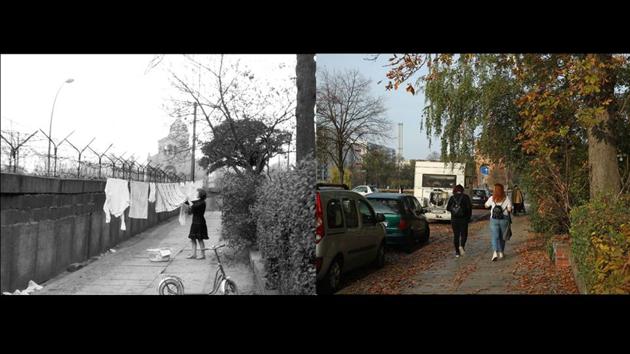
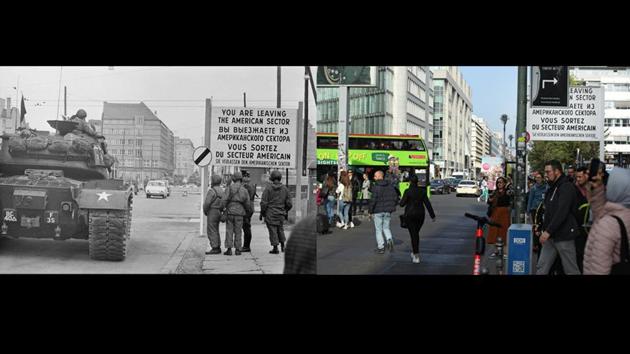
This digital composite image shows Leuschnerdamm street in Berlin in 1963 and on October 23, 2019. Steinmeier pointed out, however, that the historic event did not mark the “end of history” as U.S. historian Francis Fukuyama stated. The struggle of political systems had continued and the future was more uncertain than ever before, he added. (Express Newspapers / Sean Gallup/Getty Images)
8/9
 View Photos in a new improved layout
Updated on Nov 9, 2019 7:36 PM
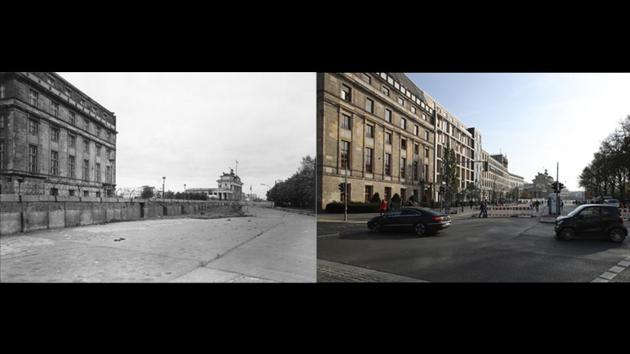
Scheidemannstrasse near the Brandenburg Gate in Berlin in 1966 and on October 23, 2019. “Liberal democracy is being challenged and questioned,” Steinmeier said. That’s why Germany and its European allies had to fight every day for a peaceful and united Europe with each country having to do its part to overcome differences, he added. (John Waterman/Fox Photos/ Sean Gallup/Getty Images)
9/9
 View Photos in a new improved layout
Updated on Nov 9, 2019 7:36 PM


