
 E-Paper



Photos: Irish border residents fear revival of old tensions post Brexit
The 500-kilometre long border between Republic of Ireland and Northern Ireland was drawn in 1921, splitting communities and sometimes property, as the British government sought to create a home for the majority Protestant population of Northern Ireland at a time when the largely Catholic Republic of Ireland won its independence. As Brexit took effect on January 31, residents on both sides of the border are now concerned about protecting the relative peace and prosperity after the 1998 Good Friday Agreement. That accord helped end three decades of sectarian violence between paramilitary groups that wanted to reunify Ireland and those who insisted the six counties of Northern Ireland should remain part of the UK.
Updated on: Feb 3, 2020 10:27 PM IST


Share via


Copy link

1/12

 View Photos in a new improved layout
Updated on Feb 3, 2020 10:27 PM
An old railway bridge blown up by the British Army in the 1970s is partially submerged in the Belcoo River that separates Northern Ireland from the town of Blacklion, Republic of Ireland. The 500-kilometre border between the Republic of Ireland and Northern Ireland will be the United Kingdom's only land border with a European Union (EU) country once Britain leaves the now 28-nation bloc. (David Goldman / AP)
2/12
 View Photos in a new improved layout
Updated on Feb 3, 2020 10:27 PM
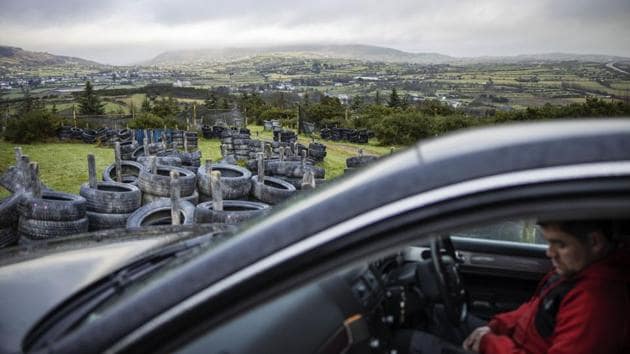
Tires line a paintball field at Watchtower Adventures, a family run business owned by Mark Rice, 32, right, near the scene of a former British watchtower overlooking the border with the Republic of Ireland, in Jonesborough, Northern Ireland. “No one knows what’s going to happen. It’s the unknown that’s the problem, isn’t it? It’s the unknown that has people afraid,” said Rice. (David Goldman / AP)
3/12
 View Photos in a new improved layout
Updated on Feb 3, 2020 10:27 PM
Moss grows over trees and stone as Adrian McSorley, 50, explains how the border with the Republic of Ireland runs through his land, in Scraghey, Northern Ireland. McSorley raises lamb on land handed down to him in the family which then get sent south of the border to Ireland. “We’ve been getting a subsidy from the EU for farming, he said. “But, if there isn’t a subsidy for farming, it’ll become non-existent.” (David Goldman / AP)
4/12
 View Photos in a new improved layout
Updated on Feb 3, 2020 10:27 PM
A pedestrian walks by St. Mary’s Catholic Church in Aughnacloy, Northern Ireland. Northern Ireland’s six counties are part of the United Kingdom. Most of its Catholics, historically discriminated against, sought unity with the Republic of Ireland to the south. They became known as nationalists, or republicans. Most Protestants insisted on remaining in the union, and became known as unionists, or loyalists. (David Goldman / AP)
5/12
 View Photos in a new improved layout
Updated on Feb 3, 2020 10:27 PM
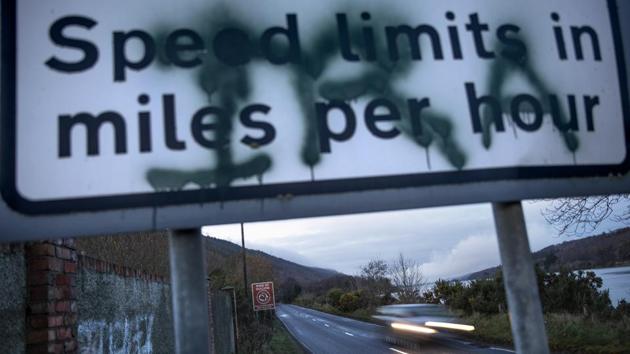
A sign on the border between Northern Ireland and the Republic of Ireland, spray painted with the initials of the Irish Republican Army, alerts drivers to the change in miles per hour for speed limit postings, in Newry, Northern Ireland. The only way motorists know they have crossed into Northern Ireland is from the speed limit signs, which use miles per hour measurements, rather than the metric system used in the south. (David Goldman / AP)
6/12
 View Photos in a new improved layout
Updated on Feb 3, 2020 10:27 PM
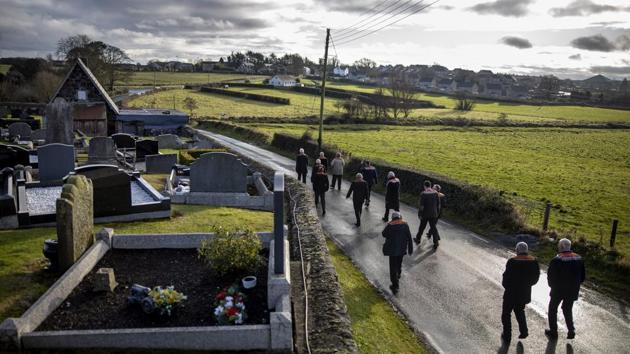
Members of the Orange Order march down the road in front of Drumcree Parish Church for their weekly protest in front of a waiting policeman who prevents them from continuing on through a Catholic area, in Portadown, Northern Ireland. The weekly protests have continued since 1998 when the Protestant group was last permitted to complete their traditional route through a Catholic area and is viewed by some groups as controversial. (David Goldman / AP)
7/12
 View Photos in a new improved layout
Updated on Feb 3, 2020 10:27 PM
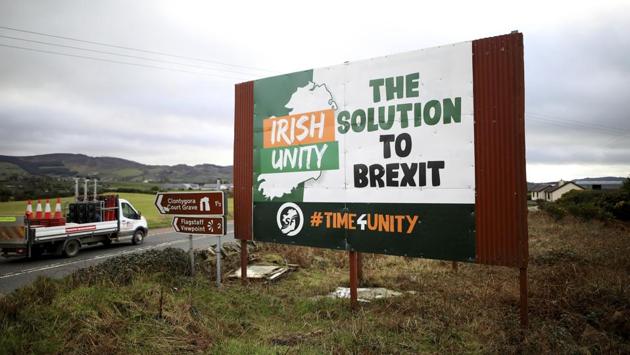
Motorists pass an anti-Brexit poster close to the Irish border, beside the town of Newry, Northern Ireland. While Britain formally left the EU at 11pm local time Friday, the hard work of building a new economic relationship between the bloc and its ex-member has just begun. (Peter Morrison / AP)
8/12
 View Photos in a new improved layout
Updated on Feb 3, 2020 10:27 PM
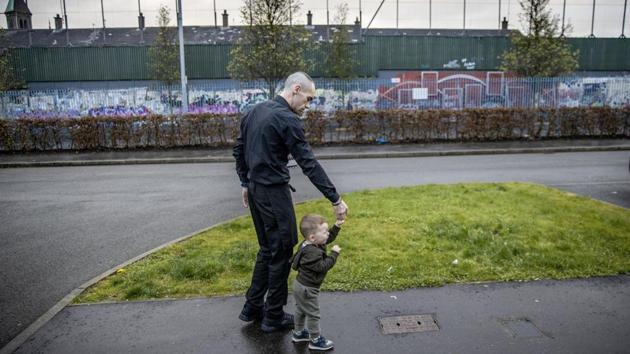
David Reid, 33, walks with his son Lawson, 1, in front of their home bordering a wall separating their Protestant neighbourhood from a Catholic one, in Belfast, Northern Ireland. “It will go back to the troubles then because there be too many fighting on the street if it was a united Ireland,” said Reid. (David Goldman / AP)
9/12
 View Photos in a new improved layout
Updated on Feb 3, 2020 10:27 PM
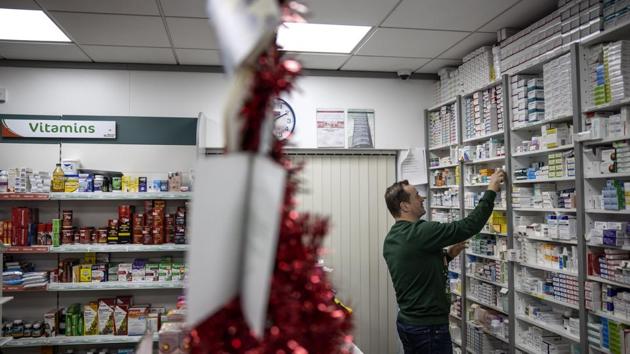
Pharmacist Tom Murray, 46, stocks shelves at his pharmacy in Castlefinn, Ireland, just over the border from Northern Ireland. “My historical political view, I think Ireland should always be united country and should be free of the shackles of Britain. But at the same time, we have to accept that there’s one million people living a mile away who identify as British,” said Murray, adding that their Britishness must be protected as much as his Irishness. (David Goldman / AP)
10/12
 View Photos in a new improved layout
Updated on Feb 3, 2020 10:27 PM
Musicians play at the John Hewitt, a bar opened by a non-profit with the intent of bringing together communities by providing services for the unemployed and is a popular gathering spot for artists, both Catholic and Protestant. (David Goldman / AP)
11/12
 View Photos in a new improved layout
Updated on Feb 3, 2020 10:27 PM
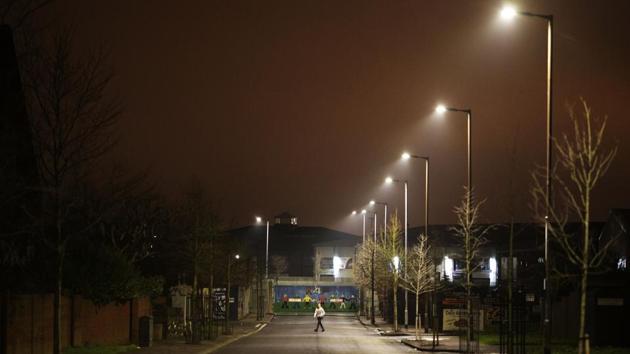
A pedestrian walks down a quiet street by one of the few remaining gates separating Catholic and Protestant neighbourhoods that still close each night, in Belfast, Northern Ireland. Signs of the conflict, known here as The Troubles, are still evident. In Belfast, so-called peace walls still seek to prevent violence by separating Protestant and Catholic neighbourhoods. (David Goldman / AP)
12/12
 View Photos in a new improved layout
Updated on Feb 3, 2020 10:27 PM


