
 E-Paper



Photos: K-Pop fame lures Japanese youth to Korea despite diplomatic chill
Yuuka Hasumi put high school in Japan on hold and flew to South Korea in February to try her chances at becoming a K-pop star, even if that means long hours of vocal and dance training, no privacy, no boyfriend, and even no phone. She is one of an estimated one million other K-pop star wannabes, from South Korea and abroad, hoping to get a shot at super competitive auditions by major talent agencies that will take on just a select few as "trainees".
Updated on: May 02, 2019 10:29 AM IST

Share via


Copy link

1/14

 View Photos in a new improved layout
Updated on May 02, 2019 10:29 AM
Yuuka Hasumi and Ibuki Ito, also from Japan, perform at an Acopia School party in Seoul, South Korea. Hasumi, 17, joined Acopia School in Seoul, a prep school offering young Japanese a shot at K-pop stardom, teaching them the dance moves, the songs and also the language. (Kim Hong-Ji / REUTERS)
2/14
 View Photos in a new improved layout
Updated on May 02, 2019 10:29 AM
Yuuka Hasumi sings a song as she spends time after class, in the Hongdae area of Seoul. “It is tough,” Hasumi said in Japanese, drenched in sweat from a dance lesson she attended with 15-year-old friend Yuho Wakamatsu, also from Japan. “Going through a strict training and taking my skill to a higher level to a perfect stage, I think that’s when it is good to make a debut,” she said. (Kim Hong-Ji / REUTERS)
3/14
 View Photos in a new improved layout
Updated on May 02, 2019 10:29 AM
Yuuka Hasumi walks with a manager of Acopia School in the Hongdae area. Hasumi is one of 500 or so young Japanese who join Acopia each year, paying up to $3,000 a month for training and board. (Kim Hong-Ji / REUTERS)
4/14
 View Photos in a new improved layout
Updated on May 02, 2019 10:29 AM
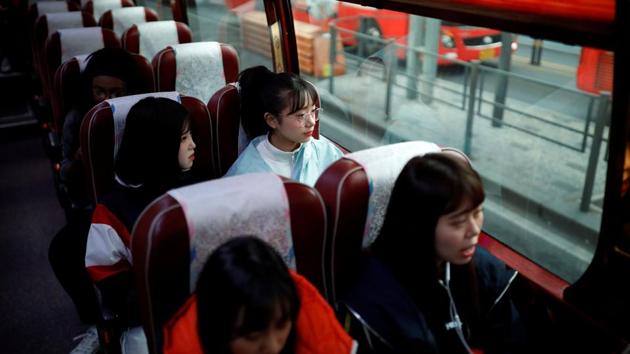
Nao Niitsu, 19, college freshman from Tokyo and other Japanese children sit on a bus heading for an audition in Seoul. The school also fixes auditions for its candidates with talent management companies that have been the driving force behind the “Korean-wave” pop culture that exploded onto the world stage in the past decade with acts such as global chart topping boy band BTS. (Kim Hong-Ji / REUTERS)
5/14
 View Photos in a new improved layout
Updated on May 02, 2019 10:29 AM
Nao Niitsu chooses her profile picture before an audition in Seoul. The influx of Japanese talent that is reshaping the K-pop industry comes at a time of increasingly bitter political acrimony between the two countries that has damaged diplomatic ties. (Kim Hong-Ji / REUTERS)
6/14
 View Photos in a new improved layout
Updated on May 02, 2019 10:29 AM
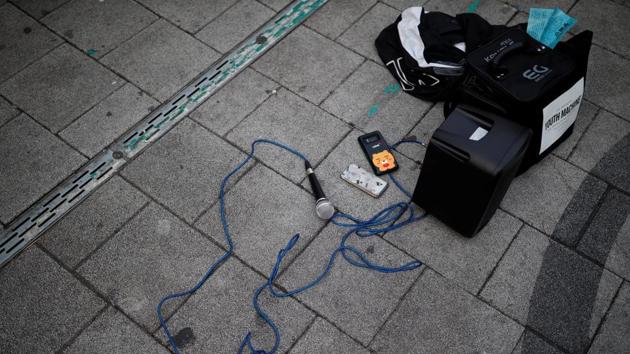
Microphone and speakers lie on the ground as Yuuka Hasumi and Ibuki Ito perform during their street performance in Hongdae. The influx of Japanese talent that is reshaping the K-pop industry comes at a time of increasingly bitter political acrimony between the two countries that has damaged diplomatic ties. (Kim Hong-Ji / REUTERS)
7/14
 View Photos in a new improved layout
Updated on May 02, 2019 10:29 AM
Nao Niitsu and other Japanese children warm up for an audition at a park in Seoul. That the tension has done little to dent the K-pop craze among Japanese youth, and the willingness by Korean agencies to take on Japanese talent, speak to the strength of the ties between their people, according to one long-time observer. (Kim Hong-Ji / REUTERS)
8/14
 View Photos in a new improved layout
Updated on May 02, 2019 10:29 AM
Yuuka Hasumi and Ibuki Ito spend time before taking part in an audition in Seoul. “They’re nuts about BTS over there in Japan,” said Lee Soo-chul, board member of Seoul-Tokyo Forum, a private foundation with members from both countries. K-pop groups, and veteran Korean musicians, are selling out concert halls throughout Japan, said Lee, a former head of Samsung Group’s Japanese operations. (Kim Hong-Ji / REUTERS)
9/14
 View Photos in a new improved layout
Updated on May 02, 2019 10:29 AM
Tensions rooted in Japan’s 1910-1945 colonisation of Korea have risen after South Korean court rulings against Japanese firms for forced labour, and amid a perception in Korea that Japan’s leadership has not adequately atoned for its colonial past. But the popularity of Korean culture and K-pop music is on the rise in Japan, with many fans and artists saying they are not bothered by the diplomatic tension. (Kim Hong-Ji / REUTERS)
10/14
 View Photos in a new improved layout
Updated on May 02, 2019 10:29 AM
For schools and agencies, Japan’s music market - the second largest after the United States and bigger than China - is a big prize and many have been on a campaign to recruit Japanese talent. “It will be good if Japan and South Korea will get along through music,” Hasumi (C) told Reuters during a break from her Korean language class. (Kim Hong-Ji / REUTERS)
11/14
 View Photos in a new improved layout
Updated on May 02, 2019 10:29 AM
Yuuka Hasumi and her friends have lunch after a Korean language class. Some Japanese transplants have already made it big. The three Japanese members of the girl band Twice helped make the group the second most popular act in Japan, after BTS. Their success has prompted JYP Entertainment, the South Korean agency backing Twice, to plan the launch of an idol group comprising only Japanese girls. (Kim Hong-Ji / REUTERS)
12/14
 View Photos in a new improved layout
Updated on May 02, 2019 10:29 AM
Nao Niitsu walks through Shin-Okubo district, known as Tokyo’s Korea Town. There’s no shortage of Japanese hopefuls willing to train under talent agencies’ watchful eye, some having left successful careers back home in search of K-pop fame. Debut is elusive, unlike in Japan where it is easier for idols to get a start and then can hone their skills and work on their appeal with the fans. (Kim Hong-Ji / REUTERS)
13/14
 View Photos in a new improved layout
Updated on May 02, 2019 10:29 AM
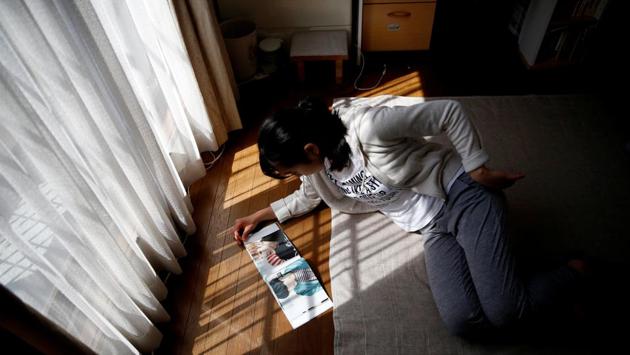
Miyu Takeuchi said it wasn’t a difficult decision to leave a 10-year career with a top idol band AKB48 back home in Japan to sign with the K-pop agency Mystic Entertainment in March as a trainee. Even with her experience, she has seven hours of vocal training a day and two-hour dance lessons twice a week, plus early morning Korean lessons. (Kim Hong-Ji / REUTERS)
14/14
 View Photos in a new improved layout
Updated on May 02, 2019 10:29 AM


