
 E-Paper



Photos: Long-dead critters animate Israel’s upcoming nature museum
For decades, hyenas, pelicans, monkeys and other animals have resided below ground at Tel Aviv University, frozen in time by formaldehyde. They were stuffed into poses taken from the lives they once lived. A bear seemed to prowl the room while a cheetah looked like it was chasing its prey. Last month, the long-dead animals surfaced — reincarnated as exhibits at Israel's new natural history museum, which is set to open in July. AP photographer Oded Balilty was granted access to the animal storeroom ahead of the museum's opening.
Updated on: Jun 17, 2018 11:47 AM IST

Share via


Copy link

1/12

 View Photos in a new improved layout
Updated on Jun 17, 2018 11:47 AM
Taxidermist Igor Gavrilov works on stuffed wolf to be displayed at the Steinhardt Museum of Natural History in Tel Aviv. Israel is opening a new national natural history museum in Tel Aviv in the wake of a public debate over evolution. The facility aims to raise public awareness about the natural world and environment, with special emphasis on local ecology. (Oded Balilty / AP)
2/12
 View Photos in a new improved layout
Updated on Jun 17, 2018 11:47 AM
The hyena, pelican and monkey had never met before they were frozen in time in a Noah’s Ark of formaldehyde. For decades they resided below ground at Tel Aviv University.The creatures were meticulously labelled and maintained under a steady temperature to preserve them for research purposes. In this photo, taxidermist Igor Gavrilov cleans a dolphin skeleton to be displayed at the museum. (Oded Balilty / AP)
3/12
 View Photos in a new improved layout
Updated on Jun 17, 2018 11:47 AM
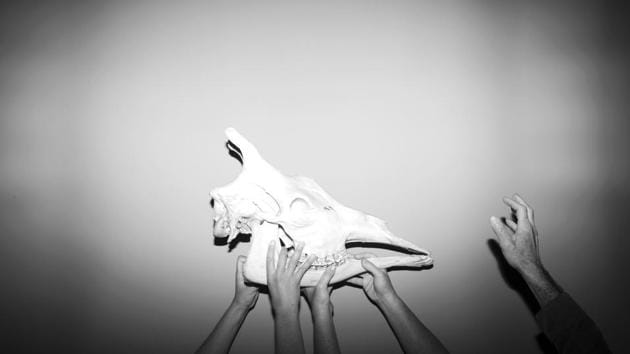
Exhibitors hold up a giraffe skull. But the animals never did appear to be dead in the room with little air or daylight.They were stuffed into poses taken from the lives they once lived. A bear seemed to prowl the room, as a cheetah looked like it was chasing its prey. (Oded Balilty / AP)
4/12
 View Photos in a new improved layout
Updated on Jun 17, 2018 11:47 AM
Part of the collection is from German naturalist and Catholic priest Ernst Johann Schmitz, who lived in the Holy Land about a century ago, and it includes animals no longer seen in the region. Last month, the long-dead animals surfaced — reincarnated as exhibits at Israel’s new Natural History Museum, which is set to open in July. (Oded Balilty / AP)
5/12
 View Photos in a new improved layout
Updated on Jun 17, 2018 11:47 AM
The ultra-modern ark-shaped edifice is set alongside the university campus and houses over 5.5 million specimens from around the globe. The Steinhardt Museum of Natural History places special emphasis on the flora and fauna indigenous to Israel and Middle East. (Oded Balilty / AP)
6/12
 View Photos in a new improved layout
Updated on Jun 17, 2018 11:47 AM
The museum’s curators say the institution -- ticketed as the only natural history research center in the Middle East -- aims to raise public awareness about the natural world by highlighting both the country’s ecological diversity at the crossroads of three continents, and the devastation wrought by modern development. (Oded Balilty / AP)
7/12
 View Photos in a new improved layout
Updated on Jun 17, 2018 11:47 AM
A pair of goat's horns is stored in the collection’s storeroom of Steinhardt Museum of Natural History. Its halls combine traditional dioramas and innovative interactive displays to showcase thousands of specimens. Stuffed hawks, pelicans and vultures swirling around the building’s entrance are meant to depict epic avian migrations from Africa to Europe through Israel. (Oded Balilty / AP)
8/12
 View Photos in a new improved layout
Updated on Jun 17, 2018 11:47 AM
The last Syrian bear to inhabit the country, killed in 1916, and the last Asiatic cheetah, killed in 1911, are ghosts from a lost world, teaching visitors about the devastating changes to the local habitat. The museum doesn’t shy away from pointing the finger at humanity for its destructive role in the natural world. It places significant emphasis on anthropogenic climate change and habitat destruction. (Oded Balilty / AP)
9/12
 View Photos in a new improved layout
Updated on Jun 17, 2018 11:47 AM
A human and a monkey skeleton await installation. An exhibit on human evolution titled “What makes us human?” looks at humanity’s evolution through the lens of cultural accomplishments: the harnessing of fire, innovation of tools, and development of agriculture. The exhibit is situated on the top floor of the museum, allowing any visitors who may find the subject objectionable to bypass it. (Oded Balilty / AP)
10/12
 View Photos in a new improved layout
Updated on Jun 17, 2018 11:47 AM
Orthodox Judaism’s strict interpretation of the scripture leads many to reject the theory of evolution, which is not taught in state-funded ultra-Orthodox institutions. These make up 23% of Israel’s schools. Even in non-religious schools, critics point out that relatively few high school students encounter the subject of human evolution in Israeli classrooms. (Oded Balilty / AP)
11/12
 View Photos in a new improved layout
Updated on Jun 17, 2018 11:47 AM
A stuffed black stork to be displayed, is stored in the collection’s storeroom.The Natural History Museum said in a statement that the exhibit’s placement on the top floor was “made within considerations from several angles, which include the museum curation and story plan and the space of each of the museum galleries.” (Oded Balilty / AP)
12/12
 View Photos in a new improved layout
Updated on Jun 17, 2018 11:47 AM


