
 E-Paper



Photos: Marawi’s ruins ring of Islamic State’s devastating reach
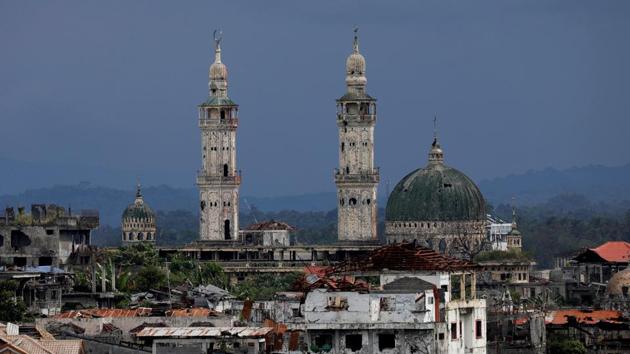
Once one of the most picturesque city in Philippines, Marawi continues to bear the brunt of ISIS attacks and retaliatory military action from 2017. Nearly 1,00,000 people fled during what became the Philippine military's toughest and longest conflict since World War Two. The Internally Displaced Persons (IDPs) now live in plastic tents and compete with thousands of families for water and other basic utilities. They are still waiting to return to their former homes.
Updated on: May 25, 2019 1:58 PM IST

Share via


Copy link

1/10
 View Photos in a new improved layout
Updated on May 25, 2019 1:58 PM
Dilapidated structures are seen at the most affected war-torn area of Marawi City at Lanao del Sur province, Philippines. The area remains abandoned two years since pro-Islamic State militants began their attacks on May 23, 2017. The displaced inhabitants of the city continue to bear the brunt of the attacks, living in dilapidated localities and struggling to make ends meet. (Eloisa Lopez / REUTERS)
2/10
 View Photos in a new improved layout
Updated on May 25, 2019 1:58 PM
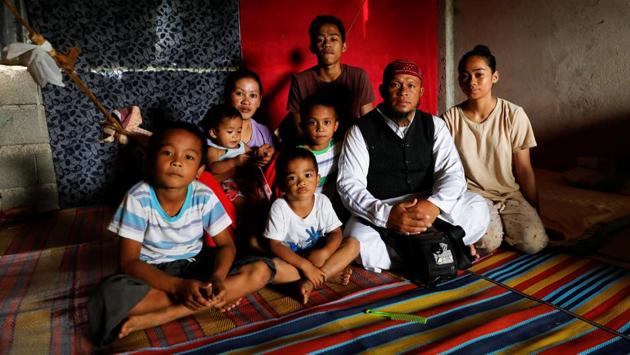
Mohammad Ali Acampong, 42, poses for a portrait with his family in a school-turned-evacuation centre at Mipaga in Marawi. During the conflict, Acampong left his three-storey lakeside house with his family of eight.”When the chaos began, our life suddenly became really difficult. We had a comfortable life before. Now we live in between shelters, enduring heat, the lack of water, the lack of everything,” he said. (Eloisa Lopez / REUTERS)
3/10
 View Photos in a new improved layout
Updated on May 25, 2019 1:58 PM
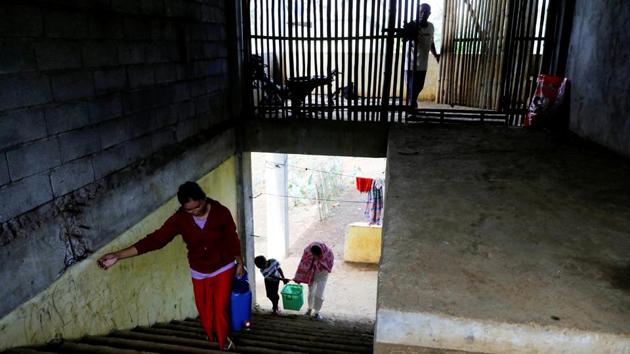
Acampong’s wife Marie Dalama Acampong, 37, and her daughter Shieka, 15, carry containers filled with water. In December 2018, Marie applied to work as a domestic helper in Saudi Arabia, following a fight with her husband. On the day she was supposed to leave, her husband and children begged her not to go. “Sometimes I still think about leaving because we don’t have a source of income. We are literally just waiting here,” she said. (Eloisa Lopez / REUTERS)
4/10
 View Photos in a new improved layout
Updated on May 25, 2019 1:58 PM
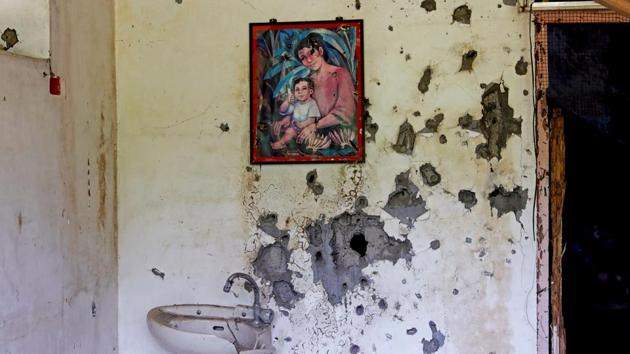
A painting of a mother and a child hangs on a wall at a bullet-riddled structure in the city. Marawi was once one of the most picturesque cities in the Philippines. About half of it is now charred concrete and skeletons of buildings, the effects of 154 days of air strikes and artillery by the military, and booby traps the rebels laid everywhere to keep them at bay. (Eloisa Lopez / REUTERS)
5/10
 View Photos in a new improved layout
Updated on May 25, 2019 1:58 PM
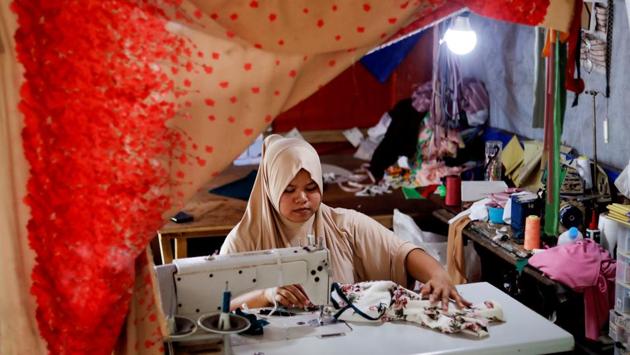
Asnia Muloc Sandiman, 25, works with a sewing machine provided by the government, in her family’s tent at an evacuation camp for families displaced by the siege. Sandiman sews made-to-order clothing and sells them online. “My deepest hope is that we are allowed to go back to Marawi but honestly, I would take any permanent address just to get out of here,” Sandiman said. (Eloisa Lopez / REUTERS)
6/10
 View Photos in a new improved layout
Updated on May 25, 2019 1:58 PM
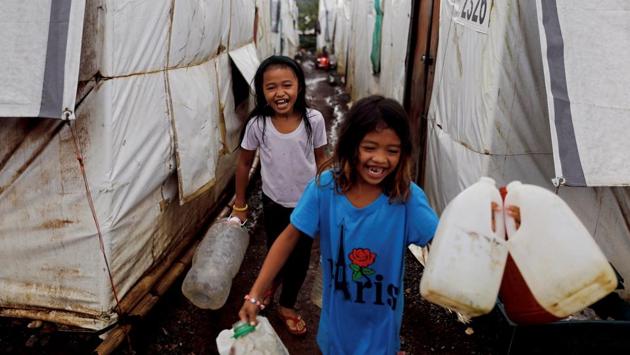
Girls carry water containers to be filled at an evacuation camp for families displaced by the siege. Thousands of internally displaced people remain in limbo as they await the rehabilitation of the city. (Eloisa Lopez / REUTERS)
7/10
 View Photos in a new improved layout
Updated on May 25, 2019 1:58 PM
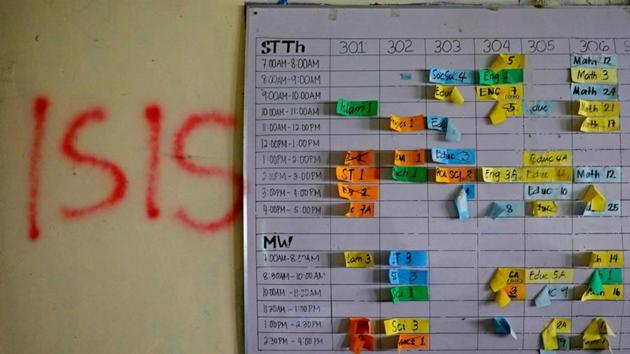
A class schedule is seen on a wall spray-painted with “ISIS” at a school in the most affected war-torn area of Marawi. Hundreds of militants, 165 soldiers and at least 45 civilians were killed in the five-month conflict. President Rodrigo Duterte in October 2017 declared the city liberated, and its rehabilitation officially underway. But there is little sign of progress. (Eloisa Lopez / REUTERS)
8/10
 View Photos in a new improved layout
Updated on May 25, 2019 1:58 PM
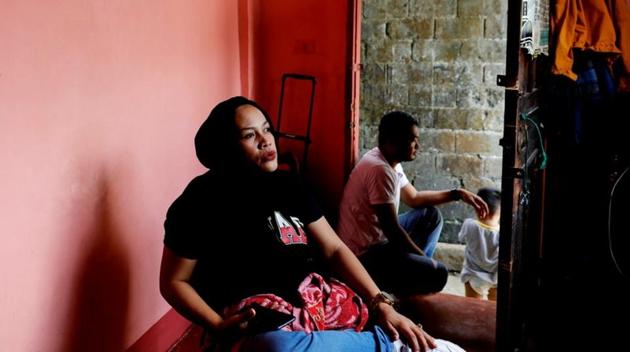
Noronisah Laba Gundarangin, 40, a mother of three, lives with four other families in her sister’s home. The 73,000 pesos ($1,385) her family received from government agencies isn’t enough for a small business. They have debts to pay and children to feed. She wonders what happened to all the help and money pledged by the international community when the war was in the spotlight. (Eloisa Lopez / REUTERS)
9/10
 View Photos in a new improved layout
Updated on May 25, 2019 1:58 PM
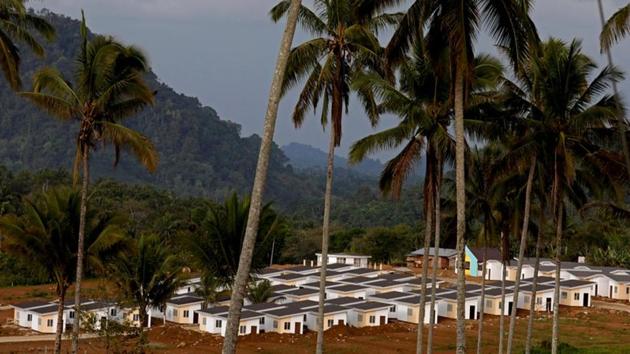
Housing units for families displaced by the Marawi siege stand in the city. Bangon Marawi (Rise Marawi), an inter-agency task force in charge of reconstruction, has a deadline of 2021 for rebuilding and remains confident of meeting it. “We could only go as fast as legally possible. We can’t make shortcuts,” its field office manager, Felix Castro, said. “It takes a while in the beginning but it will be quick once it starts.” (Eloisa Lopez / REUTERS)
10/10
 View Photos in a new improved layout
Updated on May 25, 2019 1:58 PM


