
 E-Paper



Photos: Masks, disinfectants-- the new normal for commuters now
Even in normal times, public transportation is an easy place to get sick, as commuters jostle each other, breathe the same air in packed subways, grasp the same straps for support and grab the same escalator handrails. In the times of coronavirus, where around one in five people are staying home from school or work around the world, those who must continue to use trains, streetcars and buses are doing what they can to minimize the risk.
Updated on: Mar 30, 2020 1:18 PM IST


Share via


Copy link

1/10

 View Photos in a new improved layout
Updated on Mar 30, 2020 1:18 PM
Commuters wearing masks stand in a packed train at the Shinagawa Station in Tokyo, Japan. From Mexico City to Mumbai and New York to Barcelona, commuters who can get their hands on face masks are relying on them for protection. (Jae C. Hong / AP)
2/10
 View Photos in a new improved layout
Updated on Mar 30, 2020 1:18 PM
Indian commuters, some wearing protective masks as a precaution against COVID-19 travel in a crowded local train in Mumbai, on March 20, 2020. Less than a week later, the country entered a complete lockdown, suspending all transport and public gatherings, amid rising cases of infection. (Rajanish Kakade / AP)
3/10
 View Photos in a new improved layout
Updated on Mar 30, 2020 1:18 PM
Transportation authorities are also trying to keep commuters safe. Soldiers clad head-to-toe in bright yellow protective suits stand in formation before disinfecting wagons for the new coronavirus at the central train station in Rio de Janeiro, Brazil, where trains connect cities within the state. (Leo Correa / AP)
4/10
 View Photos in a new improved layout
Updated on Mar 30, 2020 1:18 PM
Some commuters use tissues or handkerchiefs to grasp subway poles that have been touched by untold numbers before them, like seen here in New York, USA. When possible, passengers try to sit at a distance from each other. (John Minchillo / AP)
5/10
 View Photos in a new improved layout
Updated on Mar 30, 2020 1:18 PM
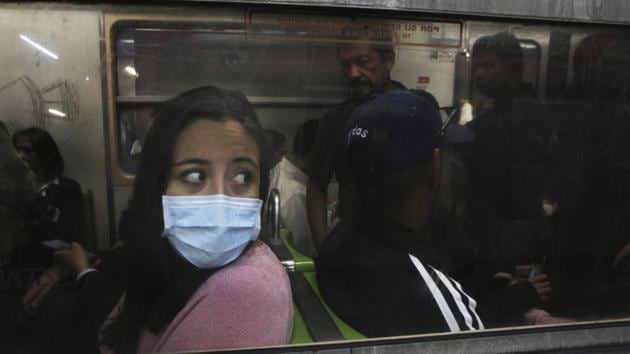
A commuter in the metro wears a protective mask as a precaution against the spread of the new coronavirus in Mexico City. More than 720,000 people have been infected across the world and over 33,000 have died as of March 30. (Marco Ugarte / AP)
6/10
 View Photos in a new improved layout
Updated on Mar 30, 2020 1:18 PM
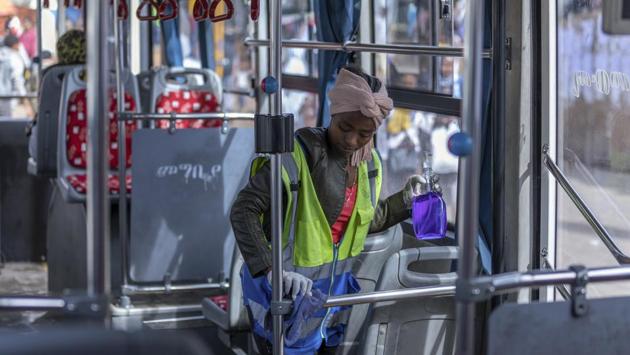
A volunteer disinfects a passenger bus in the capital Addis Ababa, Ethiopia. A large part of the global workforce has given up on daily commutes, working remotely from their homes to control the spread of the virus. The UN for instance has 99% of its staff in Addis Ababa working from home. (Mulugeta Ayene / AP)
7/10
 View Photos in a new improved layout
Updated on Mar 30, 2020 1:18 PM
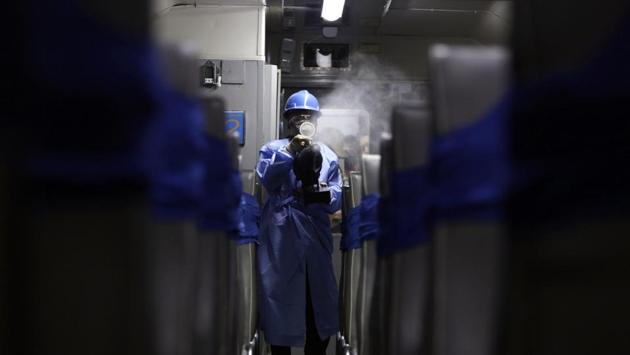
A worker in a protective suit walks through passenger car spraying disinfectant n Medan, Indonesia. For countries where commuters are still stepping out, frontline workers are engaged in regular sanitization. (Binsar Bakkara / AP)
8/10
 View Photos in a new improved layout
Updated on Mar 30, 2020 1:18 PM
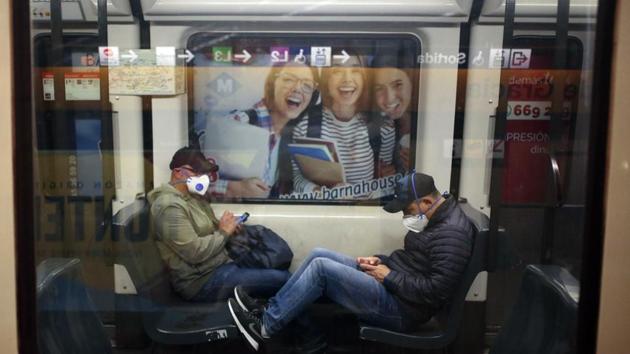
Two passenger wearing protective masks sit inside a train in Barcelona, Spain. The country has entered its third week under near-total lockdown on Sunday, as the government approved a strengthening of measures and the death toll crossed 6,500. (Joan Mateu / AP)
9/10
 View Photos in a new improved layout
Updated on Mar 30, 2020 1:18 PM
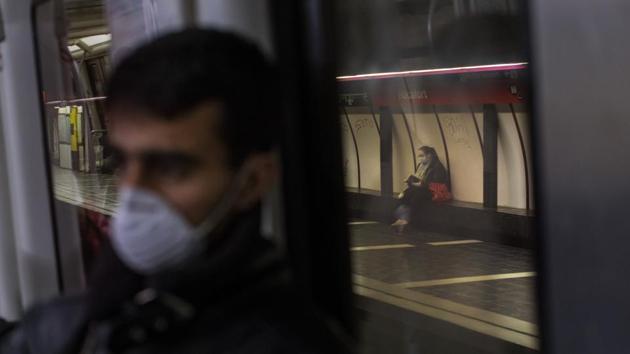
A man wearing a face mask travels by train in Barcelona. Globally, over 145,000 cases have been reportedly cured, around 20%. With no certain cure for Covid-19 and vaccines in the distance, personal hygiene and social distancing remain essential measures to avoiding infection. (Emilio Morenatti / AP)
10/10
 View Photos in a new improved layout
Updated on Mar 30, 2020 1:18 PM


