
 E-Paper



Photos: The liberation of Auschwitz, 75 years on
Ahead of events to mark the 75th anniversary of the liberation of Auschwitz, AFP has been speaking to some of the death camp's last survivors. Originally from Europe, they spent part of their childhood in the notorious extermination camp before moving after World War II to Israel. The survivors lost the majority of their families in the Holocaust, in which six million Jews were killed by Nazi Germany. Commemorations have been planned in Jerusalem on January 23, with the presence of Russian President Vladimir Putin and his French counterpart Emmanuel Macron, and in Poland on January 27.
Updated on: Jan 15, 2020 1:54 PM IST


Share via


Copy link

1/12
 View Photos in a new improved layout
Published on Jan 15, 2020 1:54 PM
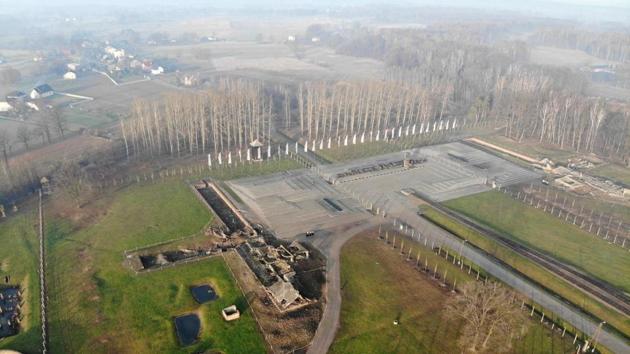
An aerial view of the remains of gas chambers and crematoriums of Auschwitz I, which was part of former German Nazi death camp Auschwitz-Birkenau, in Oswiecim, Poland. The site has been turned into a museum and memorial site. Ahead of events to mark the 75th anniversary of the liberation of Auschwitz, AFP spoke to some of the death camp’s last survivors, who are recounting the events that left an indelible mark on their personalities. (Pablo Gonzalez / AFP)
2/12
 View Photos in a new improved layout
Published on Jan 15, 2020 1:54 PM
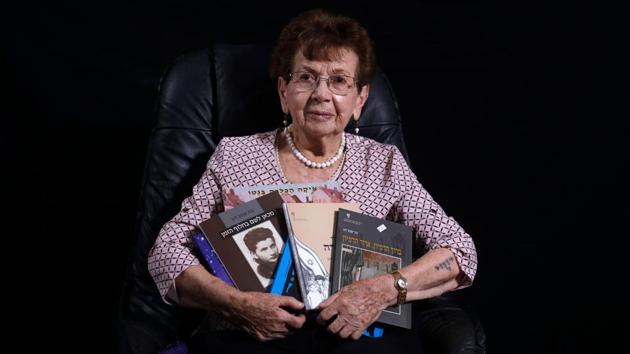
Holocaust survivor Batcheva Dagan, whose entire family was killed, poses with books she authored, during a photo session at her home in the Israeli town of Holon, south of Tel Aviv. Born in Poland in 1925, she became a pioneer in the field of Holocaust education, and has dedicated her life to teaching. Originally from Europe, the survivors spent part of their childhood in the notorious extermination camp before moving after World War II to Israel. (Menahem Kahana / AFP)
3/12
 View Photos in a new improved layout
Published on Jan 15, 2020 1:54 PM
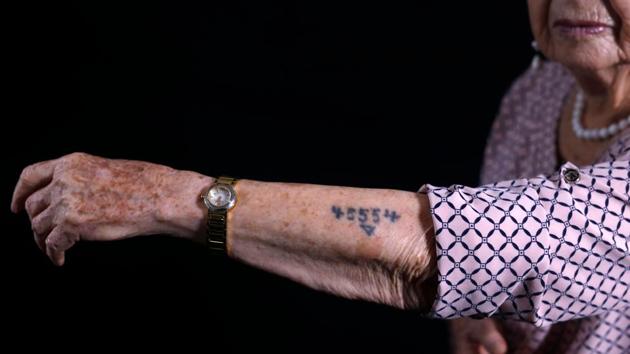
Dagan shows her arm with the Auschwitz prison number 45554. An educator and psychologist, she has written six books about the Holocaust of which five are for children. “I don’t only recount the horror of the Holocaust, but also wonderful things like helping each other, the capacity to share a piece of bread, the friendship... We remained human beings,” said Dagan. (Menahem Kahana / AFP)
4/12
 View Photos in a new improved layout
Published on Jan 15, 2020 1:54 PM
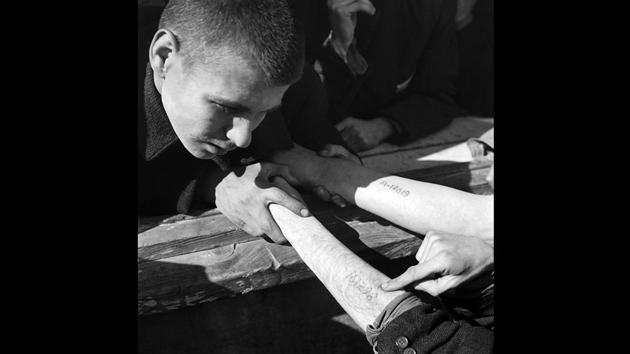
In this file photograph taken on April 29, 1945, a young man checks the numbers tattooed on the arms of Jewish Polish prisoners coming from Auschwitz, in Dachau concentration camp, after Dachau’s camp was liberated by the US army on April 29. Nazi Party created the camp on March 20, 1933. More than 200,000 people were detained between 1933 and 1945, and 31,591 deaths were declared excluding the victims of the evacuation march in April 1945. (Eric Schwab / AFP)
5/12
 View Photos in a new improved layout
Published on Jan 15, 2020 1:54 PM
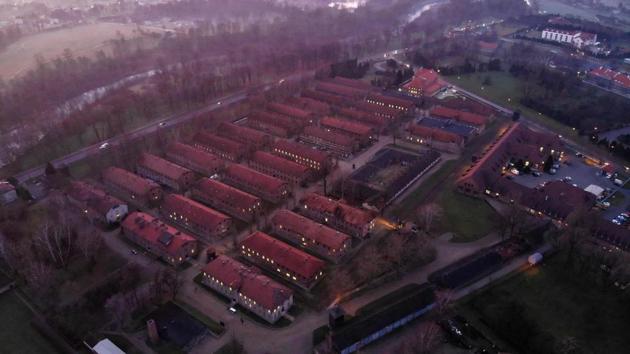
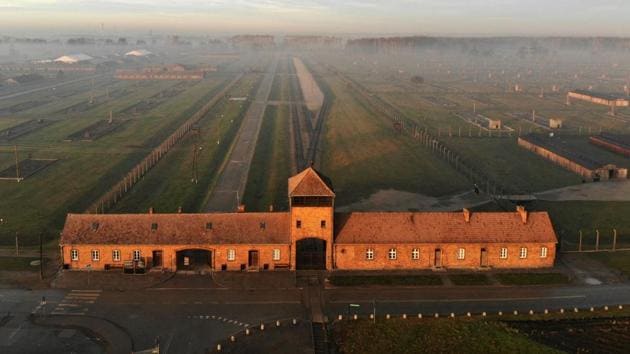
The buildings of Auschwitz I, which were part of former German Nazi death camp Auschwitz-Birkenau. The name of the city of Oswiecim was changed to Auschwitz, which became the name of the camp as well. Over the following years, the camp was expanded and consisted of three main parts: Auschwitz I, Auschwitz II-Birkenau, and Auschwitz III-Monowitz. (Pablo Gonzalez / AFP)
6/12
 View Photos in a new improved layout
Published on Jan 15, 2020 1:54 PM
Holocaust survivor Malka Zaken, 91, poses with dolls, reminders of her childhood with her mother who was killed by the Nazis, at her home in Tel Aviv. Born in Greece in 1928, she was 12 when she was sent to the death camp, assigned to fold the clothes of Jews killed in the gas chamber, and recalls the fear at Auschwitz. When the memories become too much, she turns to her dolls. (Menahem Kahana / AFP)
7/12
 View Photos in a new improved layout
Published on Jan 15, 2020 1:54 PM
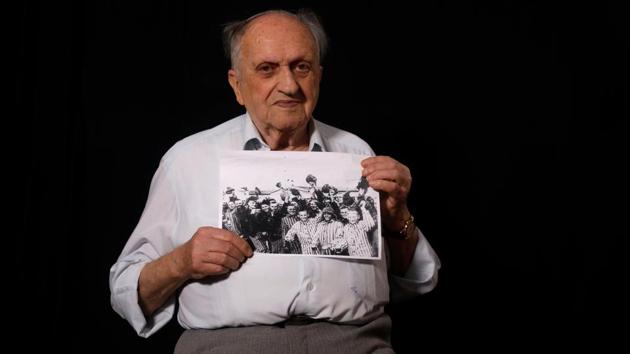
Dov Landau, 91, shows a picture of himself with other free prisoners taken after the war, at his home in Tel Aviv. Born in Hungary in 1928, he is used to speaking publicly about his experience, and has returned to Auschwitz more than 100 times with school groups and others. Landau was forced onto the “Death March” when, as the Soviets advanced, the Nazis made prisoners from extermination camps walk in deep winter towards their other camps. (Menahem Kahana / AFP)
8/12
 View Photos in a new improved layout
Published on Jan 15, 2020 1:54 PM
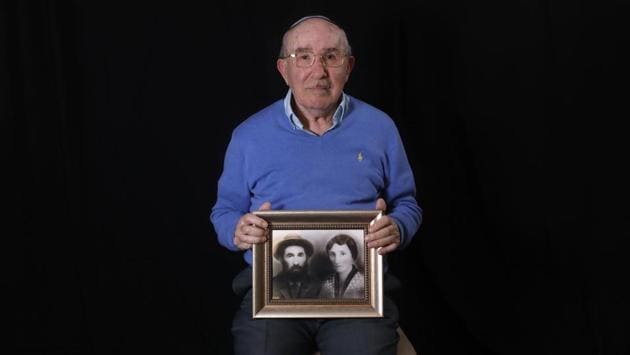
Szmul Icek shows a picture of his parents killed by the Nazis, at his home in Jerusalem. Born in Poland in 1927, he and two brothers survived while their parents and two sisters were killed in the Holocaust, and, in contrast to some survivors, he never returned to the camp after the war and avoids reading books on the subject. (Menahem Kahana / AFP)
9/12
 View Photos in a new improved layout
Published on Jan 15, 2020 1:54 PM
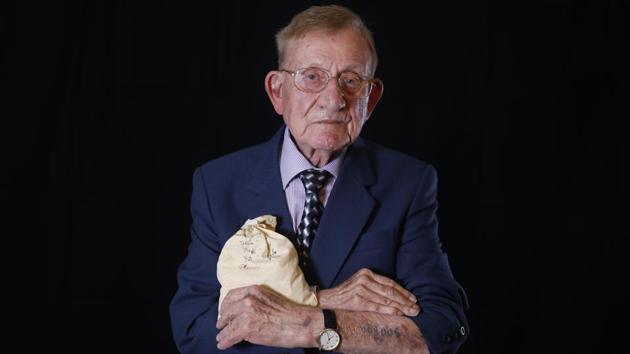
Shmuel Blumenfeld, 94, carries a bag containing earth from locations where his family members were killed by Nazis, at his home in the City of Bat Yam south of Tel Aviv. Born in Poland in 1925, he still remembers each ghetto, camp, and fellow prisoner, and has collected earth from places where his family members were killed, kept in the small yellowing bag, which he has asked his children to bury with him. (Menahem Kahana / AFP)
10/12
 View Photos in a new improved layout
Published on Jan 15, 2020 1:54 PM
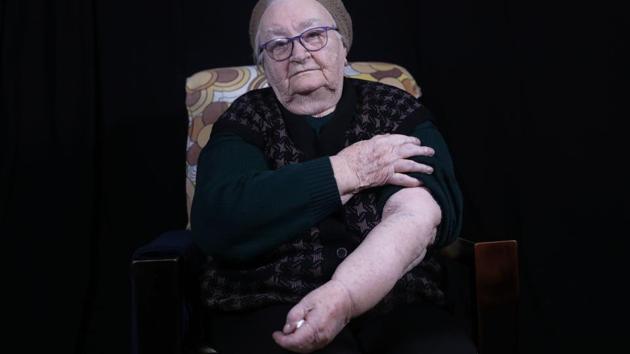
Helena Hirsch shows her arm with the Auschwitz prison number A 20982, at her home in Israel's Beni Brak suburb east of Tel Aviv. Born in Romania in 1928, she moves around slowly with the aid of a walking frame but she maintains her lively spirit, describing herself as a ‘heroine.’ “If I’m alive today, it’s because I am a heroine,” said Hirsch, the sole survivor from her family. (Menahem Kahana / AFP)
11/12
 View Photos in a new improved layout
Published on Jan 15, 2020 1:54 PM
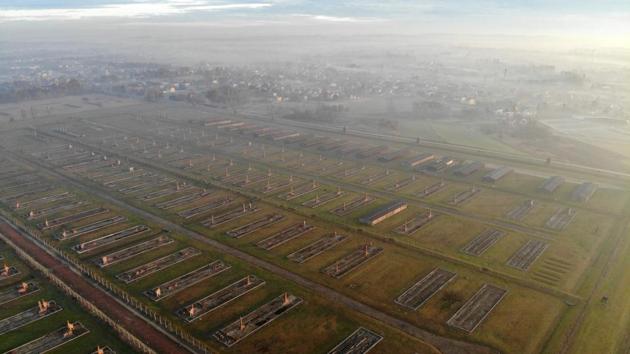
An aerial view of the remains of barracks for prisoners at the former German Nazi death camp Auschwitz II - Birkenau. (Pablo Gonzalez / AFP)
12/12
 View Photos in a new improved layout
Published on Jan 15, 2020 1:54 PM


